When a workout becomes a medical emergency: The rise of rhabdomyolysis
Emily Koh
AI generated
SINGAPORE – The room was dark, broken by flashing lights that pulsed to the beat of thumping music. Around me, rows of cyclists pedalled in unison as the instructor shouted words of encouragement.
Excited for my first spin class, I clipped my shoes onto the bike and began pedalling.
As the music built, so did the intensity. I found myself pushing harder and faster, matching the pace of everyone as adrenaline took over.
When the class ended, I felt exhausted but accomplished.
Over the next few days, however, a deep ache settled into my thighs. Walking became difficult, and even sitting down was painful. Assuming it was simply muscle soreness from an intense workout, I brushed it off and waited for it to pass.
Instead, the pain worsened. Whenever I moved my legs, I felt sharp pain and extreme soreness in my front and inner thighs. Walking, the stairs, or getting up from a chair was torture.
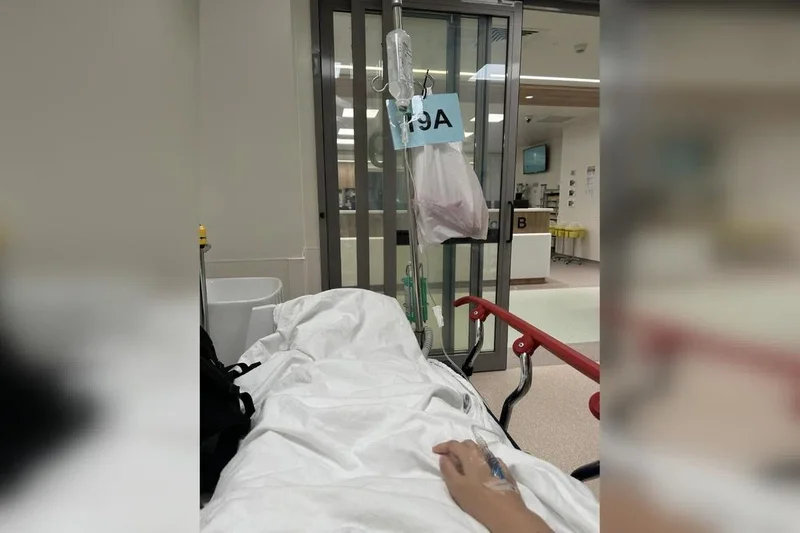
Six days after that seemingly harmless spin class, I found myself in the Accident and Emergency (A&E) department.
Concerned as to why my muscle ache was getting worse, my mother had persuaded me to see the doctor.
After examining me, I was immediately advised to go to the hospital.
Blood and urine tests revealed that I had developed rhabdomyolysis.
I was admitted to the hospital for three days and placed on intravenous (IV) fluids, receiving five bags to help flush harmful substances from my body.
What is rhabdomyolysis?
Rhabdomyolysis, commonly known as rhabdo, occurs when muscles begin to break down. It can result from overexertion, trauma, medications or an underlying health condition.
As muscle cells break apart, they release toxic substances into the bloodstream. These can overwhelm the kidneys and other organs, potentially leading to kidney failure or, in severe cases, death.
Because rhabdomyolysis can become life-threatening, early medical treatment is essential.
Patients are typically hospitalised and given IV fluids to flush these substances out of the body.
Common symptoms include severe muscle pain, swelling or tightness, dark tea-coloured urine and reduced urine output.
Most patients make a full recovery, although healing may take anywhere from several weeks to a few months depending on the severity.
Dr Audrey Wong, Head of Division and Senior Consultant at the Division of Advanced Internal Medicine, Department of Medicine at National University Hospital (NUH), said: “While most cases resolve, rhabdomyolysis should not be dismissed as simply ‘muscle soreness’. It can occasionally lead to kidney injury, dialysis, or limb-threatening compartment syndrome.”
Rhabdomyolysis is on the rise
Although it is considered a rare condition, rhabdomyolysis cases have been climbing in some hospitals.
NUH treated 16 cases in 2023. That number more than tripled to 52 in 2024 before increasing to 90 cases in 2025.
Khoo Teck Puat Hospital (KTPH) received a total of 280 rhabdomyolysis cases since 2023. They received 102 cases in 2023,103 cases in 2024 and 58 cases in 2025.
More than 80 per cent of patients were under the age of 50. Those in their 20s accounted for the largest share of cases, followed by people in their 30s.
Why spin?
When I arrived at the A&E department, the healthcare workers asked me a question.
“Spin or marathon?”
It was a question they had apparently asked many times before.
Hospitals have observed that spin classes are becoming an increasingly recognised cause of rhabdomyolysis, particularly among young and otherwise healthy adults.
Wong said: “Spin classes combine several risk factors for exertional rhabdomyolysis.”
Spin is a high-intensity indoor cycling workout where participants ride modified stationary bikes under the guidance of an instructor, with music driving the energy of the class.
Its accessibility and health benefits have fuelled its popularity in recent years.
According to an NUH study, 83.8 per cent of patients who developed spin-related rhabdomyolysis were attending their first spin class as their muscles were unaccustomed to the intensity of the workout.
At KTPH, 40 per cent of the cases reviewed were linked to spinning.
The exercise itself also involves continuous, high-intensity, repetitive muscle contractions which is another major risk factor for rhabdomyolysis.
The atmosphere can further encourage people to push beyond their limits.
Loud music, energetic instructors and the desire to keep pace with the class can cause participants to unknowingly exceed what their muscles can safely tolerate.
Spin, however, is not the only activity linked to the condition. Other triggers include intense gym workouts, endurance events, military training, CrossFit-style exercises, long-distance running and exercising in extreme heat.
Listen to your body
Doctors advise against jumping straight into unfamiliar, high-intensity exercise.
Dr Teoh Chin Sim, Senior Consultant for Orthopaedic Surgery at KTPH, said: “One should build up intensity gradually over weeks rather than diving straight into high-resistance sessions.”
They should take breaks, stay hydrated and stop exercising if pain or fatigue feels excessive.
Teoh said: “We would also encourage participants to listen to their bodies and not feel pressured by the group environment to keep up if they are struggling.”
Spin studios also have a role to play by ensuring adequate ventilation and educating participants about the warning signs of rhabdomyolysis.
Participants should seek medical attention if they develop severe thigh pain, swelling, weakness, dark urine, or reduced urine output.
Wong said: “Early recognition matters because prompt hydration and monitoring can reduce the risk of kidney injury and other complications.”
A month after my injury, I have returned to exercising (gym sessions and running, no spin), but with greater caution.
My first spin class was supposed to mark the beginning of my fitness journey. Instead, it became an unexpected lesson in the importance of knowing my limits.
While exercise remains one of the best things we can do for our health, this experience shows that more is not always better.
Sometimes the best decision is not to push through the pain, but to recognise when your body is asking you to stop.