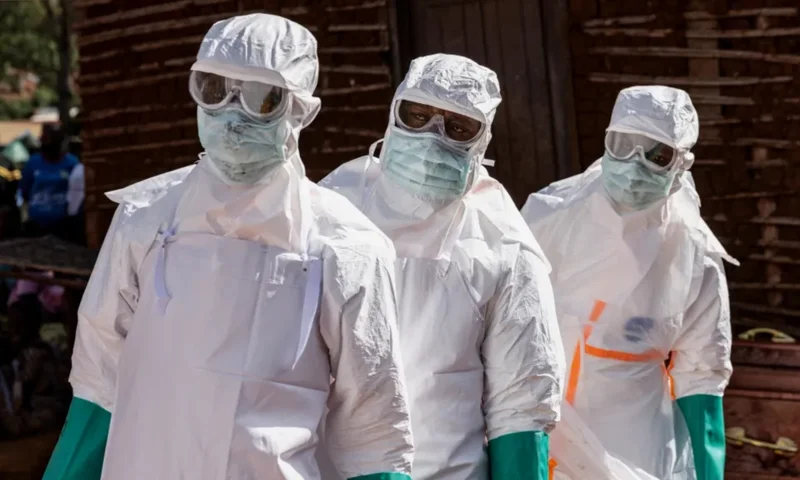
The number of people infected with Ebola in the Democratic Republic of the Congo has increased to 3,200, with at least 1,405 people dead.
The information was disclosed on Sunday as medical personnel endeavor to manage the DRC’s 17th Ebola outbreak, with cases escalating by approximately 1,000 within a mere 10 days.
The outbreak, which was announced on May 15, is attributed to the Bundibugyo strain of the Ebola virus, for which there is currently no authorized vaccine or treatment available.
According to the World Health Organization, nearly 90 percent of the reported cases are concentrated in the northeastern province of Ituri, which shares borders with South Sudan and Uganda.
The United Nations agency indicates that the virus has spread to five provinces, including two new ones where it has recently emerged.
Hedley Tah of the UN Humanitarian Air Service, UNHAS, stated, “In many instances, the humanitarian community is eager to assist, but the primary challenge lies in reaching these areas.” UNHAS is responsible for transporting medical personnel and response teams to the front lines of crises.
In addition to facilitating the movement of aid workers to affected regions, Tah noted that UNHAS is also “transporting samples for laboratory testing to ensure that traceability can be maintained.”
Authorities have reported that enhanced detection and testing methods have contributed to the identification of a greater number of infections.
The outbreak may continue for several additional months, and strikes by healthcare personnel seeking unpaid wages have hindered response efforts in certain hospitals.
Ebola, which transmits through contact with bodily fluids and leads to hemorrhagic fever, has resulted in the deaths of over 15,000 individuals across Africa in the last 50 years.
Researchers are urgently working to create vaccines and treatments for the Bundibugyo strain, with Oxford University announcing on Friday that the first group of volunteers has received an experimental vaccine aimed at this strain.
Several other candidate vaccines are being expedited for clinical trials, and two potential treatments are also in the development phase.