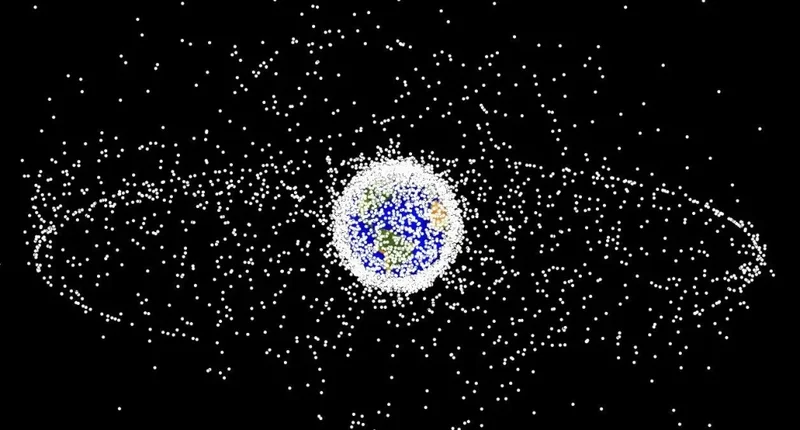
When we talk about stopping an arms race in space, people usually say that we need treaties that every state must follow or agreements that states can choose to follow. Many states are focusing on things they can do on their own to build trust. Now, it seems like trust is the most important thing in space — and it seems like we do not have enough of it.
We need to make sure we are open and honest with each other to build trust. This helps keep things in space stable. There are some central ideas that most states agree on, such as the assumption that if one state messes with another state’s satellites, it is a threat to the whole space ecosystem. If someone damages space infrastructure on purpose, it can create a lot of debris that can cause long-term conflict among states. Luckily we have rules that can stop fights from getting out of control and help states trust each other again. The Outer Space Treaty said that space should be a conflict free place, and we have flexible rules that let us solve problems quickly.
Using agreements that are not legally binding helps us work together and be transparent, which reduces the chance of mistakes that could lead to conflict. This helps us make sure that space is used in a way that’s good for everyone. Now, the whole world is facing a problem that could change everything we have agreed on so far: artificial intelligence. We need to consider carefully what will happen when military forces start using artificial intelligence in outer space.
The AI blind spot
The space industry is aggressively pursuing artificial intelligence with lots of uses like autonomously preventing collisions. Artificial intelligence can also help with looking at the Earth from space and analyzing the data.
If a state does not have resources on the ground to respond to disasters or to do precision farming, it can still use artificial intelligence. However, artificial intelligence also creates risks for the prevention of an arms race in outer space.
The core scrutiny: Article 2(4) of the UN charter
The United Nations charter has a rule that says states cannot use force against states. This rule is stated in article 2(4) of the charter. It says that states are not allowed to use or threaten to use force against the integrity or political independence of other states.
Historically, the term “force” has been used to describe power that uses physical strength. So if an autonomous system is used to cause harm in a way that’s not physical, like a cyberattack, it is not clear if this would be against that particular law.
Another question is about whether states can be held responsible if they program machines to act on their own. The problem is that article 2(4) is focused on what states intend to do. Autonomous systems do not have intentions. They just follow the instructions they are given.
The International Law Commission of the United Nations has said that machines cannot be held responsible for their actions. This means that states cannot just say that a machine is responsible for something and avoid taking responsibility themselves.
There is a principle called the Principle of Attribution that says states must be held accountable for what their autonomous weapons do. This means that if an autonomous weapon is used to commit an act, the state that owns the weapon cannot just say that the weapon was responsible.
The Principle of Accountability says that states must avoid doing anything that could be considered an act of war. The United Nations charter and these principles are important for making sure that states follow the rules and do not use force against each other.
The LAWS debate: from Earth to outer space
The international community has been talking about Lethal Autonomous Weapons Systems (LAWS) for some time. This conversation started at the UN Convention on Certain Conventional Weapons in Geneva. Now people are also thinking about how we use space. We need to make rules for space like we do for the Earth.
One idea is to make sure humans are in control of robots and that we check weapons carefully. When it comes to fighting on land, humans can react as fast as or even faster than machines. Space is different. Things happen fast in space. Objects in space are traveling thousands of meters per second. So, decisions have to be made in a fraction of a second.
If a weapon in space makes a mistake, it could think a piece of junk is a missile. If a Lethal Autonomous Weapon System in space does not work right, it could think a test is an attack. That could put the world in danger. We need to be careful with Lethal Autonomous Weapons Systems.
Turning the algorithm into an ally
Although the use of artificial intelligence is not a bad thing, it needs to be controlled.
Artificial intelligence is an example of why we need agreements that can be changed. Because if we make agreements that cannot be changed, they could be outdated by the time we agree on them.
We should try to use the opportunities that we have to make progress with artificial intelligence. We can do this by being open about how artificial intelligence works. We can agree not to use artificial intelligence to attack satellites just like we would not use missiles to attack them.
If we use artificial intelligence to track things in space, we can use it to help solve the problem of space debris and to keep our states safe. If we say that using artificial intelligence to track things in space is a good thing for all states, especially for states that do not have a lot of money to spend on it, then we can make something that could be a threat into something that makes us feel safe.
This is an important issue for the whole world and the decisions we make in the next five years will affect how safe space is for the next 50 years. States and private companies should work together to make sure that artificial intelligence is used in a way that’s good for everyone. This is very important for the future of space. Our relationships with states need to change as our satellites get smarter.
In the end, space must remain a region of peace and mutual prosperity for all who would like to explore and exploit it.
Lt. Col. Mihail Istvanovics Várdai is the head of the Hungarian Ministry of Defence, Defence Policy Department, Arms Control Unit
SpaceNews is committed to publishing our community’s diverse perspectives. Whether you’re an academic, executive, engineer or even just a concerned citizen of the cosmos, send your arguments and viewpoints to opinion (at) spacenews.com to be considered for publication online or in our next magazine. If you have something to submit, read some of our recent opinion articles and our submission guidelines to get a sense of what we’re looking for. The perspectives shared in these opinion articles are solely those of the authors and do not necessarily represent their employers or professional affiliations.