Google worries Android enthusiasts with potential on-device ADB changes that could break Shizuku
Jul 27, 2026 — 6:22 AM ET
- Google platform engineers are discussing and evaluating restricting the Android Debug Bridge daemon (adbd) to external interfaces, such as Wi-Fi (wlan0).
- Blocking “localhost loopback” addresses would prevent terminal emulator apps (like Termux) and permission frameworks (like Shizuku) from executing elevated on-device ADB commands without a PC.
- The security proposal stems from vulnerability concerns, but no decision is final, and developers have suggested an opt-in Developer Options toggle as a compromise.
Google is weighing changes to how Android handles local debugging connections, a move that could fundamentally alter how power users customize their devices. ADB (Android Debug Bridge) remains the last line of defense for tweaking device behavior, managing permissions, and running scripts without requiring full root access, and on-device ADB adds an incredible layer of convenience. However, internal discussions among Android platform engineers suggest that this long-standing flexibility and convenience might eventually face some network-level restrictions.
As detailed in a technical breakdown by Android developer Kitsumed, a proposal posted to Google’s Issue Tracker discusses restricting the ADB daemon (adbd) to external network interfaces, such as Wi-Fi (wlan0) or USB. Crucially, this would block connections over “localhost loopback” addresses, such as 127.0.0.1.
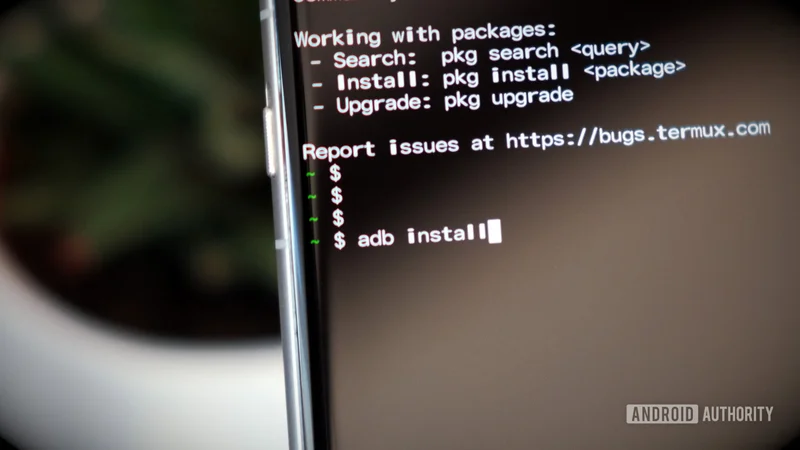
In simpler terms, a “localhost loopback” allows a device to communicate directly with itself using internal network protocols, allowing for what is commonly known as “on-device ADB.” This lets a phone run a local terminal that issues elevated debugging commands directly back to its own system. Terminal emulator apps like Termux use localhost loopback connections to run complex scripts, package managers, or debloating tools directly on the device. Then there are frameworks like Shizuku that leverage temporary ADB access to grant elevated permissions to secondary apps, enabling system UI tweaks and deeper customization without permanent root.
The primary benefit of localhost loopback/on-device ADB is the ability to run elevated commands cleanly on the go without a tethered PC, and importantly for many power users, without breaking security frameworks like Play Integrity.
The trade-off is potential risk: if a local debugging socket is left open, malicious local apps could theoretically exploit it to gain unauthorized system-level permissions. The discussion even began with CVE-2026-0073, a vulnerability that allowed attackers on any connected network (such as a public Wi-Fi network) to bypass wireless ADB authentication. Even though the vulnerability was patched with the May 2026 Android security patches, the wide attack surface remains a valid risk. If developers could bind adbd exclusively to a trusted Wi-Fi network, it would close the attack surface by restricting access on untrusted Wi-Fi networks.
It was within this security context that a Google employee (who Kitsumed says is an ADB core maintainer) proposed restricting adbd to the Wi-Fi interface and clamping down on localhost loopback/on-device ADB to prevent privilege escalation. After receiving community feedback, the employee states they will consider it and assess the risk-feature ratio.
Before you pick up your pitchforks, note that this is currently only an early discussion, and no decision appears to have been reached in the public discourse. So right now, there is no finality in any way. You should exercise some restraint before you jump to a conclusion. If you want to contribute to the discussion, you can write detailed, technical, and constructive messages in the Android Public Tracker thread. If your use case has already been mentioned, or you don’t have technical details, simply click the “+1 button” on the thread and avoid clogging it with unnecessary messages.
If Google does decide to act, developers involved in the tracker thread have already suggested compromises, such as adding a dedicated opt-in toggle within Developer Options to allow localhost ADB for power users while keeping default settings secure.
For now, on-device ADB workflows continue to operate normally. But, understandably, the Android power-user community is getting anxious, especially given all the sideloading restrictions coming to Android. It almost feels like the Android power-user days are numbered, but in my opinion, that is a premature conclusion. Right now, we need to wait and watch how Google steers the Android ship.
We’ve reached out to Google for further comments on the discussion to restrict on-device ADB. We’ll keep you updated when we learn more.