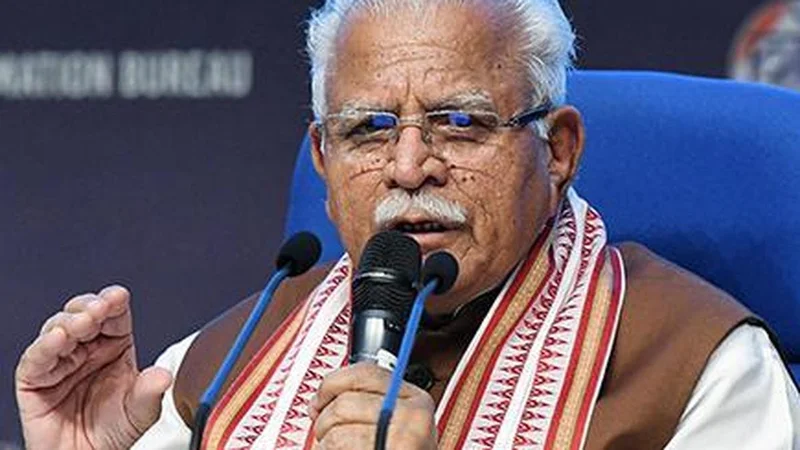
The overall increase in peak electricity demand was around 12% during the period from April to June, compared with the corresponding period last year, owing to the development of El Nino conditions in the current year, Union Minister of Power Manohar Lal Khattar has informed the Lok Sabha.
“In view of the development of El Nino conditions in the current year, the requirement of electricity has risen significantly. During the April-June period this year, the overall rise in peak demand was around 12%, compared with the corresponding period last year, and it is expected to remain high. The all-time high all-India peak demand of 270.8 GW was successfully met in May, and in July, the peak demand again exceeded 270 GW twice, which was also met successfully,” according to a statement the Minister made in the Lok Sabha.
The statement was in response to questions raised by Congress MP V. Vaithilingam and DMK MP S. Jagathratchakan pertaining to the challenges arising out of the increasing electricity demand during extreme summer, measures/contingency plans adopted, and long- and short-term strategies to meet the country’s energy requirements.
The Minister said the country had recorded an all-time high Variable Renewable Energy generation of 103.7 GW (solar 75 GW and wind 28.7 GW) in July alone. There was adequate availability of electricity in the country now. As on June 2026, the country’s installed power generation capacity was 548.86 GW. The government had addressed the critical issue of power deficiency by adding 324.7 GW of generation capacity since April 2024, transforming the country from power-deficit to power-sufficient, the statement said.
Pointing out the measures taken to augment transmission line capacity, Mr. Khattar said the total inter-regional transmission capacity in the country had become 1,20,340 MW, facilitating reliable transfer of power across regions. The Ministry had diversified electricity generation through an optimal energy mix to strengthen energy security and ensure the sustainable growth of the power sector, the statement said.
Efforts made at enhancing generation capacity utilisation, transmission and distribution efficiency, and grid resilience had yielded encouraging results, the Minister said, adding that the coal (including lignite)-based generation capacity was about 230.8 GW and its share in the total electricity supplied during the period from April to June this year was 69.54%. As on July 17, 41.4 million tonnes of coal was available at the thermal power plants, sufficient for 13 days at 85% Plant Load Factor. Sufficient coal was being received by the thermal power plants to meet the daily demands.
Gas-based generation was less than 2% of the overall basket of generation resources and geopolitical issues in East Asia had had a minimum impact on energy availability in the country. A record generation capacity addition of 64,695 MW was achieved during 2025-26. Of this, 50,905 MW came from renewable energy sources (excluding large hydro-power projects). This represented the highest-ever capacity addition in a single year, surpassing the previous record of 34,054 MW in 2024-25.
As for long-term measures for capacity addition, the Minister said the thrust was on generation from non-fossil sources, which now exceeded 54% of the total installed generation capacity. Further, the government planned to achieve 500 GW of non-fossil fuel-based installed generation capacity by 2030. According to the National Generation Adequacy Plan prepared by the Central Electricity Authority in March, 2026, the non-fossil fuel-based installed capacity was likely to increase to 786 GW by 2035-36. The Government of India had also set an ambitious target of 100-GW nuclear power capacity by 2047, the statement said.
Published - July 27, 2026 05:31 pm IST