Nigerian novelist and poet, Chinua Achebe, once explained that “serious and good art has always existed to help, to serve, humanity. Not to indict. I don't see how art can be called art if its purpose is to frustrate humanity.”
Achebe’s observation captures the long-standing ethical and social responsibility that has shaped much African artistic production. For many decades, African creative industries were expected to perform a narrow cultural and, at times, political function. Writers, filmmakers and other artists were often called upon to represent the nation, preserve tradition or counter colonial stereotypes.
While these remain important tasks, contemporary African artists are also turning inward. They are interrogating the exclusions and inequalities within African societies themselves. Questions of gender, sexuality, disability, migration, ethnicity, religion and class now occupy a more central place in many contemporary creative works across the continent.
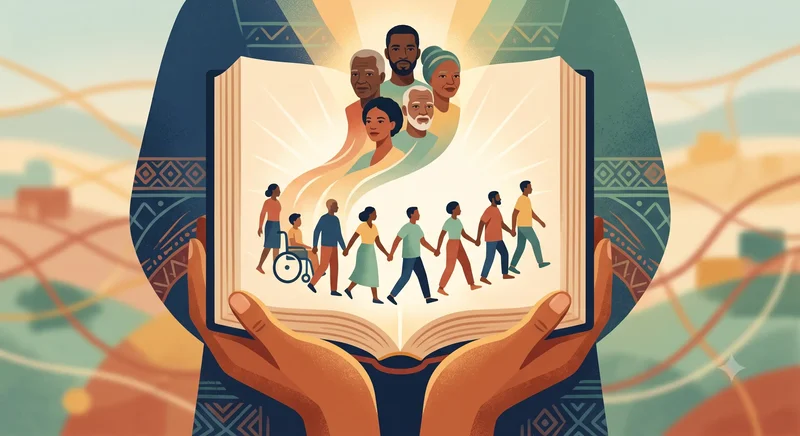
One of the most significant contributions of African storytelling lies in its ability to humanise and give a face to those who are frequently marginalised or reduced to statistics or faceless stories. These people are often discussed in abstract terms within political debates, religious discourses, or sensational media coverage. However, creative works disrupt this abstraction. They place audiences inside the emotional and social worlds of people who are otherwise pushed to the peripheries of public life.
This is particularly visible in contemporary African literature. Writers like Nigerian Akwaeke Emezi, South African Niq Mhlongo or Zimbabwean Sue Nyathi have offered vivid representations of people who have been marginalised because of their gender or sexuality, race or nationality.
Emezi’s novels like The Death of Vivek Oji, for instance, challenge rigid understandings of identity by drawing on African spiritual traditions to depict characters who exist beyond fixed categories of gender, selfhood and embodiment. Mhlongo’s fiction illuminates the frustrations, humour and resilience of black South Africans navigating the inequalities that persist after apartheid. He focuses on the experiences of township youth, migrants and economically excluded communities by exposing how poverty continues to shape everyday life. Nyathi’s work, meanwhile, frequently centres on women negotiating displacement, migration, patriarchy and social expectation across Southern Africa.
These writers demonstrate how literature can go beyond abstract debates about marginalisation by giving readers access to the emotional worlds, vulnerabilities and aspirations of those who are too often reduced to stereotypes or political slogans.
Likewise, African cinema has also become an important site of social reckoning. In recent years, filmmakers across the continent have increasingly explored themes once considered too controversial for mainstream audiences.
For example, films like the South African Inxeba/The Wound, the Kenyan documentary I am Samuel or the Nigerian Ìfé, follow the lives of Africans as they negotiate gender, sexuality, faith and belonging in different sociocultural contexts on the continent. What makes these films powerful is not simply their political message. It is the ordinariness of their tenderness. Audiences encounter the characters not as an ideological debate but as ordinary people, sons, daughters, friends and citizens who only seek dignity.
Importantly, these creative interventions do not merely give a voice or a face to marginalised communities. Many artists emerging today belong to the very communities they represent. This distinction, of course, matters. Representation is no longer only about sympathetic observation from the outside. It increasingly involves self-narration, cultural ownership, and the reclamation of dignity through storytelling.
Despite all their affordances, the creative arts do have their limits. A novel, for example, cannot dismantle discriminatory laws on its own. Similarly, a film cannot single-handedly end gender-based violence or homophobia. Nonetheless, creative works have the capacity to shape the emotional and moral imagination of societies. They influence how people perceive neighbours, strangers, and communities they may never directly encounter.
Political change often becomes possible only after cultural perceptions begin to shift.
It is for this reason that artistic freedom remains essential across Africa. Creative practitioners continue to face censorship, funding constraints, moral policing and political intimidation. Books are banned, films are restricted and exhibitions and performances are cancelled precisely because art possesses the power to unsettle dominant narratives. Attempts to silence artists often reveal anxieties about whose humanity is considered legitimate or worthy of public recognition.
It is important to reflect not only on political independence and economic futures but also on the stories Africans tell about themselves and each other. Across the continent, literature, film and theatre have increasingly become spaces where marginalised communities have been made visible and humanised. In societies where discrimination often survives through silence, creative works intervene by making audiences feel, recognise and confront realities that statistics and policy reports alone cannot fully capture.
We must celebrate the continent’s storytellers, playwrights, filmmakers, musicians and performers. Their works expand public empathy and remind societies that marginalised communities are not peripheral to African life. They are central to its past, present, and future.
At a time when polarisation and exclusion continue to shape many public debates globally, African creative works offer something urgently needed. They encourage audiences to recognise humanity where prejudice seeks to deny it. In doing so, these creative works contribute to building more inclusive and socially conscious societies across the continent and beyond.
Dr Gibson Ncube is a senior lecturer in the Department of Modern Foreign Languages at Stellenbosch University. His research focuses on how cultural productions, especially literature and cinema, represent queer lived experiences, desires, and identities in different African contexts.