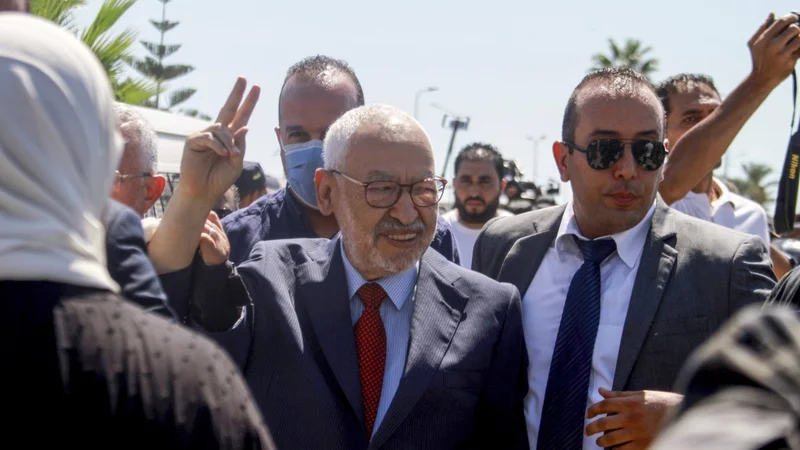
The family of Tunisia's jailed Ennahda leader and former Parliament Speaker Rached Ghannouchi said Monday they have not heard from him in nearly a week.
His daughter Soumaya Ghannouchi said in a video on X that lawyers had tried to visit her father at Mornaguia Prison, north of Tunis, over the past week.
"But they were told by prison authorities that Ghannouchi had been transferred to hospital," she added.
Soumaya said her mother and defense lawyers went to the hospital to see him but were not allowed access.
"The family has not received any information about his health condition," she added.
She said the family received information from lawyers that Ghannouchi had fainted during a prison visit due to extreme heat and exhaustion.
Soumaya said temperatures at Mornaguia Prison exceeded 50 degrees Celsius (122 degrees Fahrenheit), adding that her 85-year-old father, who suffers from Parkinson's disease and thyroid problems, was being held in a ward without air conditioning despite needing special medical care.
"Where is my father? Where have you hidden him? What have you done to him in the hospital?" she said, calling for his family and lawyers to be allowed access to his medical file.
She also criticized Tunisian President Kais Saied and relevant authorities, saying they would bear responsibility for any harm that may happen to Ghannouchi.
There was no comment from Tunisian authorities on the statement as of 10:45 a.m. GMT.
Ghannouchi's health has been the subject of renewed debate in Tunisia in recent days.
On Thursday, Ennahda Movement expressed concern over what it described as a "serious deterioration" in Ghannouchi's health after he suffered fainting and severe exhaustion a week earlier in prison.
Ghannouchi has been held since April 2023 and is currently serving multiple prison sentences in separate cases.
Tunisian authorities say Ghannouchi and other defendants are being prosecuted on criminal charges related to state security and deny any political interference in judicial proceedings.
Critics and opposition figures, however, argue the cases are part of a wider campaign targeting opponents of the Tunisian president.