Despite killing at least 221 people in dozens of U.S. airstrikes targeting alleged drug-trafficking boats in the eastern Pacific and Caribbean, Donald Trump’s administration has reportedly admitted that the attacks haven’t slowed the flow of cocaine into the U.S.
Instead, traffickers are relying on planes hopping across the interior of Central and South America, or using larger boats and sailing close to coastlines where U.S. forces are less likely to strike, according to The Washington Post, citing a previously unreported assessment from the Drug Enforcement Administration.
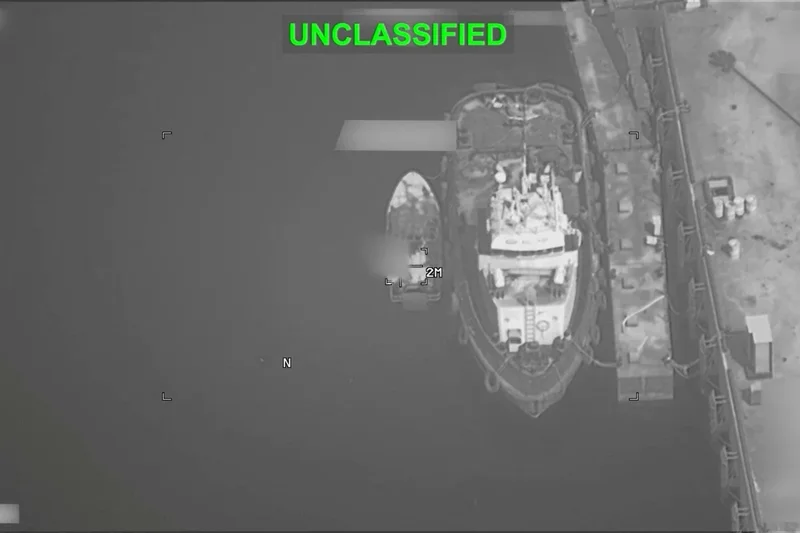
American military assets under Defense Secretary Pete Hegseth have struck at least 67 boats in international waters over the last year, killing at least 221 people on board. More than 20 people are missing or presumed dead, and there are only nine known survivors, according to The Independent’s analysis of the attacks.
The months-long attacks appear to have done little to combat the flow of illicit drugs into the country, raising questions about the effectiveness of an operation that law of war experts say amounts to extrajudicial killings and war crimes.
“When you squeeze the balloon on one side, it always expands on the other side,” one DEA official speaking on condition of anonymity told The Washington Post. “They always find the weak spots and exploit them.”
U.S. military forces and federal law enforcement are simultaneously intercepting suspected drug boats and recovering contraband, suggesting that the U.S. can deploy law enforcement to stop the flow of drugs into the country without killing everyone on board.
Top military officials — including the commander in charge of the campaign — also told members of Congress in recent hearings that the killings are not the only way to stop them.
It remains unclear whether the military will continue the attacks. The most recent strike was more than a month ago, on June 21, marking the longest break between attacks since the campaign started on September 2.
A spokesperson for the Department of Defense told The Washington Post that Operation Southern Spear accomplished “exactly what it was designed to do: detect, disrupt and dismantle designated terrorist organizations and the networks they rely on to traffic narcotics, generate illicit revenue, and threaten the security of the United States and the Western Hemisphere.”
“Transnational criminal organizations have continually adapted their tactics for decades,” chief Pentagon spokesperson Sean Parnell told the newspaper. “That does not indicate the pressure is ineffective. It demonstrates that we are imposing systemic friction on their operations.”
The Independent has requested comment from U.S. Southern Command and the DEA.
In a closed-door briefing with members of the Senate Armed Service committee last month, DEA officials reported that analysis of confiscated cocaine showed high levels of purity, according to The Post.
Cocaine, by far the most-exported drug from South America, “remains highly available, highly prevalent and relatively inexpensive,” Dr. Carl Latkin, a professor of public health at Johns Hopkins University, told The New York Times earlier this year.
The reports from Trump administration officials appear to contradict the president’s own public statements. He has repeatedly claimed that the attacks have stopped maritime drug trafficking into the country by 97 or 98 percent.
“98.2% of Drugs coming into the U.S. by Ocean or Sea have STOPPED!” Trump wrote on Truth Social in April.
The Trump administration insists that strikes against suspected traffickers are fully within legal bounds, supported by the administration’s notice to Congress that the U.S. is formally engaged in an “armed conflict” with drug cartels that the president has labeled “unlawful combatants.”
“They are murder under domestic law and extrajudicial killings under international human rights law,” according to a recent analysis from the Washington Office on Latin America, a nonprofit human rights research group.
“They are the result of the executive branch’s reckless use of the ‘terrorist’ label to enable employing the U.S. military to target civilians,” according to the report. “Their deaths come with no presentation of any evidence of wrongdoing, much less any due process for those being attacked.”
The strikes began last September when the military targeted a vessel off the coast of Venezuela, killing 11, including an alleged double-tap strike that killed two survivors.
The administration sought to link ousted Venezuelan leader Nicolas Maduro to the drug trade despite reports from intelligence agencies that have denied ties between the group and Maduro’s government.
Virtually all coca crops are inside Bolivia, Peru and Colombia, and the DEA under Trump did not mention Venezuela in a 2025 report on the state of cocaine trafficking.
Global cocaine production has reached an all-time high, according to a recent report from the U.N. Office on Drugs and Crime. Cocaine manufacturing quadrupled to 4,100 tons between 2014 to 2024, the agency’s 2026 World Drug Report found.
U.S. Customs and Border Protection and Coast Guard personnel are also intercepting larger quantities of drugs, which researchers say isn’t necessarily a sign that law enforcement agents are stopping the flow of illegal drugs. Those seizures are more likely representative of the volume of drugs moving into the U.S.
On just one boat in December, Coast Guard personnel found 3,715 pounds of cocaine worth an estimated $28 million, marking the largest bust by a small-boat Coast Guard station in 30 years, according to the agency.
That same Coast Guard outpost stopped vessels carrying 1,535 pounds of cocaine in May and 900 pounds on another vessel later that month.
Marine Gen. Francis L. Donovan, who is overseeing the strikes as head of U.S. Southern Command, also testified to the Senate Armed Forces Committee in March that the strikes are “probably not the most effective tool” and “aren’t the answer.”
“But putting total systemic friction from point of production to point of delivery,” the four-star Marine Corps officer told the panel, “I believe that actually kinetic strikes will be one of the many tools.”
According to the Washington Office on Latin America, the strikes are “more than just a counter-drug strategy gone awry.”
“They have grave implications for U.S. democracy, transparency, checks on executive power, and civil-military relations,” the group reported. “They are emblematic of an aggressive, militarized reset of U.S. relations with Latin America that could set back causes that human rights, democracy, environmental, and anti-corruption advocates have defended for over half a century.”