New US tariff worries PH firms
MANILA, Philippines — Philippine businesses are trying to identify which products may have been flagged in a United States investigation into forced-labor imports, which resulted in a higher 12.5-percent tariff on Philippine shipments instead of the previous 10 percent.
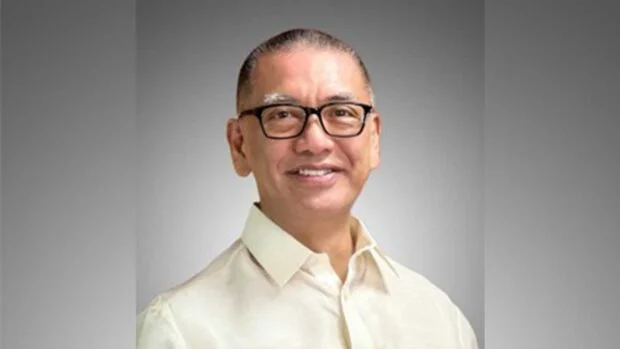
Philippine Chamber of Commerce and Industry (PCCI) president Ferdinand Ferrer said any additional tariff on Philippine products was “worrisome,” but stressed that the latest levy should be supported by evidence.
READ: US slaps Philippine exports with new 12.5% tariff
Article continues after this advertisement
In its official findings in June, the Office of the United States Trade Representative (USTR) said the “Philippines has failed to impose and effectively enforce a forced-labor import prohibition.”
While the country did not have an explicit ban on such imports, government agencies recently formed an interagency committee tasked with investigating the entry of products suspected of being made with forced labor.
“There’s a lot of vagueness,” Ferrer said on the sidelines of a Philippines-Turkey business-to-business meeting on Monday. “But definitely we will look at the remaining products where the suspected material is coming from forced labor.”
New raw material sources
Earlier, the Department of Trade and Industry said the additional tariff, which Washington imposed on 60 of its largest trading partners over forced-labor concerns, would affect Philippine products made by “labor-intensive” industries such as leather and travel goods, apparel, footwear and toys.
Overall, only 34.28 percent of Philippine exports to the United States—or $6.25 billion worth of goods—will be covered by the new tariff.
Article continues after this advertisement
Ferrer said industries subject to the higher duty would be placed “slightly at a disadvantage.”
Should evidence confirm the use of inputs linked to forced labor, he said affected manufacturers would be expected to diversify their sources.
Article continues after this advertisement
“We’re looking at alternative input material where we can say with surety that there is no forced labor,” he added.
While the higher tariff could weaken the competitiveness of some Philippine products, Ferrer noted that several neighboring economies could face even steeper US duties as they remain under a separate USTR investigation into structural excess capacity.
The Philippines was not included in that probe, which covers China, the European Union, Singapore, Switzerland, Norway, Indonesia, Malaysia, Cambodia, Thailand, South Korea, Vietnam, Taiwan, Bangladesh, Mexico, Japan and India.
Still, Ferrer said gaining an advantage because competing economies face higher tariffs would only leave global trade on an uneven footing.
“We do not want that type of advantage. We do not want that type of competition,” he added. “We should compete on our strength, our workmanship, our cost. Not because of tariffs and all that.” INQ