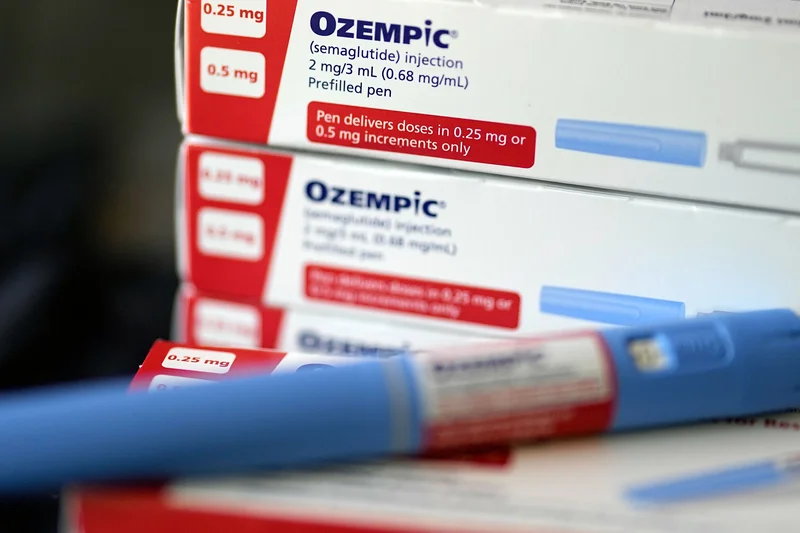
With the increase in the use of GLP-1 drugs like Ozempic, a Saskatoon group focused on body positivity says an email from a local doctor left them questioning how the medications are being promoted and prescribed.
It came in the form of a Facebook message that Cierra Giesbrecht, the founder of The Curvy Club, thought was a troll at first.
“At first, I thought it was a troll,” Giesbrecht told Global News. “I couldn’t believe that an actual health-care provider in our province would be so bold.”
That message was from Dr. Dennis Wardman, an addiction medicine physician who recently moved to Saskatoon.
Giesbrecht immediately responded, saying they weren’t interested, “like at all.”
Wardman confirmed in an email to Global News that he sent the message to the group.
He declined to do an interview, but said he became interested in weight-loss medicine due to its similar approach to addiction treatment — lifestyle change and the use of medication.
The doctor added that he respected the group’s decision to decline his offer.
The Curvy Club was founded by Giesbrecht almost five years ago and is described as a space for people “living in larger bodies to come together.” Community connection events are held in Saskatoon. She said the group gives people a place to talk about things they may not want to speak with family and friends about.
Get weekly health news
In person, it’s usually 10 to 15 people meeting at a single event, but more than 2,000 people are part of their Facebook group.
That goal of the group is why Giesbrecht said she was concerned Wardman had reached out to her about getting prescriptions for members. She said it assumes members of a body-positive group want the medication in the first place.
“We may not be interested, like myself, interested in drugs like this, but when we have that noise, obviously it weighs down on a person,” she said. “Like, is something wrong with my body? Maybe I should be looking at this. Maybe I am making a choice to live in a larger body when there is drugs like these available.”
GLP-1 agonists, such as Ozempic or Wegovy, work by triggering insulin release, blocking sugar production in your liver and making you feel full for longer by slowing the flow of food through the digestive system.
In the past several years, there has been an increase in the use of the drugs not only by people with diabetes, the primary market for the drugs, but also by those seeking to lose weight. The drugs are usually covered for Type 2 diabetes under public drug plans, but only a small number of private insurers cover the use of the drugs for weight management.
Pharmacist Kelly Kislyk said while the drugs have been shown to be effective for weight management, it’s still up to each individual patient.
“I think any time we’re making treatment decisions, it’s always best to consider the patient, what they prefer, their values, what they want,” she said. “I think that medications are a really important part of therapy, but they’re not the only part of therapy.”
In his emails to Global News, Wardman said he’s found some patients are not interested in weight-loss medication, while others prefer it, so he believes a patient-centred approach is required.
But Giesbrecht said she’s concerned about the negative impacts on the body that come with weight-loss drugs and believes it was insensitive for Wardman to reach out in the way he did.
Asked whether he might consider what he did insensitive, Wardman said he would not be commenting further.
The Curvy Club is considering whether it will make a formal complaint with the College of Physicians and Surgeons of Saskatchewan, Giesbrecht said.
The college, when asked for comment, said it does not speak to specific cases or doctors, but anyone concerned about inappropriate behaviour is asked to contact it so it can investigate further.
— with files from Global News’ Payton Zillich