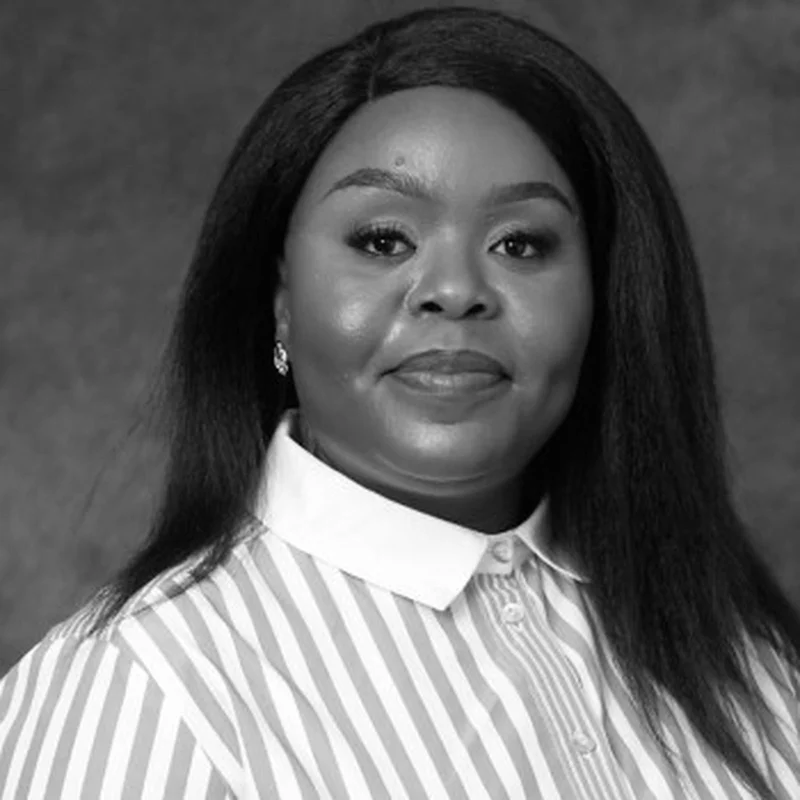
When the head of a constitutionally established prosecuting authority stands before a commission of inquiry and concedes that her office arrested a senior police official on factually incorrect allegations, the country should pause.
When that same head admits she did not know what qualifications the accused actually held before publicly branding her a âtoken appointmentâ, the pause should deepen.
And when the accused turns out to hold qualifications far exceeding the requirements of the position she occupied, the question ceases to be about one womanâs reputation. It becomes a question about the architecture of accountability itself.
Brigadier Dineo Mokweleâs ordeal is not simply a procedural misstep by the Investigating Directorate Against Corruption (Idac). It is a case study in what happens when prosecutorial power outruns the evidentiary discipline that is supposed to constrain it. Andrea Johnsonâs apology before the Madlanga Commission this week, however sincerely offered, lands on terrain that apologies alone cannot repair.
The anatomy of an unjustified prosecution
Consider what the record now shows. Mokwele was appointed in April 2024 to lead the Technical Support Services division of Crime Intelligence, a unit responsible for national covert operations. The threshold for such an appointment is not trivial. The position demands technical competence, security clearance and the institutional trust to handle sensitive operational infrastructure. She was arrested, alongside Crime Intelligence head Dumisani Khumalo and four others, on allegations that her qualifications had been misrepresented.
The Madlanga Commission has now established that those qualifications were not only legitimate but exceeded the requirements. Not a token appointment, but an over-qualified one. The prosecution proceeded on factually incorrect allegations, by Johnsonâs own concession. Johnson further admitted she did not know what qualifications Mokwele actually possessed, this after maintaining publicly that Mokwele did not meet the requirements for the role.
This is the crux. A prosecuting authority is not a commentator. When it speaks, it speaks with the coercive weight of the state. An arrest is not a tweet. It is a deprivation of liberty, a public branding and, in Mokweleâs case, a humiliation that played out in the Pretoria Magistratesâ Court and across the media. The apology that follows, however candid, cannot restore the time lost, the reputation corroded, or the operational disruption inflicted on a division responsible for covert capability.
When credentials become contested ground
There is something instructive in the way this case turned on qualifications. South Africa has a fraught relationship with credentialism. On one hand, the countryâs transformation imperatives have rightly expanded access to senior positions for black professionals who were historically excluded. On the other, that expansion has, in certain quarters, bred a reflexive suspicion â a default assumption that a black appointee, particularly a black woman, must be a token rather than a merit selection.
Mokweleâs case lays that reflex bare. She held several qualifications. The position required fewer. And yet the head of Idac, without verifying the factual basis, characterised her as a token appointment before the public and the courts. Mokweleâs lawyers are right to describe this as carrying âobvious pejorative implicationsâ. It is more than that. It is an epistemic failure. A refusal to do the basic work of establishing what is true before asserting what is contested.
Academic rigour demands that claims be substantiated before they are asserted. Prosecutorial rigour demands the same, with higher stakes. When a prosecuting authority treats unverified assumption as fact, it does not merely wrong the individual. It degrades the institutionâs epistemic authority, its claim to be acting on evidence rather than prejudice. Johnsonâs concession that she âdid not know what qualifications Mokwele actually possessedâ is, in this light, not a minor gap. It is the entire foundation missing.
What does an apology repair?
Johnson apologised. That should be acknowledged. In a culture where public officials rarely concede error, a direct apology before a commission of inquiry is not nothing. But the question Mokwele is now asking, through her formal complaint to Idacâs oversight and ombud officer, Judge Takalani Raulinga, is whether an apology is the appropriate instrument for what occurred.
If the conduct amounted to maladministration, misconduct, or an abuse of prosecutorial power, then the remedy is not contrition. It is accountability. An apology addresses the personal dimension: the hurt, the humiliation, the reputational damage. It does not address the systemic dimension. The question is whether Idacâs internal controls failed, whether the decision to prosecute was subjected to adequate evidentiary scrutiny, and whether the public characterisation of an accused as a âtoken appointmentâ reflects a pattern rather than a lapse.
The Madlanga Commissionâs role is to inquire into Idacâs conduct broadly. Judge Raulingaâs role, should he accept the complaint, is to determine whether Johnsonâs specific conduct crossed a line. These are separate processes, and both are necessary. An apology cannot substitute for either.
Who watches the watchers?
There is a deeper issue that the Mokwele case surfaces, and it is not unique to Idac. South Africa has invested heavily in independent prosecuting institutions precisely because the criminal justice system has, at moments in its history, been weaponised. The creation of Idac was a response to that history. But independence without rigorous internal accountability is not a safeguard. It is simply a concentration of power in different hands.
The test of an independent institution is not only whether it can act without fear or favour. It is also whether it can be held to account when it acts without evidence. If Idac cannot demonstrate that its decision to prosecute Mokwele was grounded in verified fact, the institutionâs credibility suffers a wound that no apology from its head can heal. The publicâs confidence in the prosecuting authority rests on the belief that charges are laid on the basis of evidence, not assumption. Once that belief is shaken, every future prosecution carries the question: was this one verified?
Where the academic lesson lands
Universities and qualification authorities spend considerable resources ensuring that credentials are verifiable, that qualifications are benchmarked against position requirements, and that the integrity of the qualificationâs framework is defensible. When a prosecuting authority proceeds as if those credentials are worthless, or worse, as if they do not exist, it undermines not only the individual but the system of credentialing that the country relies on to make defensible appointments.
If Mokweleâs qualifications had been deficient, the proper response was a verification process conducted before arrest, not a prosecution launched on conjecture. They were not deficient. They exceeded the requirement. The verification that should have preceded the prosecution would have taken days, not months, and would have spared an official, a division, and an institution the damage that has now been done.
So, is sorry enough?
No. An apology is a beginning, not an end. It acknowledges harm, and that matters. But the harm in this case was not a slip of the tongue or a misjudged phrase. It was an arrest on factually incorrect allegations, a public branding as a token appointment, and a prosecution that proceeded without the head of the prosecuting authority knowing what qualifications the accused held. These are not failures of courtesy. They are failures of process.
Mokwele has asked the right question: did this conduct amount to maladministration, misconduct, or an abuse of power? That question deserves an answer, and the answer must come from a process, not from an apology. The credibility of Idac, the integrity of the prosecutorial function, and the protection of every future accused against prosecution on unverified assumption depend on it.
Sorry is the floor. Accountability is the standard. The country should settle for nothing less. DM