Thieves are chopping off public electric vehicle chargers to steal the copper – and getting caught.
As scrap metal prices have soared, copper theft has too, and the criminals are moving beyond their traditional targets of rail infrastructure, telecommunications and building sites.
“EV chargers are the new frontier in an old crime,” said Geoff Brady, chief operating officer at Evie Networks.
In Victoria, there were 2592 incidents of copper and other scrap metal theft in 2025, up from 998 in 2016, the state’s Crime Statistics Agency said. In NSW there were 879 incidents specifically of copper theft, up from 612 in 2019, according to the NSW Bureau of Crime Statistics and Research.
Brady said copper thieves were increasingly getting caught because of security measures such as cameras and cooperation between competitors to crack down on vandalism.
“Cable theft and vandalism is affecting every operator, and we’re no different,” Brady said. “At Evie, we’ve moved from reactive replacement of vandalised cables to layered prevention, and we’re working as an industry to move in that direction together.”
At sites identified as vulnerable, Brady said, the company improved lighting and camera coverage, introduced protective cable sleeves and on-site security.
Electric charging companies were sharing information on sites that have been hit, camera footage of incidents and police case incident numbers, he said. As a result, the criminals were often getting caught.
Earlier this month NSW Police arrested a man in the Newcastle area and charged him with 10 counts of stealing and 11 counts of destroying or damaging property, as well as drug and driving offences. He was alleged to have damaged EV charging stations in the Newcastle-Hunter region and Central Coast in June, from as far north as Raymond Terrace to Gosford and Erina in the south.
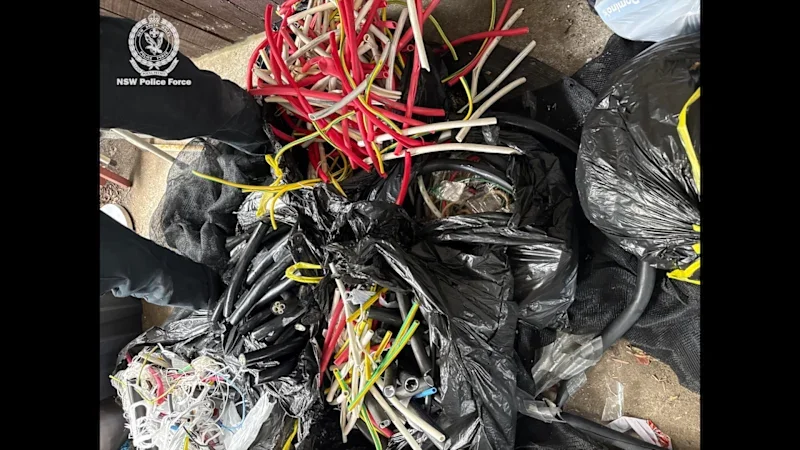
Police allegedly located and seized 17 EV charging handles (plugs), cutting tools, a taser and several large bags of stripped cables.
The price of copper on the London Metal Exchange was $US13,732.50 a tonne on Tuesday, or $US13.73 ($19.62) a kilogram. Brady said a typical DC charger cable would contain two to four kilos of copper, meaning it was not a terribly lucrative crime.
“The outcome in Raymond Terrace is great because it shows that this is a simple crime – they’re after a little bit of copper – and it’s just not worth it,” Brady said.
“The customer experience is the casualty in all of this because the copper value is small, but the impact is that people can’t charge when they need to charge because the site is offline for a period of time.”
Brady said Evie Networks had also experienced spates of copper theft in western Melbourne and Toowoomba in Queensland, which led to successful arrests.
Some public EV chargers, such as the EVX units on power poles, do not have a DC charging cable attached, but rely on the driver to bring an AC charger with them.