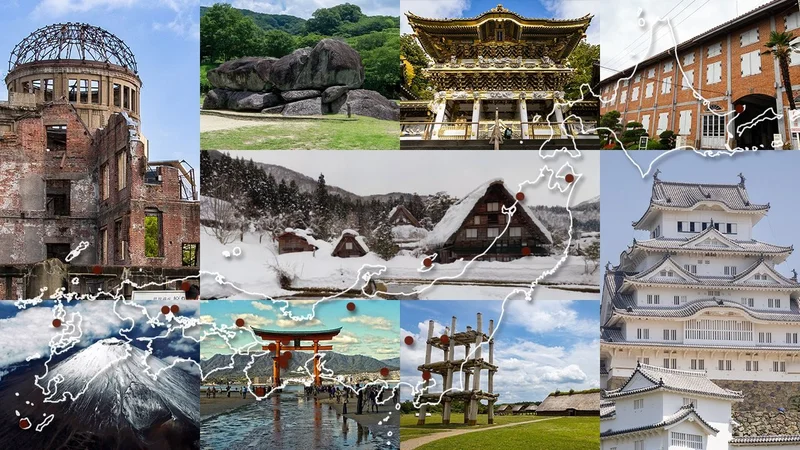
World Heritage Sites in Japan
Society Culture Guide to Japan TravelThe World Heritage Convention, adopted at the 1972 General Conference of UNESCO, called for a list to be created of natural and cultural sites of “outstanding universal value.”
In December 1993, Japan’s first World Cultural Heritage sites were registered: the Buddhist Monuments in the Hōryūji Temple Area (Nara Prefecture) and Himeji-jō (Hyōgo Prefecture). The addition of the Ancient Capitals of Asuka and Fujiwara (Nara Prefecture) in 2026 means it now has 22 cultural and 5 natural heritage sites for a total of 27 World Heritage sites.
UNESCO World Heritage Sites in Japan
Sites are for cultural heritage, unless otherwise stated.
- Buddhist Monuments in the Hōryūji Temple Area (Nara): December 1993
- Himeji-jō (Hyōgo): December 1993
- Yakushima (Kagoshima): December 1993 (natural heritage)
- Shirakami-Sanchi (Aomori and Akita): December 1993 (natural heritage)
- Historic Monuments of Ancient Kyoto (Kyoto and Shiga): December 1994
- Historic Villages of Shirakawa-gō and Gokayama (Gifu and Toyama): (December 1995)
- Hiroshima Peace Memorial (Genbaku Dome) (Hiroshima): December 1996
- Itsukushima Shintō Shrine (Hiroshima): December 1996
- Historic Monuments of Ancient Nara (Nara): December 1998
- Shrines and Temples of Nikkō (Tochigi): December 1999
- Gusuku Sites and Related Properties of the Kingdom of Ryūkyū (Okinawa): December 2000
- Sacred Sites and Pilgrimage Routes in the Kii Mountain Range (Nara, Wakayama, and Mie): July2004
- Shiretoko (Hokkaidō): July 2005 (natural heritage)
- Iwami Ginzan Silver Mine and its Cultural Landscape (Shimane): June 2007
- Hiraizumi—Temples, Gardens and Archaeological Sites Representing the Buddhist Pure Land (Iwate): June 2011
- Ogasawara Islands (Tokyo): June 2011 (natural heritage)
- Fujisan—Sacred Place and Source of Artistic Inspiration (Yamanashi and Shizuoka): June 2013
- Tomioka Silk Mill and Related Sites (Gunma): June 2014
- Sites of Japan’s Meiji Industrial Revolution: Iron and Steel, Shipbuilding and Coal Mining (Fukuoka, Saga, Nagasaki, Kumamoto, Kagoshima, Yamaguchi, Iwate, and Shizuoka): July 2015
- The Architectural Work of Le Corbusier, an Outstanding Contribution to the Modern Movement (National Museum of Western Art; Tokyo): July 2016
- Sacred Island of Okinoshima and Associated Sites in the Munakata Region (Fukuoka): July 2017
- Hidden Christian Sites in the Nagasaki Region (Nagasaki and Kumamoto): June 2018
- Mozu-Furuichi Kofun Group: Mounded Tombs of Ancient Japan (Osaka): July 2019
- Amami-Ōshima Island, Tokunoshima Island, Northern Part of Okinawa Island, and Iriomote Island (Kagoshima and Okinawa): July 2021 (natural heritage)
- Jōmon Prehistoric Sites in Northern Japan (Hokkaidō, Aomori, Iwate, and Akita): July 2021
- Sado Island Gold Mines (Niigata): July 2024
- The Ancient Capitals of Asuka and Fujiwara: July 2026
(Originally published in Japanese. Banner photo © Nippon.com.)