In the often shady and absurd world of Sydney politics, the Independent Commission Against Corruption is the ultimate spectator sport. The watchdog’s intense public hearings can ruin careers overnight or, in the case of a small group of lawyers, make them.
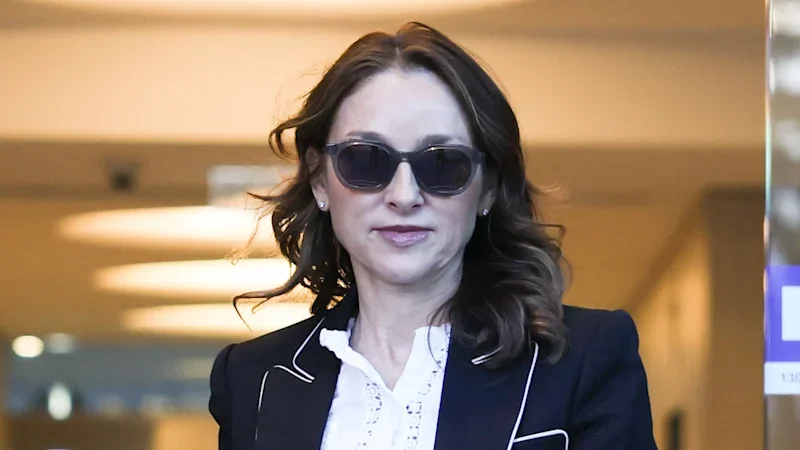
Exhibit A: Dr Peggy Dwyer SC, the counsel assisting ICAC in its blockbuster Operation Rosny inquiry. The probe, which will spend the next eight weeks exploring links between the NSW Liberal Party, dodgy developer Jean Nassif and others, commenced on Monday after four years of forensic behind-the-scenes investigative work.
The diminutive Dwyer, who has played a significant role in several cases of national interest over the past decade, gathered a legion of new fans as she spent three hours delivering a near-flawless 20,533-word opening statement. One WhatsApp chat for a group of Macquarie Street MPs watching the livestream included the not-so-subtle observation: “Wow. She’s f---ing great.”
Someone who realised Dwyer’s potential long before this week is former High Court judge Michael Kirby, for whom she worked as an associate in 1995 and 1996.
“She came across in her interview as someone who was not to be messed with,” Kirby recalls. “She wasn’t really in the normal mould of associates. All of them were top graduates, but most were very studious, quiet and retiring. Peggy was the life of the party.”
Dwyer was “cut from the same cloth” as another associate, the now Governor-General Sam Mostyn. “Both were idealistic, very energetic, hard-working, and never afraid to express their views,” Kirby says with a laugh.
The ICAC has a strange habit of creating unlikely stars out of little-known figures. Probes into disgraced Labor ministers Eddie Obeid and Ian Macdonald made Geoffrey Watson a nationally recognised corruption-buster. Privately he loathed the “Hollywood” nickname he had been given at the time due to his dramatic habit of having a witness deny something, only for an incriminating tape to then be played. Even the mild-mannered barrister Scott Robertson was the source of endless fascination for a COVID-fatigued city as he grilled former premier Gladys Berejiklian in the witness box throughout 2021.
Cool, calm and collected, Dwyer’s opening words at Operation Rosny – “money in politics, as in other spheres of life, has the potential to corrupt” – was a statement of the obvious, but the delivery packed a punch and served as a reminder that a clean democracy cannot be taken for granted.
Dwyer may not like it, but her work at the ICAC over the coming months means she is likely to become a household name in parts of Sydney. Kirby suspects she would not crave any sort of cult status.
“I think she would regard that with a degree of contempt,” he says. “She is not in this for the money. She’s not in it for fame. She is in this work for the cause of justice, and that’s a special combination.”
Those who have worked with her paint a picture of a woman on the rise through hard work, fierce intelligence and a commitment to interests outside or adjacent to the law.
After graduating from the Australian National University in 1995 with a double degree in arts and law, Dwyer was admitted as a legal practitioner in 1998, became a barrister in 2010, and was appointed senior counsel in 2023. She completed a PhD at the University of Edinburgh on drug trafficking, with a focus on the regulation of synthetic drugs and the chemicals used in them.
She does not arrive at the ICAC a complete unknown; Dwyer has appeared as counsel assisting at Julia Gillard’s royal commission into child sex abuse, counsel in the royal commission into the protection and detention of children in the Northern Territory, and senior counsel assisting in the inquest into the Westfield Bondi Junction stabbing spree. She is currently representing the Jewish Council of Australia – a strident critic of Israel – at the Bondi terror attack royal commission.
Dwyer was also part of the legal team representing the distraught family of slain Lindt cafe manager Tori Johnson at the coronial inquest into the 2014 siege. Jeremy Gormly, the counsel assisting the coroner during that inquest, says he “only has good things to say about her”.
“She’s got that capacity for clarity, which any good counsel has to have,” he observes. “She has a real intellectual thump behind her. But she also has a natural gift – that she shone in so many other cases she has done since – of forming a good rapport with her clients.”
Dwyer has spent many years working in Indigenous justice, including as the managing criminal lawyer for the North Australian Aboriginal Justice Agency and as a solicitor for the Aboriginal Legal Service in Redfern. She is also a board member of Legal Aid NSW, and former chair and current board member of the Waterloo-based Weave Youth & Community Services.
One person familiar with her work in the Indigenous justice space said Dwyer’s contribution deserved more public interest before this week’s high-profile ICAC appearance.
“A few people like to be associated with us because it looks good on a CV. Peggy is not that type of person. She genuinely believes in what we do. You can see the passion for it in how she speaks and thinks and deals with people. She uses her brain and her heart at the same time.”
Kirby believes the time Dwyer spent in the Northern Territory would have come at a financial cost, but says she would not have cared. “She wanted to do something to repair the great wrongs that had been done in our legal system to First Nations people,” he says. “The fact she went up to Darwin for years was a real instance of her dedication to a cause greater than herself.”
Not everyone’s a fan. Dwyer was counsel assisting the coroner during a heated inquest into the death of 19-year-old Kumanjayi Walker, who was shot dead in the Northern Territory town of Yuendumu by police officer Zachary Rolfe in 2019.
Objecting to the way in which Dwyer was asking questions, Rolfe’s lawyer Michael Abbott KC moaned to the inquest: “I object to the accusatory tone of this cross-examination. My learned friend is counsel assisting, not counsel for the prosecution.”
Dwyer shot back: “I absolutely object to the suggestion and it misunderstands the question. But it’s 2024, there are lady barristers! My learned friend is going to have to get used to that.” A transcript of the exchange was widely shared among senior women in the legal fraternity, who loved Dwyer’s response.
John Macgowan, a former senior adviser in the Baird and Berejiklian governments, is also sceptical of Dwyer, claiming on Monday that ICAC had descended into “Girlboss McCarthyism”.
“They might as well just outlaw rock choppers [slang for Catholics] and get it over with,” he wrote on social media platform X. He argued the hearings were part of a decades-long persecution of Christian conservatives by the “effete Sydney media and legal establishments”.
Macgowan was a witness at the ICAC the last time it examined Liberal Party donations in 2014, but was not accused of any wrongdoing. He is also a one-time confidant of Bruce Lehrmann, who was found in a civil court to have raped former Liberal Party staffer Brittany Higgins.
Anticipating potential criticism of the ICAC’s powers and procedures, Dwyer on Monday deliberately sought to explain how the watchdog goes about its work.
“The work of ICAC is free, and must be perceived to be free, of any political interests or allegiance,” she told the hearing. “Since it commenced operations in 1989, the work of this commission has investigated persons of all political persuasions and various public officials with no political interests at all. The commission has no agenda other than to uncover the truth.”
She also warned the ICAC had obtained a wealth of material via documents and interviews, and if a person gives false or misleading evidence, there was a good chance the commission will know about it.
Watson says the role of counsel assisting is intense. “One of the most challenging aspects is organising how about you go the questioning,” he said. “People are going to get into that witness box and lie through their teeth, and you’ve got to have command over material in sufficient detail so that you can contradict them. That’s really, really hard.”
Counsels assisting are not directly employed by the ICAC but are instructed to act on its behalf. Watson says the pay sometimes is not commensurate with more lucrative commercial work. “I’m not a greedy person, so that never really influenced me. But it is a factor for some people,” he says.
Dwyer will be backed up during the Operation Rosny hearings by Juliet Curtin and Hugo Wilesmith.
Kirby will be watching along: “I am very, very proud she was my associate.”
More: