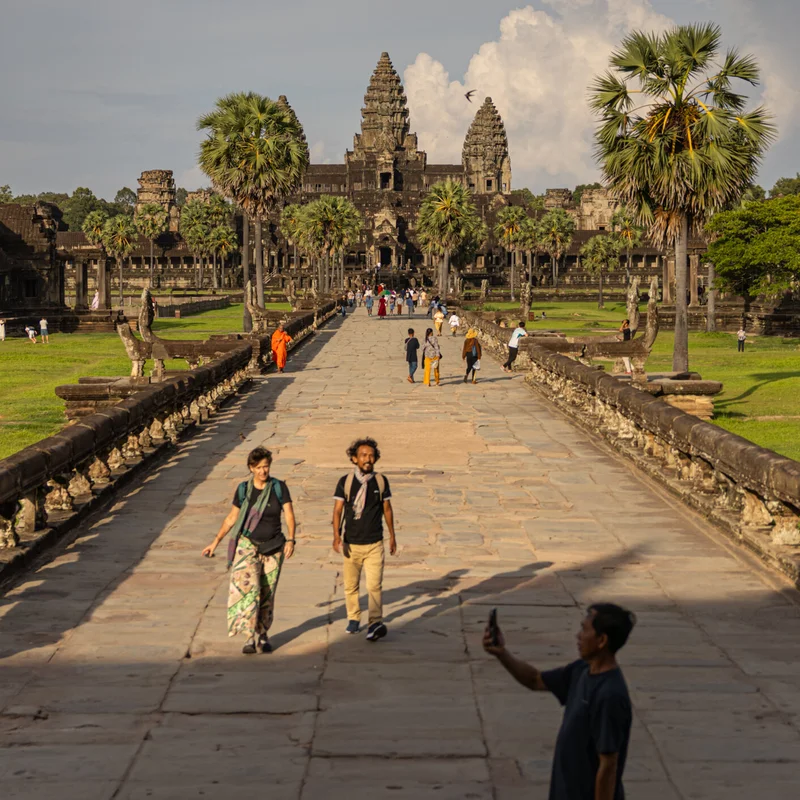
Tuk-tuk driver Khon Mony normally shuttles at least four groups of tourists to the ancient stone spires of Angkor Wat in Cambodia each week. But in all of May, he did not get a single customer.
He blames the war raging more than 3,000 miles away in the Middle East.
Since the United States and Israel attacked Iran in late February, airfares have soared — doubled on some routes — and the fighting has repeatedly disrupted flights at the commercial aviation hubs of Dubai and Doha.
While the tourism industries of Cambodia, Indonesia and Thailand have largely been resilient because of regional travel, some towns and cities that rely on European travelers have suffered. Many European tourists have canceled trips to these hot spots in favor of holidays closer to home in recent months, travel industry officials said.
This has imposed immense financial difficulties on Mr. Khon, 30. Each time he prepared his 7-month-old baby’s formula, he said, he used one scoop of powdered milk instead of the recommended two and a half, so he could stretch a can from 10 days to three weeks.
“I worry that my daughter is not healthy because I cannot give her enough milk like before,” said Mr. Khon, as he looked out across a quiet street in Siem Reap, a major tourism hub in Cambodia.
The fallout from the war is the most jarring disruption to Southeast Asia’s vital tourism industry since the Covid pandemic, according to travel industry officials.
In Cambodia, international arrivals in the first three months of this year declined by 45 percent compared with the same period last year, tourism officials said. Mr. Khon said that he used to earn an average of about 82,000 Cambodian riel, or $20, a day ferrying visitors. That has now dropped to less than $5 a day.
Businesses at Siem Reap Angkor International Airport have slashed work hours. Lam Lan, 25, a cook at an airport restaurant, said his shifts had been cut from 30 days a month to around 20 since March. His monthly earnings dropped from $250 to less than $150.