Mexico Mining Blocked: US$11 Billion Stalled by Permits
Mexico · Business
Mexico mining blocked by regulatory uncertainty has left roughly US$11 billion in investment in limbo, as foreign operators wait for the government to clear a backlog of environmental and water permits. While President Claudia Sheinbaum’s administration has moved to resolve hundreds of stalled cases, dozens of projects remain frozen, and a continuing moratorium on new concessions is depressing future spending.
Mexico mining blocked: A Backlog Slowly Clearing
The scale of the paralysis became clear when federal authorities acknowledged inheriting 176 paralyzed mining projects. By early 2026, officials reported that 110 of those had been resolved, leaving 66 still pending.
The bottleneck was primarily tied to environmental impact reviews and water permits, two areas subjected to much tighter scrutiny under the current government. The permitting gridlock created a multi-billion-dollar drag on an industry that is a cornerstone of Mexico’s export economy.
For international investors, the slow pace of resolution has been a major red flag. Even as permits trickle out, the uncertainty over timing continues to complicate capital allocation decisions for publicly traded companies based in Canada, the United States, and Australia.
The US$1.2 Billion Concession Freeze
Beyond the stalled project pipeline, the mining sector faces a structural headwind: no new concessions are being granted. The Mexican Mining Chamber (CAMIMEX) has warned that this policy is causing a sharp contraction in exploration spending.
Industry reports citing CAMIMEX data project a US$1.2 billion decline in annual mining investment directly linked to the absence of new concessions. Without fresh ground to explore, companies are unable to replenish their project pipelines, threatening the long-term production profile of Mexico’s silver, gold, and copper districts.
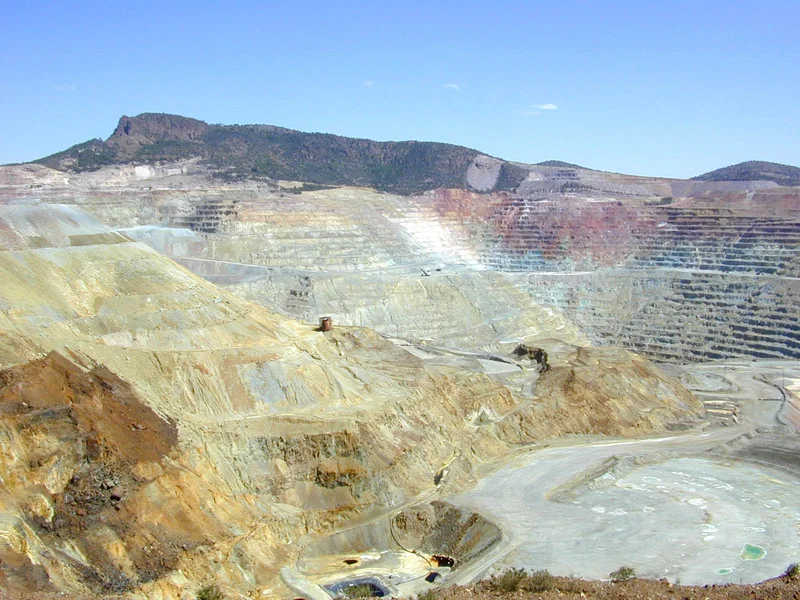
President Sheinbaum has publicly stated her administration will not approve new mining concessions, a position that maintains a hard break from previous governments. The policy is compounded by an ongoing national debate over a potential ban on open-pit mining, a method used by most large-scale foreign operators.
Projects Moving Forward
Despite the headwinds, some major developments are finally advancing. The San Nicolás project in Zacatecas, a US$1.1 billion joint venture between Canadian giants Agnico Eagle and Teck Resources, is among the high-profile assets navigating the new regulatory landscape.
Orla Mining received clearance to extend the mine life at its Camino Rojo operation by 20 years, a significant vote of confidence in the permitting process. Silver Tiger Metals also resolved its delays and scheduled construction at the El Tigre project for 2026.
These approvals suggest a pragmatic willingness within the government to support existing operations and advanced-stage projects. However, the greenlighting of brownfield expansions and near-term construction does not resolve the crisis for companies seeking grassroots exploration opportunities.
Geographic Concentration of Activity
The benefits of permit normalization are not evenly spread across the country. Reporting identifies four states as the primary beneficiaries: Zacatecas, Sonora, Chihuahua, and Durango. These regions have long histories of large-scale precious and base metals production.
Zacatecas, home to the San Nicolás joint venture, is one of the world’s great silver districts. Sonora, a copper and gold powerhouse, hosts numerous large open-pit complexes operated by foreign firms. Chihuahua and Durango form part of the prolific Sierra Madre Occidental belt.
For expat investors and foreign service providers, this geographic concentration simplifies due diligence. The state-level governments in these regions are generally more aligned with mining development, creating pockets of operational predictability even as federal policy remains restrictive.
Investor Sentiment and Legal Risk
The investment climate is further chilled by a wave of international arbitration claims. Foreign miners have filed an estimated US$1.5 billion in claims against Mexico under legacy trade agreements, challenging policy changes they argue violate investment protections.
The combination of permit paralysis, a concession moratorium, and active litigation creates a complex risk matrix. Legal experts at international firms are advising clients to structure investments through entities with robust treaty protection, a costly but increasingly necessary layer of corporate planning.
For the broader expatriate and investor community in Latin America, Mexico’s mining standoff is a case study in how regulatory uncertainty can freeze capital even when commodity prices and geological potential remain strong. The US$11 billion figure represents not just delayed production, but lost employment, supply chain contracts, and tax revenue.
The Road Ahead
The Sheinbaum administration is attempting to balance its nationalist resource agenda with the practical need for foreign direct investment. Clearing the backlog of 176 projects was a necessary first step, but the 66 unresolved cases show the process remains slow.
Industry observers note that the government’s “Plan México” economic strategy acknowledges mining’s role as a silent pillar of the economy. Yet without a clear signal on future concession rounds or a resolution to the open-pit debate, the structural investment decline tracked by CAMIMEX is likely to continue.
For now, the US$11 billion pipeline is a mixed picture: billions are finally moving, but billions more remain blocked. The international mining community is watching whether Mexico will choose to unlock its full geological potential or keep a significant portion of its mineral wealth stranded by red tape.
Frequently Asked Questions
Why is US$11 billion in Mexico mining blocked?
The investment is stalled primarily due to a backlog of environmental and water permits. The government inherited 176 paralyzed projects, and while 110 have been resolved, 66 were still pending by early 2026.
Is Mexico granting new mining concessions?
No. President Claudia Sheinbaum has stated her administration will not approve new mining concessions. CAMIMEX projects this policy is causing a US$1.2 billion annual decline in mining investment.
Which Mexican states are seeing mining permits approved?
The main beneficiaries of permit normalization are the states of Zacatecas, Sonora, Chihuahua, and Durango. These regions host major projects from foreign companies like Agnico Eagle, Teck Resources, and Orla Mining.