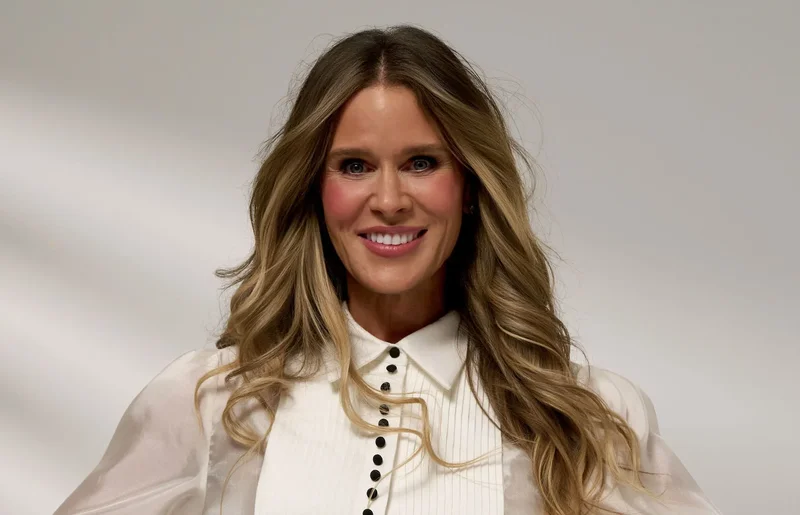
McCall McPherson was 27, practicing medicine, and on the drug nearly 90% of thyroid patients in the U.S. rely on, when she found herself spending 16 hours a day in bed.
She’d go to work as a physician assistant, come home at 3:30 p.m., and lie flat on her back through the evening. Weekends were the same. She’d gained weight, was losing hair, felt depressed, and couldn’t think clearly.
“Literally, I did not get out of bed,” McPherson told Fortune. “My life was a constant chase of, well, I have to rest enough to recover for the day and rest enough to prepare for tomorrow.”
So she did all she knew to do: go back to her doctor and ask to adjust her medication. He ran a single lab, told her the thyroid was fine, and suggested she eat less and exercise more. As she recalled, he actually wanted to reduce her dose, and handed her a cholesterol prescription for a problem her thyroid was quietly creating.
“I cried in the car on the way home and thought: ‘If he takes anything else away from me, I will not be a functioning member of society,’” McPherson said.
That drive home from the doctor’s office became the origin story for Modern Thyroid Clinic, the Bee Cave, Texas-based telehealth practice McPherson, a physician assistant, founded and now runs as CEO. It started as a super small operation in which McPherson was the clinician, the scheduler, and the medical assistant, and she paid a single phone answerer $2 per call.
McPherson now employs close to 40 people, operates in 48 states, and expects her company to bring in lower-mid eight figures in revenue this year. And McPherson achieved that as a self-funded company. Until a few months ago, she had never spent a dollar on marketing. Modern Thyroid Clinic also landed on the Inc. 5000 in both 2025 and 2026, and McPherson made Inc.’s Female Founders 500 list in 2025.
Much of this success hinges on the prevalence of thyroid conditions, especially in women. The American Thyroid Association estimates 20 million Americans have some form of thyroid disease, with one woman in eight developing a thyroid disorder during her lifetime. Women are also five to eight times more likely than men to be diagnosed with a thyroid condition, according to ATA.
To be sure, McPherson’s approach to thyroid treatment sits outside conventional endocrinology. She built the practice on the argument that standard thyroid care (essentially one drug, one lab value) misses most of the picture, and women are the ones who pay for it. Research she cites, and her own experience, point to a system that catches the “true picture” of a woman’s thyroid function less than 4% of the time. The ATA estimates up to 60% of people with thyroid disease don’t know they have it, but McPherson thinks the real figure is closer to 80% or 90%.
Modern Thyroid Clinic’s approach to treatment
McPherson’s own recovery came only after months on a waitlist to see what she called a more progressive physician who ran more labs and prescribed active thyroid hormone. She got her life back “pretty quickly,” she said, and that doctor became a mentor to her.
“I started devouring anything and everything I could from a research standpoint on [the] thyroid, and began to incorporate those practices into my practice,” she said, adding that at the time she practiced integrative and functional psychiatry. She started running into more people with treatment-resistant depression that ended up being due to a thyroid condition, so new treatments, as she had gotten, were able to “change their life,” she said.
Praise from those first patients spread across thyroid advocacy platforms, and soon McPherson became dedicated to thyroid treatment.
“Before I knew it, in my psychiatry practice, like 90% of my new patients were coming to me for a thyroid condition, despite me never having marketed myself to do that,” McPherson said, adding her first official patient flew in from out of state to see her.
“At that moment, I realized I’m not doing the right thing,” she said. “This is my calling.”
The practice is built on the idea that most thyroid patients are handed one drug—levothyroxine, a synthetic version of the inactive T4 hormone—and left there, when many can’t efficiently convert it into the active T3 hormone their bodies actually use. Modern Thyroid Clinic runs a fuller lab panel than a typical primary-care visit and prescribes active thyroid hormone rather than T4 alone. They also treat the autoimmune disease Hashimoto’s, which is the driver of most hypothyroidism, as something that can be managed down rather than simply monitored.
What’s also unique about McPherson’s practice is she hires only women who also have thyroid conditions themselves. Her theory is patients will feel more comfortable with practitioners who have experienced the condition themselves and who have been dismissed elsewhere. They need to feel believed, she argued, because by the time they arrive, most have already seen anywhere from two to 12 providers.
McPherson has also written a book about her approach to thyroid care, called Take Back Your Thyroid, which will be released by Penguin Random House in February 2027. McPherson said she continues to have eyes on expansion, but her larger ambition is to make her own clinic unnecessary.
“Thyroid is the orphan child. It’s just left out in the cold,” she said. “My hope is that what we do will become the standard of care.”
The Fortune 500 Innovation Forumwill convene Fortune 500 executives, U.S. policy officials, top founders, and thought leaders to help define what’s next for the American economy,
Nov. 16-17 in Detroit. Apply here.