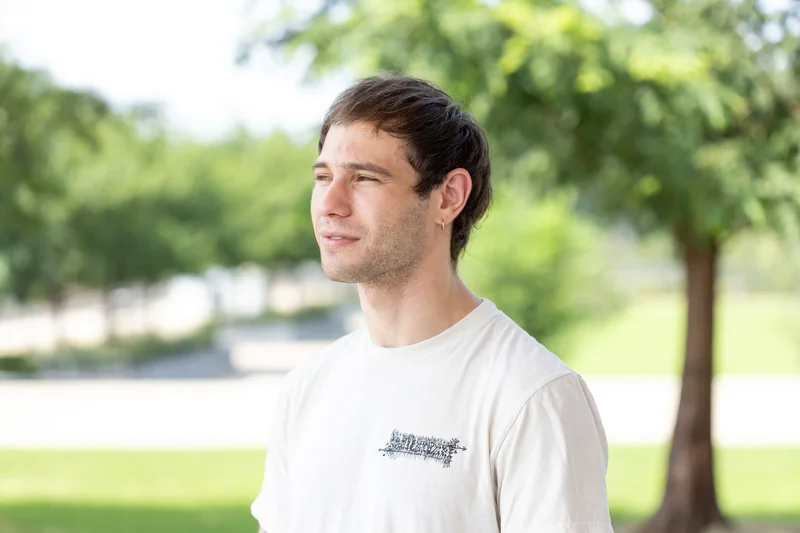
Before he even got to the airport, Sam Tunick already knew the authorities were watching him. The Atlanta activist had found out that police had apparently set up a hidden camera outside a house they believed was his home. He wasn’t alone in this — other protesters who, like him, had demonstrated against the construction of a police training center had also faced criminal charges, charges that their lawyers say looked less like genuine law enforcement and more like an attempt to silence them.
That is why, according to his attorney, Matthew Dodge, Tunick installed GrapheneOS on his cellphone. The operating system includes a feature that allows users to enter a code that instantly wipes the device. Tunick used that feature when federal agents questioned him at the airport. He now faces a charge for destroying what prosecutors say was evidence relevant to an ongoing investigation.
According to the prosecutors’ account, when a federal agent entered the password that Tunick had provided him, “the screen went blank, flashed several times and the phone appeared to restart,” court documents state. That episode served as the basis for a federal grand jury to indict him on a criminal charge in November 2025. The Northern District of Georgia contends that the activist “did knowingly destroy, damage, waste, dispose of, and otherwise take any action to delete the digital contents of a Google Pixel cellular phone, for the purpose of preventing and impairing the Government’s lawful authority.”
Experts say this is the first criminal case in the United States related to GrapheneOS, an operating system designed to strengthen user privacy and security. Its main functions include minimizing data collection, adding extra layers of protection against cyberattacks and making unauthorized access and tracking more difficult.
Tunick’s lawyers, from the Federal Defender Program in Atlanta, have asked a judge to dismiss the case, arguing that the activist was unlawfully detained at the airport and that any evidence obtained as a result of that detention, including the now-empty cellphone, should be excluded. The Justice Department, meanwhile, maintains that the agents acted lawfully and is seeking to bring the activist to trial, where he could face a prison sentence.
“In recent years the government here in Atlanta has focused on those protesting what is known as Cop City, and it has brought criminal charges against dozens of people,” attorney Matthew Dodge said in a telephone interview with EL PAÍS. “None of those charges has resulted in a conviction.”
Dodge was referring to the environmental movement Defend the Atlanta Forest, which has opposed the construction of an 85-acre, $115 million police training center. “A few years ago the government decided to target him [Tunick], as a member of the group, and put him on a Terrorist Watch List,” Dodge said.
The airport interrogation
Tunick was returning from a trip to the Dominican Republic on January 24, 2025, when an agent from U.S. Customs and Border Protection (CBP) sent him to a secondary inspection at Atlanta’s airport. He ended up in a review room where he was first approached by members of an FBI counterterrorism unit and later questioned by CBP officers.
Dodge says that during that interrogation, he was never read his Miranda rights: the right to remain silent and the warning that anything he said could be used against him.
“The officers repeatedly ignored Mr. Tunick’s requests to speak with his lawyer, continued to question him, and declared: ‘because you’re refusing to talk, which is your right, we have the authority to go through your phone to see what we’re looking for,’” states a motion filed by the defense. The activist insisted he would not answer questions until his legal counsel was present, and one of the agents allegedly told him: “when it comes to immigration and customs, right, it’s a whole different ballgame... and we have search authority, we don’t need a warrant.”
In the motion, attorney Melissa McGrane states that the agents told her client they were “looking for people who were pedophiles” and wanted to examine his phone to determine whether it contained child pornography. “he government’s reports do not indicate any suspicion whatsoever that Mr. Tunick was in possession of child porn but, rather, that their purpose in detaining Mr. Tunick and seizing his belongings was to investigate his ties with the Defend the Atlanta Forest movement,” she wrote in the filing.
Dodge says that at one point during the questioning CBP agents warned the activist: “We are going to search your cellphone one way or another. We will have access to the phone no matter what happens.” It was then that Tunick provided them with a code that triggered GrapheneOS’s security feature and wiped the device’s contents.
Last week, three federal agents who took part in the questioning testified at a hearing in an Atlanta courtroom in response to the defense’s request to suppress the now-empty phone as evidence. A judge is expected to decide in October whether to grant that request. If the case moves forward, the trial could begin as early as this fall.
Tunick remains free after posting $10,000 bail in December, while his defense team is confident that the charge will be dismissed. Dodge says that although Tunick is concerned about the criminal case against him, he remains active in the movement.