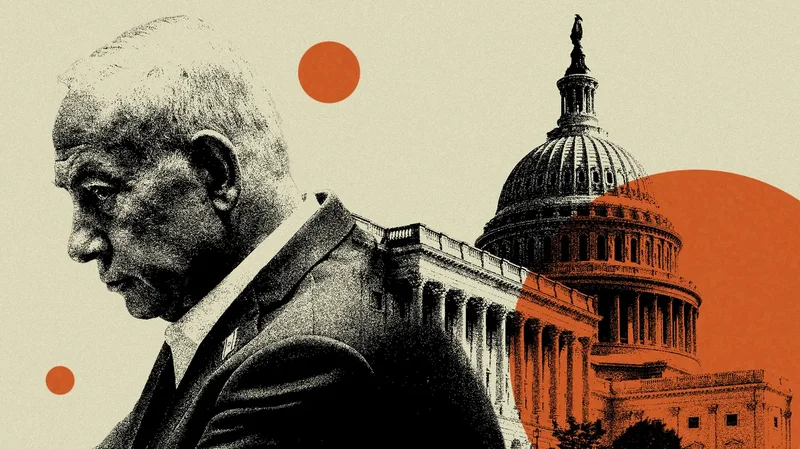
Benjamin Netanyahu will meet with Donald Trump in the Oval Office Tuesday for the eighth time since the president returned to office. But the Israeli prime minister arrives at the White House weaker and less influential than the previous seven times.Why it matters: On Feb. 28, Trump and Netanyahu went to war together and it looked like there was no daylight between them. But exactly five months later, their interests have diverged more than ever — and bad blood and frustration have deepened as they've grown suspicious of each other's intentions.Driving the news: Netanyahu's visit comes several days after Trump paused U.S. strikes in Iran and announced his envoys are trying — again — to negotiate a deal with the Iranian regime.Last Friday, Netanyahu found himself holding marathon talks with his cabinet about the war — while largely in the dark about Trump's thinking and plans. The lack of coordination led Netanyahu and the Israel Defense Forces (IDF) to prepare for the most extreme scenario: a return to major combat operations by the U.S. Only late Friday night did Israel learn that Trump had decided to hold fire. Trump told Axios he is still considering resuming a large-scale military campaign if negotiations fail. Such a move would likely include a joint military campaign with Israel similar to Operation Epic Fury at the outset of the war. The meeting with Netanyahu could be significant as Trump weighs his next steps, including possible coordination between the two countries. But the Israeli prime minister is very aware of the narrative that he pulled Trump into the war. Even if it's too late to dispel it, he doesn't want to be seen as doing it again.Behind the scenes: In the first few months of the war, Trump and Netanyahu spoke almost every day to coordinate and exchange views. But in recent weeks, their phone calls have become more and more infrequent. Netanyahu started leaning more on Secretary of State Marco Rubio for updates on Trump's thinking, sources say. Netanyahu even struggled to get on Trump's schedule for Tuesday's sit-down. He wanted to come to the White House last week but couldn't get an appointment. Zoom in: Since the April 8 ceasefire, Netanyahu's influence over Trump's war policies and decision-making has been gradually diminishing. Trump signed the memorandum of understanding with Iran in mid-June despite Netanyahu's skepticism. The Israeli prime minister tried but failed to convince Trump to keep fighting in order to further degrade the regime's military capabilities, U.S. and Israeli officials said.When the agreement was signed, Netanyahu didn't come out against it publicly, hoping it would collapse on its own. It did several weeks later.On Monday, Trump acknowledged some distance between Netanyahu and him on Iran. "We have a little difference, but pretty close," Trump told reporters on Air Force One when he was asked if he is on the same page with Netanyahu regarding the war. Case in point: Two weeks ago, Netanyahu was unable to persuade Trump not to move forward with a deal to sell F-35s to Turkey."Nobody tells me what we should be selling or not," Trump said Monday, referring to Netanyahu's objections to the deal. "Turkey has been a tremendous ally for me. Turkey's not a big fan of Israel ... and not a big fan of Bibi."Netanyahu was also caught off guard by the nuclear deal the Trump administration signed with Saudi Arabia last week. The Israeli prime minister was disappointed to learn that the language of the agreement didn't include a requirement that Saudi Arabia normalize relations with Israel — a provision the Israelis have long been pushing for, a Netanyahu adviser said.Trump said last week the nuclear agreement would in fact be contingent on Saudi Arabia joining the Abraham Accords and signing a peace deal with Israel. But on Monday, the president acknowledged he hadn't talked about it with Saudi leaders. The agreement is expected to be sent to Congress this week for review, but without any provision on Saudi-Israeli normalization, according to a source with direct knowledge. Between the lines: Netanyahu is deeply unpopular in Washington these days, among Democrats, Trump's close circle and the MAGA base.In public, Trump says his relationship with Netanyahu is still very good. In private, though, Trump has expressed frustration with the Israeli leader. Many senior officials in Trump's inner circle have come to view Netanyahu with disdain, arguing he was consistently wrong about the war. Numerous U.S. officials, including Vance, have accused Netanyahu of making rosy predictions that didn't pan out."He'll come, he'll make his promises and then we'll have to check everything out," a senior U.S. official said. Yes, but: Netanyahu has managed several times before to go into meetings with Trump concerned and come out having gotten what he wanted, with Trump more aligned with him than before. What to watch: Netanyahu is facing an election in three months that will be crucial not only for his political survival but also for his personal freedom. He wants Trump to endorse him, but so far the president hasn't done it. Trump was asked by reporters four times in recent weeks whether he endorses Netanyahu, but he stopped short of doing so. He praised Netanyahu for being a "great wartime prime minister," but each time referred to the Israeli prime minister in the past tense. The meeting between Trump and Netanyahu is currently planned to be private and closed to the press. If he decides instead to go before the cameras, Netanyahu could leave with a triumphant photo op — or perhaps be on the receiving end of a Zelensky-style dressing down.
A diminished Bibi arrives for his moment with Trump