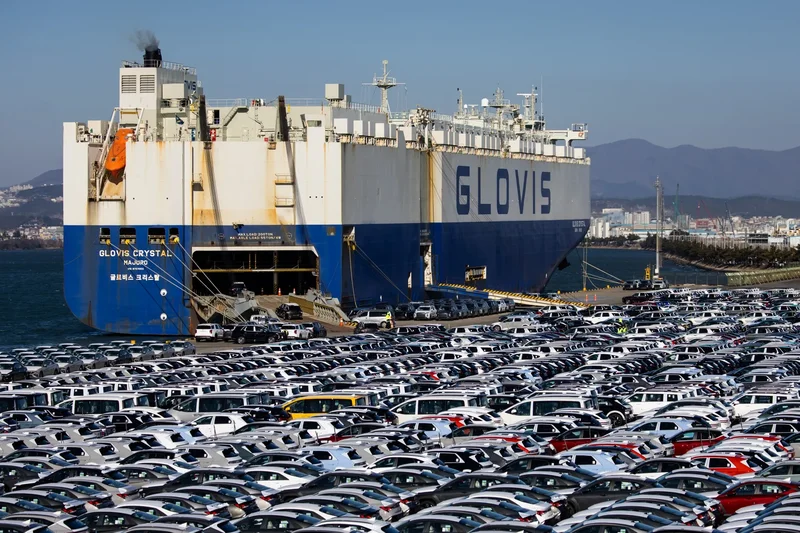
Mexico Corridor Ships 900 Hyundai Cars in 72 Hours to US
Mexico · Infrastructure
Interoceanic Corridor freight operations reached a milestone in late July 2026 as a Hyundai Glovis pilot moved roughly 900 vehicles from South Korea to the U.S. East Coast via Mexico’s Isthmus of Tehuantepec rail land bridge, with the end-to-end transit taking about 72 hours.
A Dry Canal Takes Shape in Southern Mexico
The Interoceanic Corridor of the Isthmus of Tehuantepec (CIIT), a flagship infrastructure project of the Mexican government, is designed to connect the Pacific Ocean to the Gulf of Mexico through a revitalized 300-kilometer rail line. The route links the deep-water port of Salina Cruz in the state of Oaxaca with the Gulf port of Coatzacoalcos in Veracruz, creating a land bridge that bypasses the Panama Canal entirely.
For international investors and expatriates monitoring Latin American trade logistics, the corridor represents a potential shift in hemispheric supply chains. The Hyundai pilot was specifically presented as a proof of concept for using the CIIT as a substitute for the Panama Canal on the busy Asia-to-U.S. East Coast shipping lane.
Inside the Hyundai Glovis Pilot Operation
The commercial test involved roughly 900 Hyundai vehicles carried by Glovis, the logistics arm of the South Korean automotive giant. The cargo arrived at the Pacific port of Salina Cruz, where it was transferred onto rail cars for the crossing of the isthmus.
The rail segment itself took about nine hours, a fraction of the time required for a Panama Canal transit. The broader end-to-end operation, including port handling and the onward vessel service to the U.S. East Coast from Coatzacoalcos, was reported at roughly 72 hours.
This intermodal chain – ship-to-rail-to-ship – is what proponents call a ‘dry canal.’ By transferring containers and rolling cargo across Mexico by rail, shippers can potentially avoid canal waiting times and reduce overall logistics costs for certain cargoes, particularly automobiles and time-sensitive container freight.
Panama Canal Alternative: Promise and Limitations
The CIIT is not a universal replacement for the Panama Canal, which handles roughly 40% of all U.S. container traffic and accommodates massive neo-Panamax vessels. Instead, the Mexican corridor targets specific cargo segments where speed and cost savings justify a ship-to-rail transfer.
Automotive logistics is a prime candidate. Finished vehicles are high-value, time-sensitive cargo that does not require the enormous container vessels that dominate canal transits. The Hyundai pilot validated that the CIIT can handle this niche efficiently.
For foreign businesses evaluating nearshoring or alternative supply routes, the corridor adds a new variable to logistics planning. A faster Asia-to-U.S. East Coast connection through Mexico could reduce inventory carrying costs, though the corridor’s capacity remains a fraction of the Panama Canal’s throughput.
Infrastructure Status and the Road to Full Operations
The CIIT is operational in parts and moving toward full completion. Mexican-government reporting has described the corridor as already running cargo service, while the broader project continues to be finished in phases. The administration has targeted full operational status by June 2026.
The project includes more than just rail. It encompasses industrial parks along the route, port modernizations at both Salina Cruz and Coatzacoalcos, and incentives for private investment in manufacturing and logistics facilities. The government has promoted the corridor as an economic development engine for southern Mexico, a region that has historically lagged behind the industrialized north.
For expat investors and international firms, the phased rollout means opportunities may emerge gradually. Tenants in the corridor’s industrial parks could benefit from tax incentives and streamlined customs procedures, though the full regulatory framework is still being implemented.
What the Pilot Means for Global Trade Routes
The successful Hyundai shipment signals that the CIIT can function as a commercial freight corridor, not merely a government infrastructure project. It demonstrates that a major global shipper – Hyundai Glovis – is willing to test the route with real cargo, a crucial step toward building market confidence.
Shipping analysts note that the corridor’s competitive advantage depends on several factors: Panama Canal transit fees, fuel costs, rail capacity, and port efficiency at both Mexican terminals. If the CIIT can offer consistent, reliable service, it could capture a slice of the estimated 14,000 vessels that transit Panama annually.
For the expatriate and investor community following Latin America, the corridor represents one of the most tangible infrastructure developments in the region. It is a concrete asset – steel rails, deep-water berths, and industrial zones – rather than a policy proposal, and it is now moving commercial cargo.
Looking Ahead: Scaling the Corridor
The next challenge is scaling operations. A single pilot of 900 vehicles proves the concept, but regular commercial service requires sustained volume, reliable scheduling, and competitive pricing. Mexican authorities have indicated they are in discussions with other global logistics firms to expand the corridor’s customer base.
The CIIT’s success will also depend on complementary investments in road connections, customs modernization, and security along the route. For foreign companies considering the corridor as part of their supply chain strategy, these supporting elements are as important as the rail line itself.
As the project moves toward its June 2026 full-operational target, the Hyundai pilot will be remembered as the moment the Interoceanic Corridor of the Isthmus of Tehuantepec transitioned from blueprint to functioning trade artery.
Frequently Asked Questions
What is Mexico’s Interoceanic Corridor of the Isthmus of Tehuantepec?
It is a Mexican government infrastructure project connecting the Pacific port of Salina Cruz to the Gulf port of Coatzacoalcos via a 300-kilometer rail line, creating a ‘dry canal’ alternative to the Panama Canal for cargo moving between Asia and the U.S. East Coast.
How long did the Hyundai pilot shipment take through the corridor?
The end-to-end operation from South Korea to the U.S. East Coast took roughly 72 hours, with the rail crossing across the Isthmus of Tehuantepec itself lasting about nine hours.
When will the Interoceanic Corridor be fully operational?
The corridor is already operational in parts and running cargo service. The Mexican government has targeted full operational status, including all supporting infrastructure and industrial parks, by June 2026.