Aug. 12, 2026, promises to be a big day for anyone interested in the sky. By day, a solar eclipse will be visible across parts of North America and Europe. For most, it will be partial, but for those within the path of totality in eastern Greenland, western Iceland and northern Spain, the moon will completely block the sun.
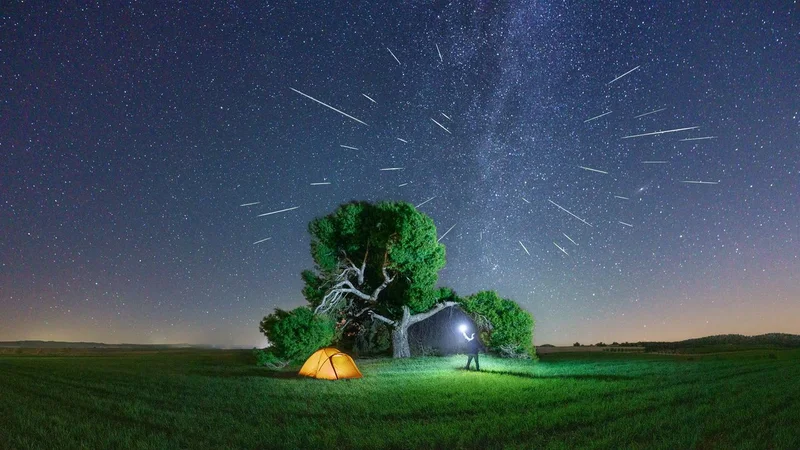
Hours later, the sky show continues with the peak of the Perseid meteor shower on the night of Aug. 12-13. The shower occurs when Earth passes through debris left behind by Comet 109P/Swift-Tuttle, producing bright meteors and occasional fireballs. In 2026, the timing could hardly be better. The same new moon that makes the solar eclipse possible will also create moonless skies for meteor-watching, with observers under dark skies potentially seeing 30 to 50 "shooting stars" per hour.
All of that happens after the eclipse. As a bonus, Venus will blaze low in the west during twilight, the Milky Way will stretch overhead after dark and, in Iceland, there is even a slim possibility of an early-season aurora display. Many visitors will spend 12 hours or more outdoors, arriving long before first contact and remaining under the stars until after midnight. Here’s what to consider buying for this very special day and night beneath the sky.
Nothing belongs in your bag more than certified eclipse glasses. Whether you're in Spain's path of totality, watching a deep partial eclipse from the U.K. or viewing a smaller partial eclipse from North America, proper eye protection is essential during every partial phase of the eclipse. Even observers inside the path of totality will spend far longer watching the eclipse before and after totality than during it.
Eclipse glasses should comply with ISO 12312-2 and be bought from a reputable supplier. These Eclipser HD glasses from American Paper Optics are more comfortable and harder-wearing than regular cardboard products.
Dedicated solar binoculars like the Celestron EclipSmart 10x42 are one of the best eclipse purchases you can make. They reveal sunspots, active regions and the changing shape of the partial eclipse in a way eclipse glasses simply cannot.
They're lightweight, require no set-up and provide a far more immersive view of the partial phases. However, it's important to practice with them before the eclipse because finding the sun is not as easy as many think. The EclipSmart porro solar binoculars also come in 12x50 and 20x50 versions.
Although solar binoculars are great for the partial phases, you can just make some regular optical binoculars safe by using Baader AstroSolar Safety Film OD 5.0 to make your own filters. However, if you’re heading to the path of totality, consider getting some image-stabilized binoculars to allow you a spectacular close-up of the solar corona.
These reference-level binoculars from Canon use motion sensors to detect hand shake and then shift actuators around the lenses to cancel it out. Other image-stabilized options include the Canon 12x36 IS, Canon 8x20 IS and Canon 15x50 IS.
If you want to explore the world of solar observing during the eclipse and well beyond, consider investing in a hydrogen-alpha solar telescope. Isolating light emitted by hydrogen atoms in the chromosphere, they show you an entirely different view of the sun — from sunspots and dark filaments to prominences and, if you’re really lucky, a solar flare in action.
This 40mm aperture and 400mm focal length option from Lunt makes it thoroughly portable.
Read: Best telescopes
Solar eclipse glasses work well for individual viewing, but if you want a safe way to share an image of the partially eclipsed sun, consider a solar projector. The Solar Projector arrives flatpacked and is made entirely of stiff cardboard (which doesn’t heat up like metal or melt like plastic).
Once aimed at the sun using a designed-in quadrant to measure the sun’s declination, it uses its achromatic glass lens and convex mirrors to create a 55-75mm image of the sun on a small screen.
A compact smart telescope is a wise choice for eclipse chasers who are after more than just a few smartphone snapshots. The DwarfLab Dwarf Mini is a tiny, app-controlled telescope whose included magnetic solar filter allows solar observing.
It can quickly locate the sun and capture images revealing sunspots during partial phases of a solar eclipse. If and when totality arrives, simply remove the solar filter. You'll need to add your own tripod.
A stargazing tent makes sense for anyone planning to watch the Perseids long after the eclipse. Sky View Tents use near-transparent mesh walls so you can lie in a sleeping bag and keep watching the sky, making them useful for meteor watching and the Milky Way.
The two-person Backpacker Stargazing Tent is roomy enough for lying back, quick to pitch and has an internal rainfly that can be deployed without getting up. At 5.6 pounds (2.6 kilograms), it’s better for car camping or short dark-sky hikes than long backpacking trips.
You'll likely arrive early to secure a good location. Then you'll spend hours watching the eclipse unfold before darkness finally arrives and the Perseids begin. A lightweight folding chair is therefore one of the most valuable things you can bring.
The Nemo Stargaze EVO-X is a suspended, gently rocking chair that reclines smoothly, with a padded headrest that makes long sessions under the stars far easier on the neck. It’s excellent for meteor-watching, reading and relaxed binocular use, with pockets for a phone or drink. However, it is bulky, heavy and body-size-dependent, so it’s better for car-based observing than for backpacking.
A sturdy travel tripod is essential if you want sharp eclipse photos, twilight shots of Venus or wide-field images of the Milky Way and Perseids.
The Peak Design Travel Tripod is unusually narrow when folded, quick to set up and stable enough for full-frame cameras, yet it also hides a smartphone mount in its center column, making it useful for both serious cameras and phones. Its compact ball head keeps the whole package sleek for travel, while the fast leg locks make set-up and takedown easy in the dark. However, it is expensive and not especially tall.
A fast wide-angle lens is the classic choice for photographing the Perseids and the Milky Way after the eclipse. The Sigma 14mm f/1.4 DG DN is a huge, heavy wide-angle lens for full-frame cameras that achieves f/1.4 aperture — the first such lens to do so.
That means shorter exposures, lower ISO settings and cleaner night-sky images which, with luck, will be stuffed with "shooting stars." It's sharp and well built, but it's expensive.
Get the world’s most fascinating discoveries delivered straight to your inbox.
Jamie Carter is a Cardiff, U.K.-based freelance science journalist and a regular contributor to Live Science. He is the author of A Stargazing Program For Beginners and co-author of The Eclipse Effect, and leads international stargazing and eclipse-chasing tours. His work appears regularly in Space.com, Forbes, New Scientist, BBC Sky at Night, Sky & Telescope, and other major science and astronomy publications. He is also the editor of WhenIsTheNextEclipse.com.