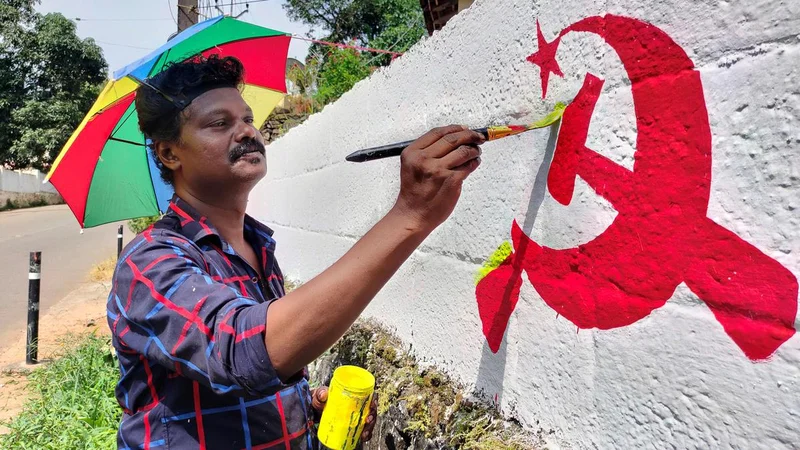
The Communist Party of India (Marxist)’s [CPI(M)] self-critical review of the Left Democratic Front (LDF)’s Assembly election debacle in Kerala in 2026 is widely viewed as a precursor to an organisational rectification process that will commence with an “extended” State committee meeting in September 2026 in Kozhikode.
The brainstorming session will unfold against the bleak political backdrop of the ascendancy of the right-wing communal forces led by the Bharatiya Janata Party (BJP) in West Bengal and Assam; the defeat of the Dravida Munnetra Kazhagam (DMK)-led alliance, in which the CPI(M) was a partner, in Tamil Nadu; and the re-election of the BJP-led government in Puducherry. Moreover, the CPI(M) no longer controls any State government in the country.
The situation in Kerala also appeared unpromising for the CPI(M), given that the BJP had won three seats in the 2026 Assembly elections and emerged second in six constituencies. The party’s vote share dwindled to 37.44% in 2026, down from 44.44% in 2021, while the Congress-led United Democratic Front (UDF) improved its vote share from 38.88% in 2021 to 46.55% in 2026.
Shaky strongholds
The CPI(M) noted that its messaging about transformational development did not resonate among the middle classes. The growing influence of caste- and religion-tainted identity politics caused an erosion of the party’s basic voters, namely “workers, agricultural workers and poor peasants.” Votes from traditional sectors (such as coir, handloom and cashew) plummeted, while the party’s traditional strongholds fell.
Moreover, police highhandedness, continuing human-wildlife conflict and an overbearing bureaucracy that operated beyond political control appeared apathetic to the trials and tribulations of the working classes. The CPI(M)’s review document stressed the need to devise the “correct tactics” to stymie the rise of the anti-federal, anti-minority and pro-corporate Hindu majoritarian forces in the country and regain lost political ground.
Organisational rejig
CPI(M) State secretary M.V. Govindan had hinted last week at a radical organisational rejig and political course correction at the “extended” State committee meeting in Kozhikode.
The CPI(M) document blamed the Congress, chiefly Leader of the Opposition in Lok Sabha Rahul Gandhi, for giving a leg-up to the BJP in Kerala by prosecuting a soft-Hindutva campaign focussed on tarring and feathering the CPI(M).
Stress on clear communication
The CPI(M) document recommended proper discussions in the LDF in matters of political and social import such as the signing of the supposedly pro-Hindutva PM-SHRI programme. The CPI(M) also stressed the need to improve the political sharpness of public meetings and political rallies, and hinted that long-drawn-out and meandering speeches would soon be a thing of the past, among other corrective measures.
It flagged a decline in the number of effective communicators who could convey the CPI(M)’s political perspective to the people, and the need to create public consciousness against divisive communalism.
Published - July 28, 2026 04:30 pm IST