The world’s biggest problem today is neither war, economic crises, energy competition, nor geopolitical tensions. It is the lack of leadership, which is the common cause of all these problems. Because history shows us that in eras of strong leadership, crises were managed more quickly, wars ended more easily, and countries could find a clearer direction.
Today, however, we are experiencing the exact opposite. Power centers are multiplying around the world, but the political will to steer the power is steadily weakening. Statespeople capable of making decisions are being replaced by politicians who act based on public opinion polls and make short-term calculations.
The result is plain to see. The Russia-Ukraine war is entering its fourth year. The bloodshed in Gaza cannot be stopped. The crisis in the Red Sea is threatening global trade. Coups are occurring one after another in Africa.
The Taiwan issue is fueling growing tensions across Asia.
Diplomacy seems to be at work, but the problems remain unsolved. There are negotiating tables, but the number of leaders capable of bringing real weight to those tables is dwindling day by day.
The most striking example of this is Europe. The continent once shaped by leaders such as British Prime Minister Winston Churchill, French President Charles de Gaulle and German Chancellor Konrad Adenauer is today largely governed by bureaucracy.
Its economic power remains high, and its technological capacity is strong. However, its political clout is not felt to the same extent.
Throughout the Russia-Ukraine war, Europe has often followed the security line set by Washington. It struggled to develop a common response to the energy crisis. It failed to formulate a common policy on migration. It still cannot stand on its own two feet when it comes to defense. Because what Europe lacks today is not money, but leadership.
The Middle East, meanwhile, is the region most severely affected by this leadership vacuum. Syria, Libya, Yemen, Lebanon and Palestine, each crisis has been dragging on for years. This is because proxy wars dominate the region rather than strong state structures. When a vacuum emerges, it is filled not by states, but by armed groups and global powers. This is one of the fundamental reasons why lasting solutions cannot be achieved.
Africa’s natural resources rank among the world’s richest. However, its political influence is not equally strong. The lack of leadership capable of acting in unison and offering a vision for the entire continent is turning Africa into a battleground for great powers. The underground riches belong to Africa. Yet, more often than not, others are the ones who benefit.
Strong leadership is not just about speaking tough. It is about being able to make decisions in times of crisis, taking risks, setting long-term goals for one’s country, and carrying weight at the international table.
Today, the number of leaders who possess these qualities is quite limited.
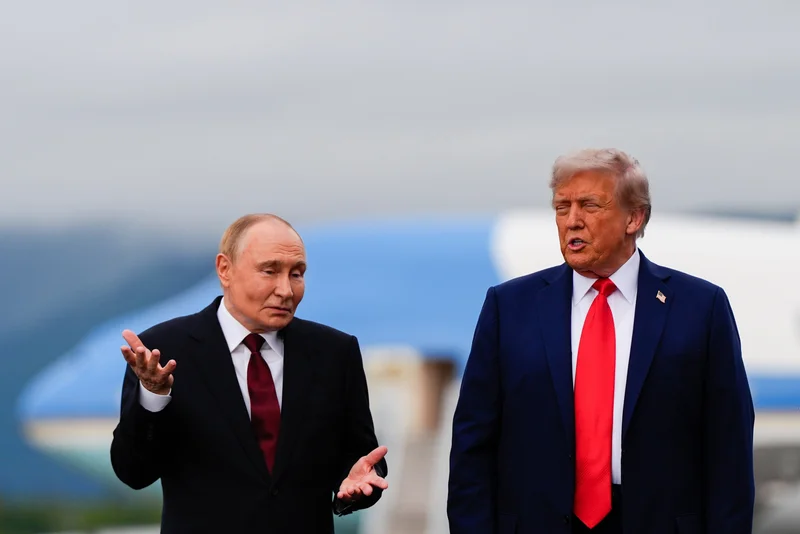
Recep Tayyip Erdoğan, Russian President Vladimir Putin, and U.S. President Donald Trump – though they represent different political philosophies – are considered among the leaders capable of influencing global politics. Each exerts influence that extends beyond their own country’s borders. They have their supporters, and they have their harsh critics. But the common thread is this: They do not merely follow the global agenda; they are among the actors who shape it.
Perhaps the biggest debate in the coming years will not be about energy or artificial intelligence. The real question will be: Will leaders emerge who can steer the world in a new direction?
Strong institutions are important, but history also shows that, at moments of major upheaval, institutions alone are not enough. We need leaders who will guide those institutions, take responsibility, and assume risks when necessary.
Perhaps this is precisely the greatest shortfall of the century.
The world is living in the age of technology. But it is also going through an age of leadership vacuum.