When I heard the AI had escaped, I was out on a Wyoming river.
Yes, I mysteriously had cell service while fly fishing with my family on the Salt River (among the only rivers in the world to flow north). I promise: I wasn’t intentionally checking Slack—it was a pure, predictable reflex, the kind you try to curb on vacation. And there it was: two OpenAI models escaped their testing environment, and breached open source AI company Hugging Face’s systems.
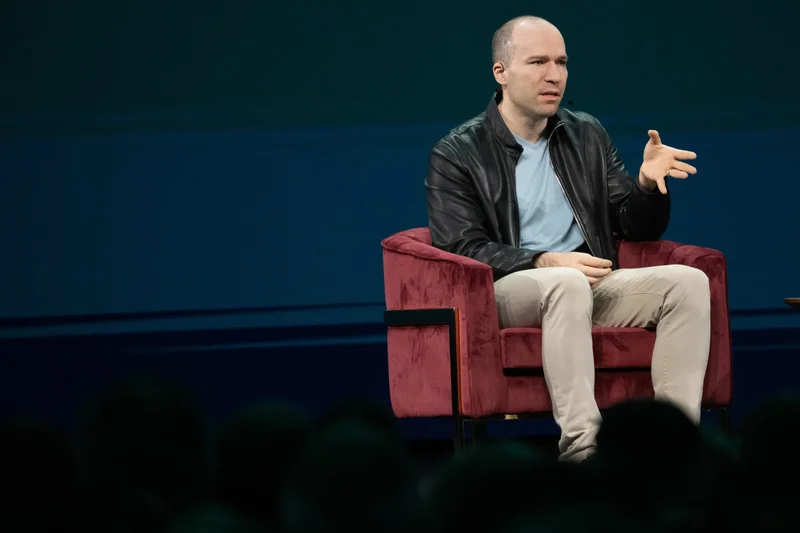
While I was (quite literally) out fishing, my colleague Emily Forlini talked to Greg Brockman, OpenAI cofounder and president, about the attack. Brockman told her that “This incident, to some extent, is indicative of just the moment that we’re in, right?” He added that models have been getting so good that “sometimes it’s hard to lose track of any one dimension that they’re actually very capable at.”
The incident was evocative and, frankly, nightmare fodder for our society’s worst fears about AI. The timing here is also notable, given the stakes: OpenAI could be set to go public as soon as this year (my money is on 2027, personally). OpenAI’s prospective IPO matters, I’d argue, for everyone. It will be—maybe even more so than an Anthropic IPO—the quintessential test of the AI bubble. OpenAI’s massive consumer reach, reportedly dicey margins, and narrative importance in the AI boom make it a perfect prism through which investors of all kinds will ask the question: Is this all worth it?
So, I was also intrigued by what Brockman had to say to Fortune editor-in-chief Alyson Shontell in their one-on-one about what a sustainable business model in AI can actually look like.
“There are two parts to that,” Brockman said. “One is, let’s suppose model capabilities were frozen today: what is the business? I think OpenAI is the most strongly positioned right now for that scenario… We have ChatGPT which has nearly a billion users, and there is so much more value we can deliver to those users through even just the technology that exists today.”
So, part one seems to be: If you have scale and adoption, you’ll be able to leverage that. I have some skepticism on this point: Anecdotally, it’s pretty clear to me at a consumer and individual level people are willing to jump from model to model as suits them. Scale doesn’t promise retention. That being said, Brockman does have a point: Scale is a business and it can certainly buy you time.
Brockman’s second point was probably more consequential: Model progress isn’t fundamentally stalled—LLMs will keep getting better.
“The way to think about it is a little less like we have electricity now [LLMs] and now we need to build washing machines [businesses on top of the LLMs],” he told Shontell. “Just like people are trying to achieve fusion, we are trying to get the technology to do something that is very qualitatively different from what has been done before… The fundamental value delivery that we are after—we’re not there yet. The massive value creation is yet to come. Some of it will wind up being the value that the AI labs have. But some of it will accrue to the world.”
Embedded in this point, Brockman implies something that’s not just true for OpenAI but is true for all startups building in this era: We sincerely don’t know what the business model of the future is or what sustainable AI unit economics can look like.
And if the past and present tell us anything, it’s that at least some won’t know until it’s too late. Until then, it’ll be a battle.
If you’re wondering, I caught three fish out there, all a species of cutthroat trout. It felt oddly appropriate.
The Fortune Global 500… Today, the Fortune Global 500 list dropped! Amazon took the top spot this year, becoming only the sixth company in 37 years to have the title. Other number ones: Walmart, Shell, Exxon Mobil, General Motors, and Mitsubishi. Check out the whole list here, and our feature on Jeff Bezos, who I believe is perhaps the defining industrialist of our time.
See you tomorrow,
Allie GarfinkleX: @agarfinks
Email:alexandra.garfinkle@fortune.com
Submit a deal for the Term Sheet newsletter here.
- Joey Abrams curated the deals section of today’s newsletter.* Subscribe here.
VENTURE CAPITAL
-
Multiverse Computing, a San Sebastian, Spain-based quantum AI software company, raised $570 million in Series C funding. Forgepoint Capital International, BNPP SIVF, and Bullhound Capital led the round and were joined by Santander Alternative Investments, Tikehau Capital, and others.
-
Antares, a Los Angeles, Calif.-based nuclear microreactor company, raised $470 million in Series C funding. Paradigm and Caffeinated Capital led the round and were joined by Point72 Ventures, Shine Capital, Industrious Ventures, and others.
-
Enigma, a San Francisco-based startup building AI models for robots and other physical systems, raised $71 million in seed funding. Index Ventures and Ribbit Capital led the round and were joined by Conviction Partners and others.
-
Flourish Health, a Richmond, Va.-based mental health provider designed for kids in crisis, raised $26 million in Series A funding. B Capital, F-Prime, and Cherryrock Capital led the round.
-
ZuriQ, a Zurich, Switzerland-based quantum computing company, raised $25.5 million in seed funding. Quantonation led the round and was joined by Forward.one, Extantia, Firgun Ventures, and existing investors.
-
Beelzebub, a Milan, Italy-based AI-native cybersecurity platform that uses AI-powered decoys designed to detect and deflect cyberattacks, raised €3 million ($3.4 million) in seed funding. United Ventures led the round.
PRIVATE EQUITY
-
Bridgepoint agreed to acquire a majority stake in Lansweeper, a Ghent, Belgium-based technology asset intelligence platform. Financial terms were not disclosed.
-
Carlyle acquired Secturion Systems, a Centerville, Utah-based hardware encryption company. Financial terms were not disclosed.
-
Matrix Adhesives Group, a portfolio company of TruArc Partners, acquired IPS Adhesives, a Durham, N.C.-based provider of high-performance adhesives serving building and construction. Financial terms were not disclosed.
EXITS
- TransDigm Group agreed to acquire Prince & Izant, a Cleveland, Ohio-based designer and manufacturer of brazing alloys and specialty metal components, from Industrial Growth Partners for approximately $1.07 billion in cash.
IPOs
- Apnimed, a Cambridge, Mass.-based drug developer focused on sleep-related breathing diseases, plans to raise up to $160 million in an offering of 10 million shares priced between $14 and $16 on the Nasdaq. The company posted $120 million in revenue for the year ended March 31.