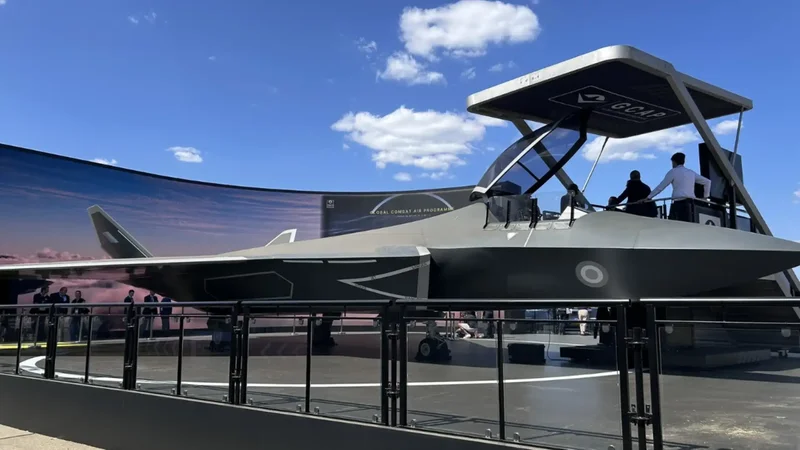
BAE Systems has offered the clearest glimpse yet of the combat air flying demonstrator, the aircraft that will spearhead development of the Global Combat Air Programme (GCAP) and ultimately the sixthâgeneration Tempest fighter. A newly released image shows the fuselage under construction at Samlesbury, while wings and fins are being assembled at Warton, from where the demonstrator is expected to fly before the end of 2027. This marks the UKâs first fighter demonstrator since the British Aerospace EAP of 1986, which laid the groundwork for the Eurofighter Typhoon.
The demonstrator is not intended as an operational weapon system but as a testbed to validate technologies, manufacturing methods and aerodynamic concepts. It will inform the Tempest fighter being jointly developed by the UK, Italy and Japan, with Canada recently joining the project as an observer. The programme aims to deliver a combat aircraft for service in the 2040s, designed to meet the demands of future air warfare. Sixthâgeneration fighters promise a leap beyond current fifthâgeneration fighters in terms of design, as they employ allâaspect stealth, advanced propulsion, digitalâfirst engineering, integration of artificial intelligence, cyber tools and mannedâunmanned teaming.
Their weapons suites will include longârange standoff missiles and directedâenergy systems such as lasers.
India has been exploring partnerships with either GCAP or the nowâfractured FrancoâGermanâSpanish Future Combat Air System (FCAS), from which Germany has withdrawn. Domestically, India is pursuing its Advanced Medium Combat Aircraft (AMCA), a fifthâgeneration design not expected to be operational before 2035. This timeline is significant given Chinaâs rapid progress: the Peopleâs Liberation Army Air Force already operates around 500 Jâ20 stealth fighters and is flightâtesting two separate sixthâgeneration prototypes, the Jâ36 and Jâ50. The pace of Chinese development underscores the urgency for India to accelerate its own programme or seek collaborative avenues.
The United States, meanwhile, is advancing its Next Generation Air Dominance project, centred on the Fâ47 fighter, distinct from the U.S. Navyâs F/AâXX effort. Boeing has been awarded the contract, with President
Donald Trump announcing that a tonedâdown version will be offered to allies. Loyal wingmen drones, designated Collaborative Combat Aircraft, are being tested alongside fourthâ and fifthâgeneration fighters to mature mannedâunmanned teaming concepts. Boeingâs MQâ28 drone has already participated in a largeâscale multinational exercise over the Pacific, highlighting the integration of unmanned systems into future air combat.
The unveiling of the UK demonstrator thus represents more than a national milestone. It is part of a wider global race toward sixthâgeneration air power, where stealth, digital engineering, AI integration and unmanned teaming will define combat effectiveness. For India, balancing indigenous development with potential partnerships will be critical to avoid falling behind in a domain where China and the U.S. are already pressing ahead.