Rapa Nui Welcomes Ancestral Remains Returned by Australian Museum
Cultural Restitution · Chile
The Rapa Nui repatriation movement achieved a milestone in July 2026 when the Australian Museum returned 17 ancestral remains taken without consent from sacred burial sites in 1882, deepening a global reckoning over colonial-era collecting.
A 144-Year Journey Home
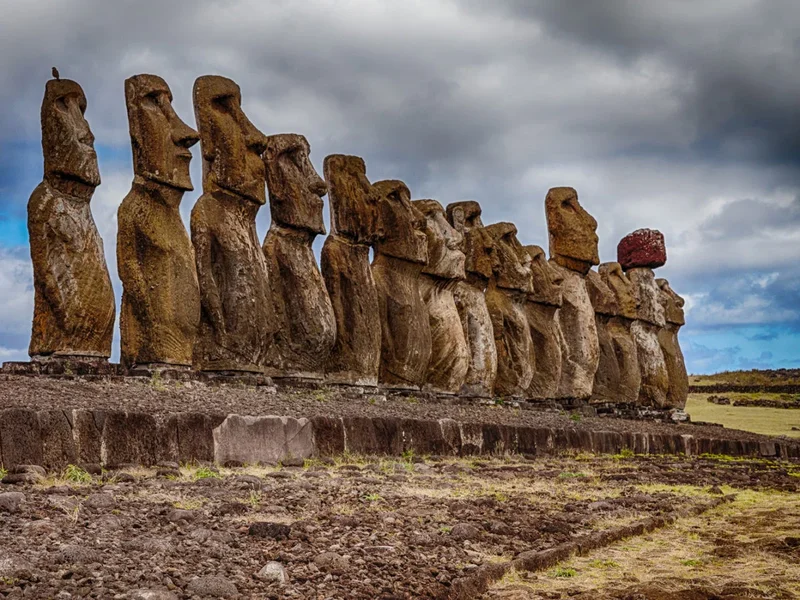
In September 1882, a German naval expedition reached the slopes of Rano Raraku, the volcanic quarry where Rapa Nui’s ancestors carved the island’s iconic Moai. The crew removed human remains from sacred burial sites and shipped them to Europe.
A year later, in 1883, those remains were sold to the Australian Museum in Sydney, where they sat in storage for over a century as scientific specimens rather than honoured ancestors. In July 2026, that transaction was finally reversed.
The museum returned 17 Ivi Tupuna — ancestral human remains — and one sample of human hair to a Rapa Nui delegation in what the institution itself described as one of its largest repatriations. The museum publicly acknowledged the remains were taken without consent and said the return was part of confronting its colonial collecting history.
Ceremony and Spiritual Restoration
The handover in Sydney was not a simple administrative transfer. Rapa Nui elders, cultural leaders, and Chilean heritage officials conducted traditional ceremonies to honour the returning ancestors before accompanying them on the long flight home.
The delegation travelled via Santiago, where Chile’s Ministry of Cultures, Arts and Heritage (MINCAP) received the remains, before continuing to Rapa Nui itself. On the island, the Ivi Tupuna were welcomed with traditional rituals, songs, and communal feasts known as umu.
Carlos Edmuns Paoa, president of the Rapa Nui Council of Elders, described the moment as one of “deep emotion and justice” that strengthens memory, spirituality, and ties to future generations. The remains are now under the care of the Museo Antropológico Padre Sebastián Englert (MAPSE) pending community decisions on their final resting place.
The Broader Rapa Nui Repatriation Campaign
The Australian Museum return is the latest chapter in a sustained, Rapa Nui-led process called Ka Haka Hoki Mai Te Mana Tupuna — roughly, “bringing back the spiritual power of the ancestors.” The campaign targets institutions across multiple continents that hold remains and sacred objects taken during more than a century of expeditions.
Between 2019 and 2024, Chile cooperated with Rapa Nui community institutions such as CODEIPA and Ma’u Henua to secure repatriations from the Museo Nacional de Historia Natural in Santiago and the Kon-Tiki Museum in Oslo. The Norwegian return included skeletal remains and artefacts collected during Thor Heyerdahl’s famous expeditions.
A United Nations Human Rights Council report has highlighted Chile’s cooperation with the Rapa Nui community in these efforts. Museums in Australia, Norway, New Zealand, and the United States have now acknowledged past wrongs and cooperated in returns without being legally compelled to do so.
What Was Taken: The Colonial Extraction Record
The “history marked by dispossession” that frames these celebrations is not metaphorical. From the late 19th century through much of the 20th, European and American expeditions systematically removed human remains, Moai statues, and other sacred objects from Rapa Nui.
These ancestors and ritual pieces were turned into scientific specimens and museum holdings in Santiago, Oslo, Sydney, Washington, and Wellington. For generations, the Rapa Nui people had little control over their ancestral lands or heritage.
That dynamic has only recently begun to shift. Management of Rapa Nui National Park and repatriation decisions have increasingly moved to local Indigenous authorities, marking a partial reversal of more than a century of external control.
The Read-Through for Chile and Latin America
The repatriation carries significance beyond cultural heritage. It reinforces Chile’s evolving relationship with its Indigenous peoples, a dynamic that investors and businesses operating in Latin America watch closely.
Chile’s willingness to facilitate returns and recognise Rapa Nui authority over heritage contrasts with more contentious Indigenous disputes elsewhere in the region. For the tourism sector, which drives much of Rapa Nui’s economy, the repatriation adds a layer of cultural depth to the island’s global profile.
The returns also reflect a broader global shift in how museums handle contested collections, with implications for institutions across Latin America that hold Indigenous remains and objects. Each successful repatriation sets a precedent that other communities can cite.
What to Watch Next
The community decision on the final resting place of the returned Ivi Tupuna will be the next significant moment. MAPSE currently holds the remains, but Rapa Nui elders and institutions will determine whether they are reburied in their original sacred sites or kept in a protected ceremonial space.
Further repatriations are expected. Institutions in the United States and New Zealand still hold Rapa Nui ancestral remains and objects, and the Ka Haka Hoki Mai Te Mana Tupuna campaign continues to press for their return.
Each success strengthens the diplomatic and moral case for the next.
For Chile, the challenge will be maintaining its cooperative stance while ensuring Rapa Nui institutions have the resources to care for returned ancestors. The global museum community will be watching how MAPSE and local authorities manage what is likely to be a growing collection of repatriated remains.
Frequently Asked Questions
What are Ivi Tupuna and why are they being returned?
Ivi Tupuna are ancestral human remains of the Rapa Nui people. They were taken from sacred burial sites during colonial-era expeditions, often without consent, and held in foreign museums as scientific specimens.
Their return is part of a Rapa Nui-led campaign to restore the spiritual power, or mana, of the ancestors and to heal the community’s connection to its past.
How many ancestral remains did the Australian Museum return to Rapa Nui?
The Australian Museum returned 17 Ivi Tupuna and one sample of human hair in July 2026. The remains were originally taken from Rano Raraku in 1882 during a German naval expedition and sold to the museum in 1883.
The museum described the return as one of its largest repatriations.
What is the Ka Haka Hoki Mai Te Mana Tupuna campaign?
Ka Haka Hoki Mai Te Mana Tupuna is a Rapa Nui-led repatriation process focused on returning the mana, or spiritual power, of ancestors and sacred items taken during more than a century of expeditions. It involves Rapa Nui community institutions, Chile’s Ministry of Cultures, and international museums, and has already secured returns from Norway, Chile’s national museum, and Australia.