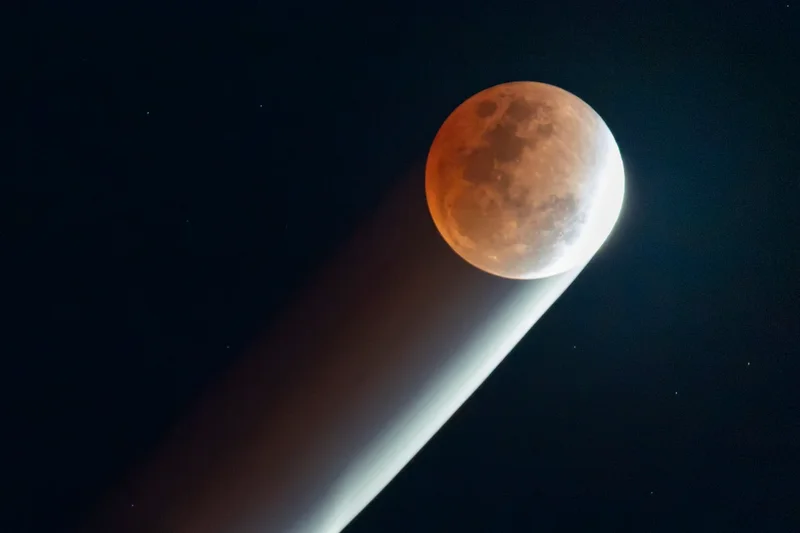
A 35-day “eclipse season” is underway as the Sun, Earth and Moon line up in space, bringing two celestial events within just over a fortnight of each other next month.
A total solar eclipse will see the Moon pass between the Earth and the Sun on 12 August, with the path of totality sweeping from Greenland down to Spain.
Then on the night of 27-28 August, the Earth will pass between the Sun and the Moon to cause a partial lunar eclipse over Europe, Africa, North America and South America.
The pair of eclipses occur due to an orbital alignment window that happens roughly every six months, which some astronomers refer to as an eclipse season.
Despite the frequency of eclipse seasons, total solar eclipses are relatively rare occurrences, with only one more set to take place over Europe in the next 10 years.
The lunar eclipse, which will see over 96 per cent of the Moon pass into Earth’s shadow, will also be the best lunar eclipse anywhere on Earth until December 2028.
It will create something known as a ‘blood moon’, where the lunar surface appears to turn a deep red colour.
For people in the UK, it will appear low in the western sky shortly before setting at dawn on 28 August.
Another celestial spectacle in August will bring shooting stars to the night sky on 12 August – the same day as the total solar eclipse.
That date is the peak of the Perseid meteor shower, which is one of the year’s best meteor showers, capable of producing up to 100 shooting stars per hour.
The next eclipse season will begin in early 2027, featuring an annular ‘ring of fire’ solar eclipse over South America and Africa on 6 February.
A penumbral lunar eclipse, where the Moon will pass through the outer part of Earth’s shadow, will then appear on the night of 20-21 February over Europe, Africa and parts of Asia.
The next total solar eclipse will take place on 2 August 2027, passing over Spain and North Africa and producing the longest duration of any solar eclipse visible from land until 2114.