The government on Tuesday (July 28, 2026) described the Public Examination (Prevention of Unfair Means) Amendment Bill, 2026 as a “milestone” legislation in the history of Parliament and said it was a reaffirmation of the government’s commitment to safeguarding the students and youth of the country.
The Bill seeks to strengthen the anti-paper leak law with stricter punishment of up to 10-year imprisonment and a fine of up to ₹50 lakh. It comes days after nationwide student protests over the alleged NEET paper leak, which led to the resignation of Dharmendra Pradhan as the Union Education Minister.
The proposed legislation was first announced by Prime Minister Narendra Modi in a midnight Instagram post last week, in a bid to quell the students’ protest at Jantar Mantar in Delhi.
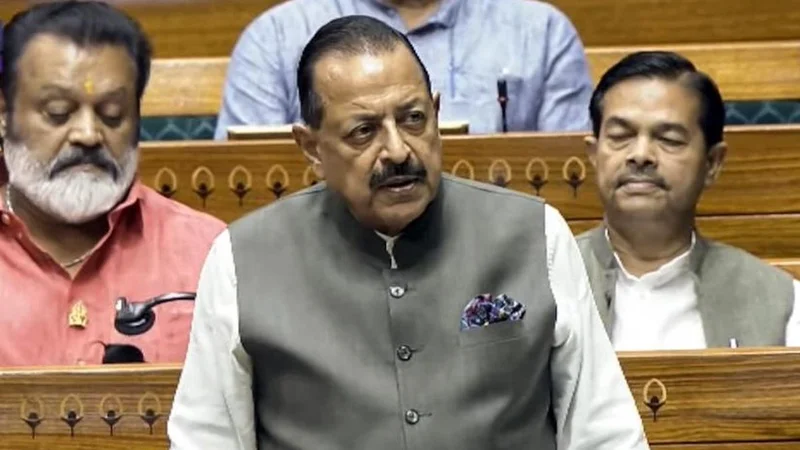
Initiating the discussion on the Bill in the Lok Sabha, Union Minister Jitendra Singh said the proposed legislation shows Prime Minister Modi’s resolve not to compromise with the future of the children.
Parliament Monsoon Session: Follow LIVE updates on July 28, 2026
For more stringent law
“Incidents of paper leaks have taken place in various States ruled by different parties. The anti-paper leak Bill is a reaffirmation of the government’s commitment to safeguard the welfare of students and youth. The amendment... (is being) brought to make the law more stringent,” Dr. Singh said.
Emphasising the importance of speedy justice, Dr. Singh said the Amendment Bill provides for the establishment of Special Fast Track Courts to deal with offences relating to public examinations.
Speedy disposal of cases
He said the Bill envisages completion of investigations within two months and trials within three months from the date of the filing of the chargesheet, ensuring expeditious disposal of such cases. The Bill also empowers the Central Government to refer investigation of offences under the Act to a Special Task Force constituted for the purpose, thereby enabling swift and effective action against organised examination-related crimes.
The Minister also informed the House that the Government has already initiated steps for the establishment of Special Fast Track Courts in several locations to facilitate speedy disposal of such cases.
The proposed amendments would reinforce deterrence against organised examination-related crimes, ensure speedy justice and further strengthen public confidence in the integrity, transparency and fairness of the country’s public examination system, he added.
The Bill was taken up for discussion after ending a week-long logjam, as Opposition parties had been insisting on discussing the police action on protesting students first.
The government had introduced the Bill in the Lok Sabha on Monday (July 27, 2026) amid uproar by the Opposition members who demanded a discussion on the police action on protesting students in the country first.
A total of 91 amendments have been moved to the Bill. RSP MP N. K. Premchandran proposed that the Bill should be circulated for stakeholder consultations till December 1 so that it can be made more comprehensive.
The Speaker had initially allocated six hours for the discussion, however, later the duration was extended to 10 hours.
Published - July 28, 2026 07:50 pm IST