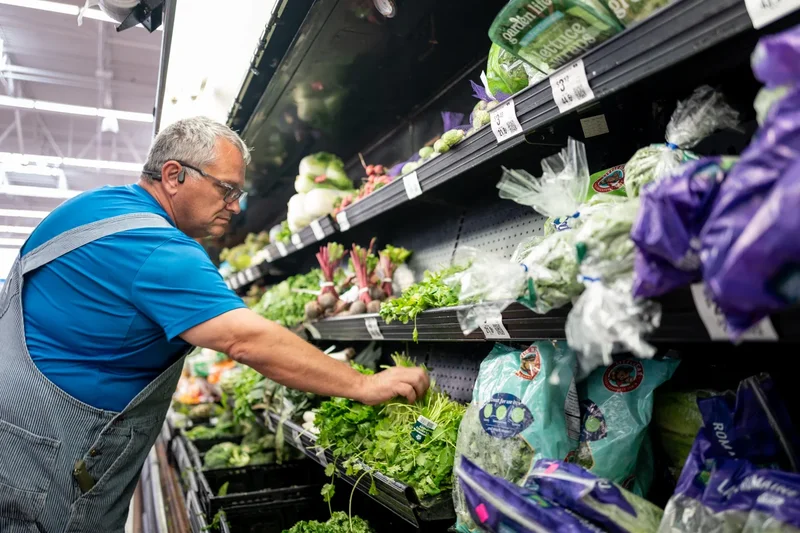
Some 40 percent of Americans are eating or buying less fresh fruit and vegetables due to nationwide outbreaks of a nasty foodborne illness, a new survey has found.
Cyclosporiasis has sickened 16,000 people across over 40 states with Michigan experiencing more than 9,200 cases. At least 300 people have been hospitalized but no deaths have been reported.
Infections are caused by the parasite cyclospora, with exposure leading to explosive diarrhea, fever, fatigue and dehydration.
The source of multiple outbreaks remains under investigation but some cases have been linked to contaminated iceberg lettuce, parsley and cilantro, federal and state health officials say.
A CBS News survey of more than 2,000 adults last week also found that more than half of Americans haven’t changed their eating or buying habits - even as 43 percent of Americans said they were following the outbreak “somewhat closely.”
The best way to avoid getting sick is to stop eating potentially-contaminated foods, or cook foods at a temperature of 158 degrees Fahrenheit which kills the parasite.
And avoiding produce isn’t the answer, experts stress. That can come with further consequences for our health.
Fruits and vegetables are packed with vitamins and essential minerals that the body needs to stay healthy. Yet, most Americans aren’t getting enough already.
Not getting enough fruits and vegetables can lead to weight gain that raises the risk of life-threatening heart disease, contribute to poor gut health that increases the likelihood of developing cancer and reduce the likelihood of premature death.
“About 90 percent of Americans already eat too few vegetables, and 80 percent eat too little fruit,” emergency physician Dr. Leana Wen wrote in an op-ed in The Washington Post last week. “The last thing they need is for sensational headlines to make it even harder for them to choose fresh produce.”
People should throw out produce when it’s linked to outbreaks, but not avoid fruits and vegetables altogether, she urged.
Another way for Americans to better protect themselves going forward is to stay informed.
“Rather than avoiding all fresh produce, consumers should stay informed about outbreak announcements, pay attention to recalls and public health advisories, wash produce under running water and continue eating a healthy diet,” food safety and consumer policy expert Darin Detwiler, a professor emeritus at Northeastern University, told Serious Eats.
“The nutritional benefits of fruits and vegetables far outweigh the relatively small risk posed by any single outbreak,” he said.
While washing fruit and vegetables with care doesn’t eliminate cyclospora, it remains an important step to reduce risk – especially with produce that may not be smooth-skinned.
“Some people mistakenly conclude that because washing cannot remove every parasite, washing doesn’t matter,” Detwiler said.
Washing your hands is also an important step. The parasite spreads through traces of human waste.
Although, in outbreaks this big, it’s believed that contaminated water on crops may be responsible.
“You’d have to have a lot of produce being irrigated with a lot of water that was contaminated by a lot of cyclospora to see this number of cases,” Keith Schneider, a professor of food safety at the University of Florida, told The New York Times last week.