TPO plans to review regulations to remove barriers to production, trade
TEHRAN- The head of Iran's Trade Promotion Organization (TPO), while emphasizing the need for continued interaction between the government and the private sector and the improvement of business processes, announced the organization's plan to amend and review trade-related regulations, remove domestic obstacles, and strengthen trade guarantee infrastructure with private sector participation.
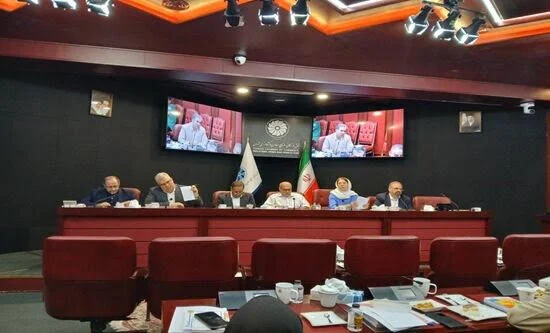
According to the Public Relations Department of the TPO, Mohammad-Ali Dehghan Dehnavi, at a meeting of the board of representatives of the Tehran Chamber of Commerce, referred to the importance of government-private sector interaction and said: The purpose of holding these meetings is to hear the concerns and suggestions of economic actors and find common solutions to reform and improve business processes.
Referring to some existing challenges in the field of foreign trade, he said: Part of the problems of economic actors are related to processes and systems managed by various bodies, and it is necessary to clearly define the scope of duties and responsibilities of each body and strengthen coordination among relevant bodies. Stating that some economic actors conflate the Comprehensive Trade System and the TPO, he said: These two entities are fundamentally different in nature and duties; Iran's TPO plays a role in some subsystems of the Comprehensive Trade System, but its share in its overall management is limited. According to Dehghan Dehnavi; the Comprehensive Trade System is a collection of various subsystems in numerous bodies, and disruption in any of these subsystems can affect the trade process; and there is a view that these problems can be solved by referring to the organization, while the disruption may be related to other bodies; therefore, not all problems and disruptions of this system are necessarily related to the TPO.
The head of the TPO identified determining the priority of currency allocation, currency optimization, and currency quotas as the three main axes of the Ministry of Industry, Mining and Trade's role in the Comprehensive Trade System, and added: The process of determining the priority of currency allocation is carried out in a rule-based manner, and efforts have been made to base decisions on specific frameworks and indicators.
Dehghan Dehnavi also stated, referring to the currency optimization policy: This policy is implemented with the aim of managing foreign currency resources and regulating the import volume of certain goods, and the organization's plan is to move towards reducing restrictions and focusing this mechanism on essential commodity groups; although the limitation of foreign exchange resources has affected the implementation of this plan. The currency quota is also determined with the aim of managing the import volume of economic actors within the framework of the country's resources and policies, and efforts are made to facilitate and clarify processes as much as possible while maintaining discipline in resource management. The head of the TPO, referring to the country's foreign currency resource conditions, said: Resource management is carried out with the priority of supplying essential goods and those needed by the production sector, and through interaction and coordination with the Central Bank and utilizing existing capacities, including foreign exchange resources obtained from exports, efforts have been made to supply part of the country's foreign exchange needs.
Referring to the problems of economic actors in the trade sector, he stated: A significant portion of economic actors' referrals to the TPO are related to obstacles arising from regulations, banking processes, financing, currency allocation, and currency obligations, and in some cases, these issues have turned into a complex cycle that requires coordination among relevant bodies and process reform.
The head of the TPO, emphasizing the role of sanctions in creating problems for the country's foreign trade, said: The private sector in recent years has found its own solutions to overcome the limitations caused by sanctions, but these paths have imposed more costs on the country's economy, and any action to reduce the limitations caused by sanctions can be a significant achievement for the country.
Dehghan Dehnavi considered one of the most important duties of the TPO to be the amendment and approval of regulations with the aim of reducing domestic obstacles, and said: In the new structure of the organization, the issue of regulations will be pursued with greater focus, and a special specialized capacity has been created to review, amend, and facilitate trade-related regulations.
He further emphasized the need to review some regulations related to the repatriation of export currency and added: The purpose of amending these regulations is not to weaken the repatriation of export currency, but rather mechanisms should be designed in such a way that, while maintaining the return of currency to the country's economic cycle, they also serve as incentives and facilitators for exporters' activities.
The head of the TPO also, emphasizing the need to strengthen guarantee infrastructure in the trade sector, proposed: The private sector, with the participation of chambers of commerce, should take action to establish a specialized institution in the field of guarantees to cover the needs of economic actors for various commercial, customs, and banking guarantees.
According to the Deputy Minister of Industry, Mining and Trade; establishing a guarantee institution using the financial capacities of the private sector and chambers of commerce can create significant capacity for issuing guarantees and provide the services needed by economic actors domestically and even in the field of international trade.
Dehghan Dehnavi concluded by emphasizing the continuation of dialogue and cooperation with the private sector and said: The goal of the TPO is to reduce domestic obstacles, facilitate business processes, amend regulations, and provide more suitable conditions for the activities of producers, exporters, and importers, and the realization of these goals requires the participation and cooperation of the private sector.
EF/MA