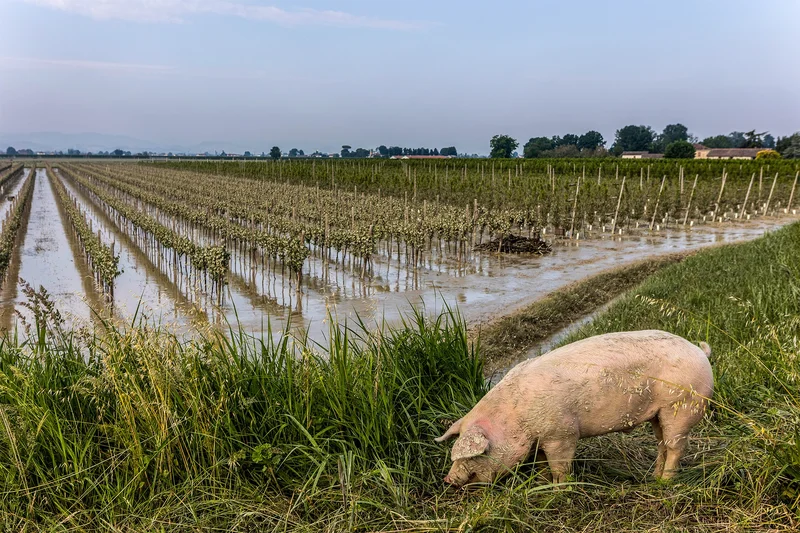
When the rain began falling over the Hex River Valley in the Cape Winelands on Sunday, 10 May, there was little indication of how rapidly the landscape would change.
By the afternoon of 11 May, the Hex River had swollen to such an extent that water was running between workersâ homes at Kleinberg Kriegler Farms and through the vineyard.
The sheer scale of the approaching flood became clear when a large upstream dam, which had been only 32% full, overflowed after about 18 hours of rain.
According to Andre du Toit, general manager of Kleinberg Kriegler Farms, within 24 hours conditions had deteriorated so dramatically that lives would probably have been lost had the residents not been evacuated.
âNobody was hurt. That is the one positive thing about the floods. But some of the people lost a lot,â he said.
The flood severed roads, swept away gates and forced farmers to open routes across neighbouring properties to reach isolated areas. Four houses at Kleinberg Kriegler were damaged, displacing 11 people. Elsewhere on the farm, the Hex River tore through vineyards, pump stations and infrastructure.
A similar scene unfolded about 70km away, at Springfield Estate in the Breede Valley, where the floodwater was 2m deep in places. Vineyards nearly a kilometre from the river were submerged.
As the water spread over the estate, it did not simply rise and recede. It moved with enough force to wash away soil, expose rock and carve new channels through agricultural land.
âEverything from here downwards was underwater,â said Pieter Bruwer, viticulturist at the estate, surveying the damaged vineyards two months later. âThe water was higher than all the vines here.â
In one young vineyard, planted only last year after a previous flood, almost nothing remained. Vines, trellises and about a metre of soil had been washed away, leaving rock exposed.
âWeâre not even going to try to salvage it. Everything else is washed away,â said Bruwer.
The cost
The full extent of agricultural land lost across the province in the flood, either temporarily or permanently, has not yet been established.
However, in a media statement released this month, the Western Cape Department of Agriculture estimated the flood had cost seasonal workers R18.7-million in wages.
Initial industry reports indicate table grape producers suffered widespread losses.
The South African Table Grape Industry (Sati) said the flood had affected producers in the Hex River, Berg River and Olifants River regions. Some reported damage to more than a third of their vineyards. In the Hex River region alone, an estimated 100 to 120 hectares were affected.
The organisation stressed that it was too early to determine how much of this land would remain unusable or how employment would be affected. Western Cape table grape regions support about 58,000 permanent and seasonal jobs, meaning prolonged disruption on severely damaged farms could place livelihoods under pressure.
At Kleinberg Kriegler, a 70-hectare table grape farm, water flowed through about 30 hectares. Du Toit expects at least five hectares were permanently lost.
He said that some blocks would be replanted, while others may be surrendered permanently to make space for a wider river channel.
âWeâre going to lose about two to three hectares just on widening the rivers. Itâs a big decision to make because, out of 70 hectares ... 2½ hectares will now bring in no income,â he said.
The sacrifice is intended to prevent future floods from destroying productive vineyards.
Du Toit said new vines generally take four to five years to reach full production, and surviving blocks with badly disrupted soils could take another two or three years to recover.
Soil washed away
The flood left lasting damage across Kleinberg Kriegler and Springfield Estate. At Kleinberg Kriegler, the surging water stripped away years of carefully built-up topsoil, compost and nutrients. Preliminary soil tests confirmed severe depletions of potassium and boron â a setback Du Toit says will take two to three years of liming and treatment to repair.
He said the farm would use soil and leaf analyses to monitor vines and determine whether nutrient shortages needed to be corrected through additional applications.
At Springfield, the flood deposited deep layers of pale, nutrient-poor sand across vineyards while stripping fertile soil from other areas.
âThe sandy soil that gets deposited here has nothing in it,â said Bruwer. âThere are no nutrients and organic matter.â
Saturated soil also loses oxygen, disrupting the microorganisms that help maintain soil health. Following previous floods, Bruwer observed sluggish vine growth and smaller crops during the first recovery season.
Persistent standing water risks rotting vine roots, as high water tables repeatedly refill low-lying areas despite Springfieldâs pumping efforts. Compounding the damage, some vines have prematurely begun budding during their winter dormancy.
âIt has completely got its seasons wrong,â said Bruwer. Premature budding uses stored energy and can lead to uneven ripening. To protect wine quality, the estate may have to remove bunches that are still green while others ripen.
Bruwer was reluctant to make a firm prediction but believes the next harvest could be about 20% smaller. The estate will try to protect quality, he said, but cannot guarantee the same volume.
The provincial agriculture department said rehabilitating flood-damaged topsoil, silted vineyards and saline-affected land could take from several months to several years, depending on the severity and conditions at each site.
Farming between drought and flood
For farmers in the Cape Winelands, the May disaster was not an isolated encounter with extreme weather.
Flooding is not unusual on the Springfield Estateâs floodplain, said Bruwer. In the past, water entered the vineyards and receded. This time, its height and force transformed it from an inundation into an erosive current.
âThe two big problems that we face with climate change are longer, more severe droughts and the wetter spells and floods,â he said.
In the Hex River Valley, Du Toit has also seen extreme events become more frequent. He recalled major floods in 1981 and 2008, followed by roughly four floods of varying severity since 2000.
âThe intensity has definitely been picking up a lot,â he said.
Sati said repeated flooding was placing severe financial pressure on producers whose margins were already constrained. Clean-up and repair work can cost individual farms hundreds of thousands of rands, diverting money that might otherwise have been invested in new vineyards, protective coverings or improved production.
Making room for the water
For both farms, recovery means more than restoring the landscape to what it was before May. It requires reconsidering where and how farming can continue.
Kleinberg Kriegler is widening river channels and strengthening a protective wall near workersâ housing.
Springfield is also planning to give the river more room. This could include altering a bend and rebuilding protective walls, subject to regulatory approval from the government.
Bruwer cautioned that while embankments protect against smaller floods, they can amplify destruction during major events by bottlenecking the waterâs force. Striking the right balance â containing minor floods while safely dispersing catastrophic ones â demands expert engineering advice.
The farm has also sown rye over exposed soil to prevent the deposited sand from blowing away. Cover crops provide root systems that bind the soil and may reduce erosion during future floods. Some neighbouring farmers are considering planting seasonal crops in the most vulnerable areas rather than re-establishing orchards or vineyards, which take years to mature.
The Western Cape Department of Agriculture said it was providing technical guidance on riverbank rehabilitation, erosion control and river-protection measures. Planned interventions include removing sediment blockages, stabilising riverbanks, repairing damaged channels and strengthening embankments.
The province is reprioritising funding for disaster relief, although it did not specify how much direct assistance would reach farmers or when it would be available. Environmental authorisations and other regulatory approvals could further influence the pace of river work.
Sati has called for urgent funding to repair roads, bridges and water infrastructure before the next export season. Damage to public infrastructure could prevent grapes from reaching packhouses and ports, even where vineyards escaped the worst of the flooding.
Citing Western Cape government estimates, Sati said the floods caused about R9-billion in damage, including more than R5.2-billion to agriculture and almost R2-billion to transport infrastructure.
Starting again
Weeks after the water receded, recovery remained a race against the agricultural calendar.
Sand needed to be removed before vines began flowering. Pump houses and electricity lines needed to be restored before irrigation became necessary.
At Springfield, Bruwer expects it could take a year or two to restore the farm to the condition it had reached after recovering from the previous flood.
âWe had the farm at a place where it was neat, and we could be proud of it again,â he said. âNow itâs all the work from the beginning again.â
The experience has not extinguished his determination.
âWe have to be hopeful,â he said. âWe will get it back to how it should be. Weâre not going to give up.â DM