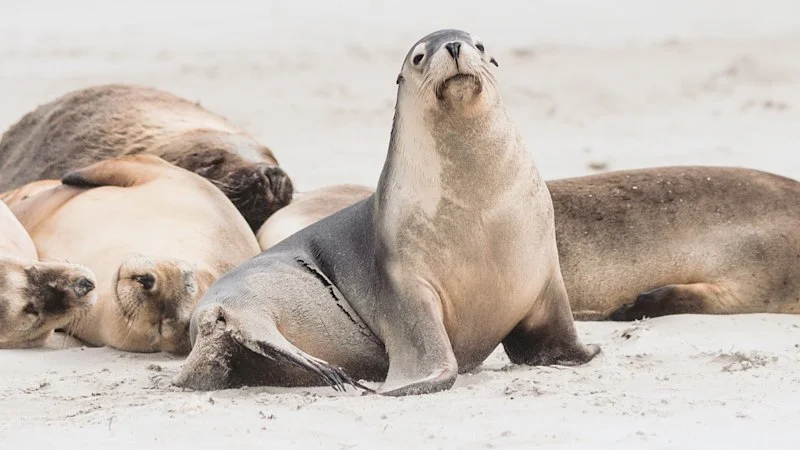
Dreaded local transmission of the deadly H5N1 bird flu has been declared in South Australia, sounding alarm for avian species across the country and sparking fears for a colony of endangered sea lions, which are also susceptible to the virus.
South Australian Primary Industries Minister Clare Scriven on Wednesday announced 11 new cases of the virus had been detected among greater crested terns, a local species that does not leave the country. It is likely migratory seabirds from the Antarctic brought H5N1 to Australia, and it then spread among terns.
Eleven new cases of H5 bird flu had been detected, all in greater crested terns. Seven detections were made on South Australia’s south-east coast and four on Kangaroo Island, which Scriven said showed local transmission of the virus was “very, very likely”, adding that authorities could not halt the spread in wild populations.
“It was pretty much inevitable that it would occur,” she told the ABC. “There is nothing we can do to stop the transmission of H5 bird flu.”
The virus has killed hundreds of millions of birds around the world, and it is believed an outbreak of H5N1 in Australia could spark an environmental disaster that risks extinction of dozens of species, including marine mammals like otters, dolphins and seals that also suffer from infection.
Scriven said the popular beach tours to the colony of about 1000 sea lions at Seal Bay on Kangaroo Island had been halted. The virus has not been detected among the marine mammals, but tours were halted to stop any potential disturbances that could harm the colony.
There are also about 100,000 long-nosed fur seals on or around Kangaroo Island, which can also contract the virus.
“Everyone knows how susceptible the [sea lion] population is, and they are an endangered species,” Scriven said.
H5N1 arrived in South America in 2022 and killed more than 30,000 South American sea lions, 17,000 southern elephant seal pups and unknown numbers of porpoises, dolphins and otters, as well as at least 650,000 native birds.
More than 13,000 seal pups were killed by the virus on Australia’s sub-Antarctic Heard Island territory, which was more than three-quarters of new births on the island.
Conservation groups are calling for the immediate deployment of a $200 million fund to boost wildlife resilience. They argue that while the virus cannot be stopped from spreading among wildlife, investment in habitat restoration and programs to cull feral predators can help native animals survive the outbreak.
“With only 12,000 individuals left, the Australian sea lion simply cannot absorb the kind of losses we have seen bird flu inflict on marine mammals overseas,” said Australian Marine Conservation Society campaigner Alexia Wellbelove.
“Every colony, every pup, every individual matters when a population is this small. We cannot afford to wait.”
The Invasive Species Council’s James Johnston said emergency wildlife funds were critical.
“We can’t stop bird flu reaching every corner of Australia, but we can give our wildlife a much better chance of surviving it,” he said.
Testing by the CSIRO is underway to confirm the infected birds have the H5N1 strain of the virus, which has killed millions of animals around the world.
H5N1 is not considered a significant risk to human health.
However, pet birds and cats usually get extremely ill and die when infected.
Dogs are more resistant to the virus and rarely die or become severely ill. The same is believed to be true for rabbits and guinea pigs as well as cows, sheep, pigs and horses.
There have been no detections of the virus in farmed poultry. An outbreak would cause a significant impact on chicken meat and egg production. H5N1 in the United States has caused more than 170 million birds to be culled since 2022, while egg prices had tripled by 2025.
The government says people who see sick or dead birds and other animals should not touch them, but instead record their location, take photos and videos and call 1800 675 888.
People are encouraged to look for signs of bird flu in wild and domestic animals, such as sudden death or difficulty breathing, standing, walking or flying.