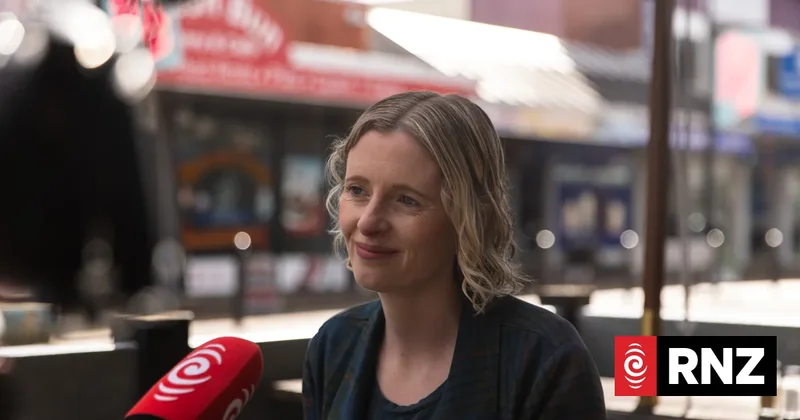
Upper Hutt's mayor is urging other Wellington councils not to force it into amalgamating against its will.
Councils across the motu have until August 9 to come up with plans to simplify local government, but in the capital there's still stark disagreement about the details.
The current proposal has Wellington, Upper Hutt, Lower Hutt, and Porirua city councils merging, as well as three Wairarapa councils and potentially Kāpiti District Council.
A layer of community councils would sit beneath that.
An email that Wellington Mayor Andrew Little sent last week to all councillors, which RNZ has seen, said Upper Hutt intended to vote against a plan to merge with the other Wellington councils.
The email said the city's mayor Peri Zee intended to ask councillors in each council to propose an amendment to have Upper Hutt excluded from any amalgamation proposal.
Zee told RNZ she was sceptical of amalgamation.
"I haven't yet heard anybody articulate the value proposition, or the outcomes we expect to get from this project.
"Our region already has strong regional governance in things like transport."
Upper Hutt mayor urging Wellington councils not to force amalgamation
Analysis by consultants MartinJenkins showed a Wellington council made up of the city, Hutt Valley and Porirua councils could cost $290 million to set up and result in savings of $930 million over 25 years.
Zee said amalgamation would not deliver enough benefits for ratepayers.
She said she would ask elected members across the region to respect local decision-making if Upper Hutt votes against the idea next week.
"If a council votes no, that means no... and I would expect that they would respect that."
But that plea may be rejected.
Little said the proposal he would submit, if it was backed by his council, would include the region's four metro councils.
He said ministers had ultimately designed the process this way.
"Ministers can say it doesn't make sense for you not to be in it, therefore you're in it."
Little said he wants the Wellington region to decide it's own fate, and not leave the plan up to the Government by missing a deadline.
He believed the benefits, including savings, from a larger council would be a win for ratepayers in the long run.
"We're not setting up for a few years, we're setting up an arrangement that is intended to last for two or three decades."
A majority of 3016 surveyed Wellington city residents said they wanted councillors to forge ahead with merger plans.
About 85 percent said they supported councillors putting forward plans, with 68 percent strongly supporting that and 17 percent somewhat supporting that.
Little said councillors were still debating amalgamation. He expected a decision next week.
What Wellingtonians think of amalgamation
Resident Ellen Blake believed forced amalgamation jeopardised Wellington city's special character.
"We have lots of council housing, we've got significant nature restoration programmes, those are all unique to Wellington - and not to the rest of the region. So we've got our own local identity, and we want to keep it."
Climate consultant Matt Raeburn was more positive about the idea. On Wednesday he told councillors in the capital that merging would help the region address climate change.
He said in his opinion, Wellington's voice was currently weaker than Auckland council's unified one when it came to climate.
"From central governments over the last few years, and frankly even before that, the message to councils has increasingly been you're on your own.
"Councils are being given unfunded mandates on climate change, we cannot count on central government changing course or coming to save us."