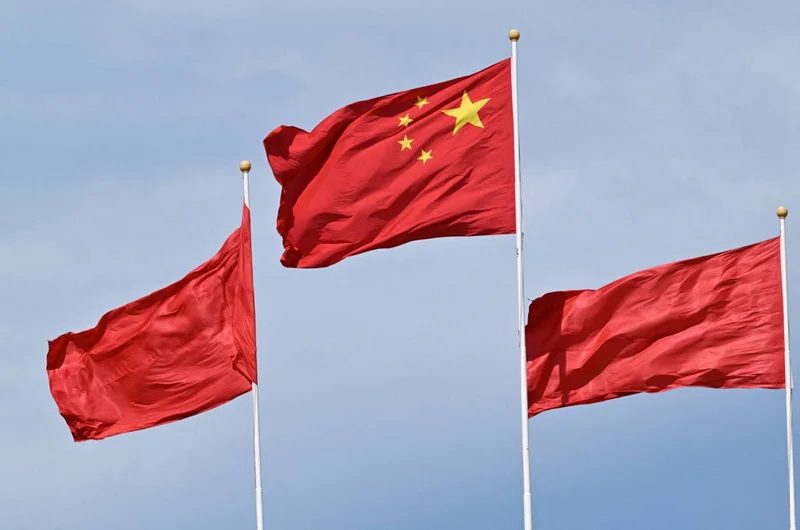
Perceptions that China is the foreign power that wields the most positive influence on Africa’s youth have strengthened, a biennial survey showed, while nations ranging from Germany and the U.K. to India are now viewed more favorably than the United States.
Some 95% of young African respondents consider Beijing’s influence on the continent as positive, while 85% regard Washington’s standing in a similar vein, the survey conducted for the Ichikowitz Family Foundation and released Wednesday found. Russia is also making headway in its drive to increase its sway, with 83% of those surveyed having a favorable view of its presence, compared with 68% in 2024.
The survey was conducted at a time when on-again, off-again tariffs imposed by U.S. President Donald Trump’s administration and conflicts in Europe and the Middle East are seeing the reconfiguration of supply lines. That’s prompted an increased focus on Africa and its store of mineral riches from the U.S., China and lesser powers.
“Perceived influence from China and India has grown since 2024, with China increasingly viewed as a more favorable partner than the U.S. — a sentiment shaped in part by the return of the Trump administration,” the foundation said in its African Youth Survey 2026.
Youth in South Africa, which has had an adversarial relationship with the Trump administration, were the least favorable to the U.S. of those interviewed in 16 nations, with just 58% seeing the country as a positive influence.
Almost three-quarters of those surveyed in the country said their leaders needed to stand up to Trump. Almost three-fifths of those spoken to continent-wide said they believed the U.S. would disregard international law to win access to natural resources.
Russia gained ground most strongly in nations where it has offered military support against Islamist militants, with 95% of those interviewed in Burkina Faso saying it has influence on the nation.
Russia has courted African nations with renewed vigor since the start of its war against Ukraine in 2022, opening cultural centers and deepening diplomatic ties. At the same time, it has been accused of recruiting Africans to fight for its military and work in its drone factories.
Researchers interviewed 4,901 men and women between the ages of 18 and 24 for the survey in countries ranging from Chad and Kenya to Zimbabwe.