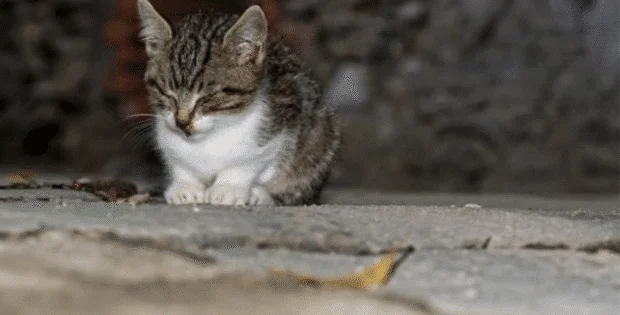
Kill the cats to save the birds?
“Cats? We need to catch them.”
“The only way to control the population is to cull them.”
When birdwatcher and YouTuber Kim Eo-jin made these remarks in a video, he touched one of the most contentious nerves in South Korea’s animal welfare community: What should be done about the country’s growing stray cat population?
Article continues after this advertisement
There is a widespread debate over how to deal with the stray cat population in Korea, with clashing views presented by those advocating for the humane management of cats and other animals.
Kim has spent the past month posting videos on his channel, which has more than 500,000 subscribers, arguing that stray cat populations have grown out of control in some parts of the country, particularly on Mara-do, South Korea’s southernmost island, and that the cats are threatening wild birds.
READ: Birders find new role: Minimizing bird strikes
Kim’s YouTube channel also links to a petition calling on the National Assembly to amend the Animal Protection Act, including tighter regulations on cat shelters and a ban on feeding stray cats.
His campaign has fueled an increasingly acrimonious debate online between cat advocates and bird conservationists over how stray cats should be managed — and whether culling should ever be part of the answer.
Article continues after this advertisement
Some environmentalists, veterinarians and animal welfare advocates, however, argue that the debate places disproportionate blame on cats. They point to habitat destruction and other human activity as major threats to wild birds and question whether culling cats would provide an effective or scientifically justified solution.
Korea’s stray cat issue
Korean law defines stray cats as cats living naturally in urban areas that are subject to population-control measures such as trap–neuter–release (TNR) programs.
Article continues after this advertisement
There is no official nationwide count of stray cats. But an analysis of Agriculture Ministry data estimated that some 680,000 to 690,000 were living in Seoul and six other major metropolitan cities as of 2022.
The nature of the conflict surrounding stray cats has also changed.
READ: Animal pound in Cavite found starving cats to death
According to the Seoul Metropolitan Government, complaints in the past largely involved noise and cats tearing open garbage bags. More recently, disputes have increasingly centered on how the animals are cared for, including the sanitation, location and expansion of feeding stations.
Are cats a threat to endangered birds?
At the heart of Kim’s argument is that cats have become somewhat sacred in South Korea’s discussion of animal welfare and ecological conservation — an animal whose impact on wildlife, he says, has become difficult to openly criticize.
Kim describes stray cats as invasive predators and argues that, with few larger predators, their populations face little natural control while they pose a threat to native birds and other small animals.
One trait he particularly emphasizes is cats’ tendency to hunt even when they are not hungry.
Kim says that there are fewer than 150 crested murrelets around Mara-do and that the cats on the island prey on endangered species and migratory birds, even after around 40 were relocated off the island.
Kim traces what he sees as the root of the problem to human feeding.
Regular feeding by residents allows cats that might otherwise struggle to survive to live longer and reproduce, he argues, creating artificially high concentrations of predators in urban areas.
READ: 150 cats headed for dinner tables rescued in China
Kim also challenges the common perception that stray cats help control rat populations, arguing that cats do not necessarily hunt rodents in significant numbers.
He is similarly critical of the government’s TNR program, calling it a “failed policy.”
Under TNR, stray cats are captured, sterilized and returned to the areas where they were found.
Kim argues that such programs can substantially reduce populations only when roughly 70 to 90 percent of cats in a given area are sterilized within a relatively short period.
With South Korea lacking even a nationwide estimate of its stray cat population, Kim argues that achieving such a sterilization rate is practically impossible.
His conclusion is far more drastic. If the goal is to actually reduce the number of stray cats, he argues, some form of culling is unavoidable.
Ecologists, veterinarians say humans are a far greater factor
Kim’s arguments have drawn pushback from environmentalists and animal welfare advocates who say focusing on cats risks obscuring much larger human-driven threats to wildlife.
Choi Byung-sung, an environmental activist and head of the Climate Disaster Research Institute, urged bird enthusiasts to exercise restraint.
“Is the biggest reason birds are disappearing that cats eat them, or that humans are destroying their habitats?” Choi wrote in a Facebook post. “If you love birds that much, you should ask yourselves how much you have actually done to protect the places where they live.”
Choi accused some bird enthusiasts of devoting disproportionate attention to cats while failing to speak out as forcefully when bird habitats are threatened by development.
He pointed to Sodeul Island, a major habitat for Baikal teals, where local residents have opposed the construction of transmission towers.
“When residents were struggling over the construction of transmission towers at Sodeul Island, one of the largest habitats for Baikal teals, where were the people who love photographing those birds?” Choi wrote.
He also pointed to birds killed in collisions with glass buildings and other artificial structures.
“Which kills more birds — collisions with the growing number of glass buildings, or cats?” he wrote. “Have you ever called for glass buildings not to be built?”
A 2018 report by the Environment Ministry and the National Institute of Ecology estimated that about 8 million wild birds die annually from collisions with transparent windows.
Meanwhile, veterinarian Na Eung-sik separately challenged Kim’s claim that TNR is ineffective.
Na argued on Friday that isolated cases in which cat populations remain high do not prove that the approach itself has failed.
Na also questioned Kim’s argument that feeding stray cats means they stop hunting rats while continuing to prey on birds.
Cats can continue to react to moving prey even when they are full, Na said, but there is no basis for assuming that such hunting behavior would apply to birds but not rodents.
“The policy needs to be based on objective research and South Korea’s ecological conditions,” Na said.
Rather than culling, Na said reducing stray cat populations requires concentrated TNR programs within defined areas, combined with proper management of feeding stations and sanitation.
“We should be discussing management based on scientific evidence, rather than an emotional debate for or against cats,” he said. /dl