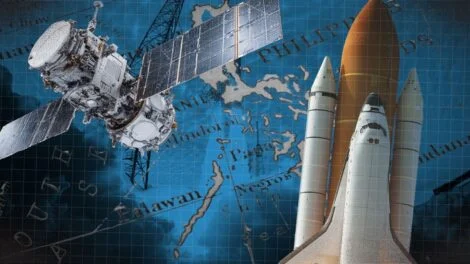
PH eyes public-private partnership to develop spaceport
MANILA, Philippines — The Philippine Space Agency (PhilSA) is pursuing a public-private partnership to develop a spaceport in the Philippines and ensure the long-term sustainability of commercial rocket launches in the country.
The agency made the announcement after President Ferdinand Marcos Jr., in his State of the Nation Address on Monday, July 27, said the country would launch a rocket into space next year — the first liquid-fueled sounding rocket launch on Philippine soil.
The launch, set in Cagayan, is expected to advance the Philippines’ launch capabilities, develop Filipino expertise in rocket technology and prepare the country for future space launch activities.
Article continues after this advertisement
READ: PH prepares for 1st rocket test launch next year
PhilSA Director General Gay Jane Perez said existing spaceports cannot meet increasing demand as global launch rates continue to accelerate.
A spaceport in the Philippines is expected to reduce costs, improve launch efficiency and create opportunities for future launch services, she said.
With the Pacific Ocean to its east and its proximity to the equator, “the Philippines is well positioned for safe and secure rocket launch and recovery operation,” Perez said.
Article continues after this advertisement
Next year’s sounding rocket test launch will be a demonstration flight of a liquid-fueled rocket from the Philippines. It will carry a locally developed payload weighing up to 2 kilograms to an altitude of at least 5 kilometers.
The project will be implemented by PhilSA, the Department of Information and Communications Technology and the Cagayan Economic Zone Authority, together with Ascend International Gateway Inc. and South Korean company Perigee Aerospace Inc.
Article continues after this advertisement
“The Philippines possesses strong potential to become an important participant in the future global space economy,” said Ji Hye Kwon, country director of Perigee Manila.
“Our vision is for the Philippines to have a spaceport that serves as a gateway for safe, responsible and sustainable space access for the region and the world,” Perez said.
“It will be a commercially driven, government-enabled spaceport, with predictable timelines for launch licensing and authorization,” she said.
“Apart from location, launch companies also take into consideration the approval process: whether it is clear, whether the approvals arrive on a schedule they can plan around, and whether the country meets its international obligations.”
“That reliability is where the Philippines intends to compete, and it marks a shift in the country’s role in the regional space economy, from a user of space services to one that helps provide them,” Perez added. /dm