Brazil · Energy
A historic production run at Brazil’s state-controlled oil giant is colliding with a sharp pullback from its biggest customer. The scramble to place displaced barrels is redrawing global crude trade routes.
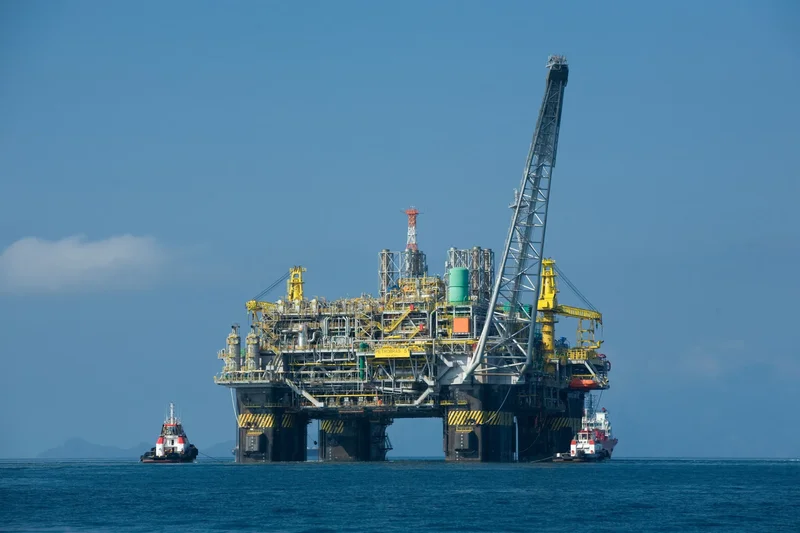
A production record built on pre-salt
Petrobras pumped a company-record 3.336 million barrels of oil equivalent per day in the second quarter of 2026, a 14.1 percent jump from a year earlier.
The Búzios field in the Santos Basin was the star performer. Its platforms reached daily operated production of about 1.2 million boe/d in June, after the field’s monthly average crossed the 1 million barrel-per-day mark for the first time.
China steps back from Brazilian barrels
The demand picture darkened in Asia. Chinese refiners slashed purchases of Brazilian crude by more than one-third for certain delivery windows, driven by high prices and war-related shipping disruptions.
As a result, China’s share of Petrobras crude exports tumbled from about 62 percent in the first quarter to roughly 35 percent in the second. Broader Chinese import data shows the country drawing on storage rather than buying spot cargoes.
Live Company IntelligencePetroleo Brasileiro Petrobras SA ADR — the full investor dossier
Wall Street view
11Buy
3Hold
0Sell
$22.59· +40% vs 200-day
Valuation & profitability
Price & risk
$10.9752-wk high
$22.07
Revenue trend · 6y
$88.10B
Ownership
Dividend
What Petroleo Brasileiro Petrobras does.Petróleo Brasileiro S.A. – Petrobras explores, produces, and sells oil and gas in Brazil, China, the United States, the Americas, Asia, Europe, Singapore, and internationally. It operates through three segments: Exploration and Production; Refining, Transportation & Marketing; and Gas & Low Carbon Energies. The Exploration and Production segment explores, develops, and produces…
Where the oil is going now
Petrobras moved quickly to re-route cargoes. India, Europe and other Asian countries became the main offsets to weaker Chinese demand, soaking up the surplus of medium-sweet pre-salt grades.
The company added five new crude customers in the quarter: refiners in Taiwan, Oman, Poland, Sweden and South Africa. The diversification marks a structural shift away from the single-buyer dependency that defined Petrobras export strategy for years.
Refining runs cap import needs
At home, Petrobras pushed its refineries to very high utilization rates. Imports of oil derivatives fell to about 67,000 barrels per day, the lowest quarterly level on record.
Combined with surging domestic output, this freed up even more crude for export. Crude imports also dropped to multi-year lows, flipping Brazil into an even larger net exporter position.
A new trade map takes shape
The Q2 data confirms that Brazilian grades like Búzios and Tupi are finding permanent homes outside China. European buyers, facing Middle East supply disruptions, are increasingly turning to Latin American heavy-sweet crudes.
For international traders and policymakers, the signal is clear: Brazil’s pre-salt boom is decoupling from its traditional Asia-Pacific anchor. The re-routing of nearly a million daily barrels is reshaping spot markets from Rotterdam to Singapore.
Frequently Asked Questions
Why did China cut Petrobras crude purchases so sharply?
Chinese refiners reduced imports due to high global crude prices and war-related shipping disruptions. Broader data shows China drew down storage rather than buying expensive spot barrels, hitting Brazilian grades like Búzios especially hard.
Which countries are buying the oil China left behind?
India, Europe and other Asian nations absorbed most of the displaced volumes. Petrobras also added five new customers in Q2 2026: Taiwan, Oman, Poland, Sweden and South Africa.
What is the Búzios field and why does it matter?
Búzios is a deep-water pre-salt field in Brazil’s Santos Basin and Petrobras’ main production growth engine. In June 2026 its platforms hit 1.2 million boe/d, making it the single biggest driver of the company’s record output.
How much crude is Petrobras now exporting?
Total oil and derivatives exports reached about 1.2 million barrels per day in Q2 2026, up roughly 41 percent year-on-year. Crude exports alone approached 1 million barrels per day in the quarter.
LatAm Markets: Live Signals → — real-time movers, turnover leaders and FX across Latin America.