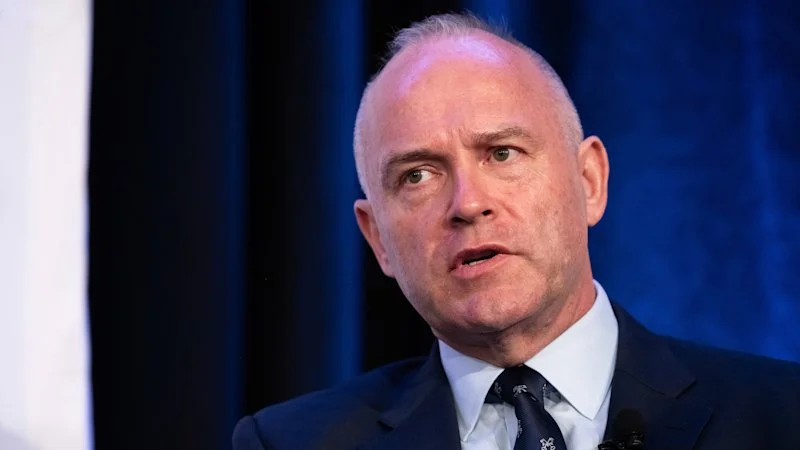
In his commentary on the ICAC investigation into the NSW Liberal Party, Bevan Shields writes that “taxpayers and parents of the 270,000 students in Catholic schools across NSW all have good cause to be disgusted by the envious financial abuse and breathtaking entitlement aired during a major corruption inquiry yesterday. They also have a right to demand answers.” Not only them. Taxpayers and parents of students in public schools also have a right to demand (and receive) answers. When many public schools struggle with under-resourcing, the allegation that Catholic Schools NSW went to bed with the Liberal Party is infuriating (“Catholic schools rort was a ‘running joke’. You won’t hear parents or taxpayers laughing”, July 29). Graham Fazio, Cootamundra
Bevan Shields raises disturbing issues in writing about the allegations against Dallas McInerney in his position at Catholic Schools NSW. Parents and taxpayers will rightly ask questions. If the allegations prove correct, not only have funds intended for education been misused, but the efforts of many honest, hardworking educators have been brought into disrepute. These allegations affect all those principals, teachers, support staff and administrators in Catholic schools in NSW who, day in and day out, are dedicated to the growth and flourishing of the children and young people in their care. After 50 years’ experience as a Catholic educator, including many years in leadership, I wish to speak up on their behalf and to assure parents of their integrity. Anne Benjamin, Toongabbie
If I was in the role of marketing Christianity and religion in general, I would be pulling my hair out at the moment – churches transferring ownership of organisations to avoid paying compensation, ICAC revelations that indicate possible corrupt links between politicians, churches and developers. A sorry sight. Philip Dowle, Wickham
Whatever the recommendations of the ICAC, one essential action must be the separation of churches from state largesse. This may mean governments taking over schools and hospitals, but unless drastic action is taken, this behaviour will continue. Wayne Duncombe, Lilyfield
I find it curious that the main protagonists in the latest ICAC investigation chose to name themselves “Reformers”. The word reform means “to make something better, fix a wrong, or change bad habits”. Attempting to drag a political party back to the 1950s would not seem to meet this definition in any way. Tim Parker, Balmain
‘Girlbosses’? Try: leaders
I could scarcely believe the attempt by John Macgowan, former senior adviser to the Baird and Berejiklian Liberal governments, to dismiss the ICAC hearings as “Girlboss McCarthyism” and as the persecution of conservative Christians by the “effete Sydney media and legal establishments” (“ICAC’s formidable ‘lady barrister’ is about to become a household name”, July 29). His rhetoric exemplifies the atavistic attitudes that permeate the entitled Reformers faction of the Liberal Party, and their apparent inability to accept accomplished, assertive women in positions of authority. His use of the word “effete” reads as the lament of a man resentful of social change that has eroded traditional power and gender hierarchies. Macgowan seems particularly threatened by Dr Peggy Dwyer, SC, who has brilliantly made a detailed and compelling case. Calling the enforcement of electoral donation laws a “persecution” turns morality on its head. It is the minimum expected in a democracy. The alternative is called corruption, Mr Macgowan. Salvatore Sorbello, Campsie
I was fascinated to read about the impressive Senior Counsel Peggy Dwyer in the ICAC hearings. However, I’m not sure why it was necessary to describe her as “diminutive”. Has the physique of Justice Michael Kirby or Geoffrey Watson, SC, ever been mentioned? As quoted in the article, Dwyer once said to a fellow barrister: “But it’s 2024, there are lady barristers! My learned friend is going to have to get used to it.” Sally Shepard, Nelson Bay
No time to burn
Like Australia’s bushfire authorities, I’m watching Europe’s disasters with growing unease as our own fire season approaches (“Extreme weather overseas spells danger for Australia”, July 29). We are heading into an El Nino summer in a country now 1.5 degrees hotter than it was in 1910. Monday’s AusAlert test was encouraging, but early warnings alone won’t keep communities safe from bushfires and other climate‑driven disasters. With elevated fire risk forecast across much of eastern Australia, preparation is essential to stop a dangerous season becoming a Black Summer repeat. What else is the Albanese government doing to keep us safe? Larni Dibben, Glen Iris (Vic)
With increasing fire danger, Australia should start using the American approach of fast-attack teams that parachute into fire zones as soon as they are spotted. Those teams build containment lines before the fire gets too big. They are sometimes assisted by water bombers. By comparison, the Australian approach is to build containment lines along truck-accessible roads, which often means letting the fire grow huge. Not only does that make the fire harder to stop, it also means sacrificing isolated houses and large numbers of birds and animals in the areas that get burnt. Automatic detection systems are giving us the tools to detect fires earlier. Let’s start responding to them earlier too. Anthony Healy, Centennial Park
Sign of madness
As the old saying goes, insanity is defined as doing the same thing over and over again and expecting a different result. The Reserve Bank’s strategy of raising interest rates seems to be an example of this misguided thinking, particularly if it contemplates another increase (“Michele Bullock puts interest rate rise on the agenda for the bank’s August meeting”, July 29). Even with my limited high-school economics, I fail to understand how increasing the cost of business borrowing or imposing further financial pain on families will control inflation. Overusing its power to set interest rates is more likely to add to the inflationary pressures the Reserve Bank is hoping to prevent.Linda Page, Baulkham Hills
A week ago, the world oil price rose $US10 a barrel and the oil companies here immediately raised our bowser price by more than 10¢ a litre. When the oil price fell $US10 a barrel did the aforementioned lower our bowser prices? Well, no, I’m still waiting. This episode by concentrated ownership in Australia epitomises the main cause of our current inflation. Add private healthcare, supermarkets, insurance and airline prices, among others, and you see that Australia’s main inflationary pressure is not caused by a high level of demand but by supply-side issues. These include oil price rises, the other main cause of our current inflation. Hammering mortgage holders by increasing interest rates would have little impact on inflation as this is a demand-side weapon – it can reduce spending. In fact, higher mortgage rates would actually add to inflation as they feed into housing costs, which are included in inflation calculations. James Tulloch, Westleigh
PM’s predicament
Hannah Ferguson has got a few things right, but whether she can oust Albanese is another matter (“She should be running for Labor. Instead, Hannah Ferguson plans to oust the PM from his seat”, July 29). Ferguson is correct in blaming the failings of mainstream politics for the rise of One Nation and right-wing populism. It’s hardly a wonder that people are angry with politicians and politics in general. Neoliberalism has been a disaster for the common people. There is no trickle-down effect – only the wealthy, large companies and multinationals have benefited. Housing has become an investment vehicle, and most people under 30 without family money have little hope of owning a home. Private medical insurance has become a system for greed and profit rather than a safety net for healthcare. All this is a fertile ground for authoritarian leaders to become popular because they mendaciously promise an alternative to traditional political parties. As we have seen, when people like Donald Trump achieve power, democracy is diminished. Unless traditional governments start making policies that benefit everyone rather than just big business and the extremely wealthy, they’re all going to mirror the giant disaster that America has become. Barrington Salter, Elanora (Qld)
According to Jacqueline Maley, Hannah Ferguson would be a perfect Labor Party candidate because, despite not having a policy platform, she talks fast, is tall and is telegenic. Anthony Albanese is not tall, not telegenic and certainly does not talk fast. But at least he has a policy platform. Matthew Simcock, O’Connell
On the one hand, Anthony Albanese has been pilloried for not allowing open debate at the recent ALP conference (Letters, July 29), while on the other, if dissenting voices had been heard he’d have been attacked for not having control of his party. It seems he can’t win. Randi Svensen, Wyong
Test for Taylor
Angus Taylor proclaims that he will not form a coalition with One Nation. The real test of that conviction will be when he releases the Liberal “how to vote” card. Will he advocate to put One Nation last, or will he accept the preferences that will flow to the Liberals if he doesn’t? John Gelling, Merimbula
Eve of disruption
Paul Sakkal and Ross Gittins present contrasting perspectives on the Australian economy, jobs, productivity and AI (“Your boss will hate this economic fix … but you’ll love it”, “AI job disruption poised to upend Labor’s electoral map”, July 29). Gittins despairs about productivity and proposed a radical strategy of bosses being forced to increase workers’ salaries in the hope that this prompts them to increase productivity somehow. Sakkal highlights job disruption coming from the increased productivity associated with AI. The two articles capture the dilemma about AI and productivity facing government, business, unions and individual workers. I usually like your idealism Ross, but implying that this dilemma might be solved by individual businesses seems a step too far. The problem is that we are currently facing a major disruption, but the way forward is unclear. Alan Russell, Unley (SA)
Highlands overlooked
Judging by all the news coverage and Transurban’s profuse apologies, you could be forgiven for thinking the temporary closure of the M5 on Wednesday had brought Sydney to its knees. Thankfully, the motorway was reopened before the afternoon peak (“Huge delays as Sydney motorway closed due to emergency safety works”, July 29). Meanwhile, in the Central Highlands we will have been waiting not for a day, but for at least 18 months for the Mount Victoria causeway to be reopened. If only our road attracted the same level of outrage, media attention and apologies as a Sydney motorway. Our tourism operators, cafes, pubs, farm stays and small businesses are suffering, with some facing closure. So, to M5 commuters: take heart. Your disruption lasted a few hours. Ours has become a way of life. And one more thing. The Central Highlands is still open, beautiful and desperately in need of your support. Come and visit. We can’t promise a Transurban apology if you’re delayed, but we can promise a much warmer welcome – despite the winter wonderland. Vivien Clark- Ferraino, Duckmaloi
Developers not welcome
I’ve lived in the Hills for almost 60 years and I’m fed up with the destruction of my suburb. For most of that time we were ignored. Most people were rusted-on Liberal voters so neither major party made much effort in our area. Public transport was pathetic, but now the metro has opened the floodgates for developers. In just one example, a social housing complex of town houses is being demolished by the government to be replaced by towers, ripping up a community. Where will all these people in need of homes live? Overdevelopment is rife. It’s a government-sanctioned feeding frenzy. Where are all the tradespeople required to build these new homes? Are we going to be faced with a glut of poorly built apartment buildings with little sunlight, wind canyons and no soft surfaces, like the CBD? As the Orange Lady would say, I’ve had a gutful. Barbara Grant, Castle Hill
Destructive debate
If, as your correspondent suggests (Letters, July 29), our government has “sided with Israel for two and a half years”, how does she explain the repeated and unprecedented personal attacks and political interference by Benjamin Netanyahu? It seems there are two extreme sides in this debate, both loudly demanding the government follow their advice exclusively, while the rest of us are generally supportive of the balanced approach the government is taking – calling for a peaceful settlement while criticising both Israel and Hamas – and would like to see a lot less of the political point-scoring that is fuelling antisemitism and Islamophobia. Phil Bradshaw, Naremburn
Sally for PM
Many working-class people over a long period have benefited from Sally McManus’s negotiating skills, not to say her industriousness, palpable honesty and decency, as Jenna Price explains (“All workers owe thanks to campaign genius McManus”, July 29). McManus has rightly been praised by Anthony Albanese as “a giant of the Labor movement”. She would very likely make an admirable MP if she chose to move into the parliament. Speculatively, doing so could be a giant stride to replacing the unadventurous Albo by becoming our second female prime minister. Ron Sinclair, Windradyne
The big picture
Banning school photos is a tragedy (“Why one of Australia’s largest childcare providers has banned school photos”, July 29). On risk-benefit analysis, the enjoyment from such photos would surely far exceed the risk of abuse. Life is dangerous. We can’t legislate 100 per cent safety in 100 per cent of situations. Some common sense, please. Ashley Berry, Toolijooa
- To submit a letter to the- Sydney Morning Herald, email letters@smh.com.au. Click here for tips on how to submit letters.
- The Opinion newsletter is a weekly wrap of views that will challenge, champion and inform. Sign up here.