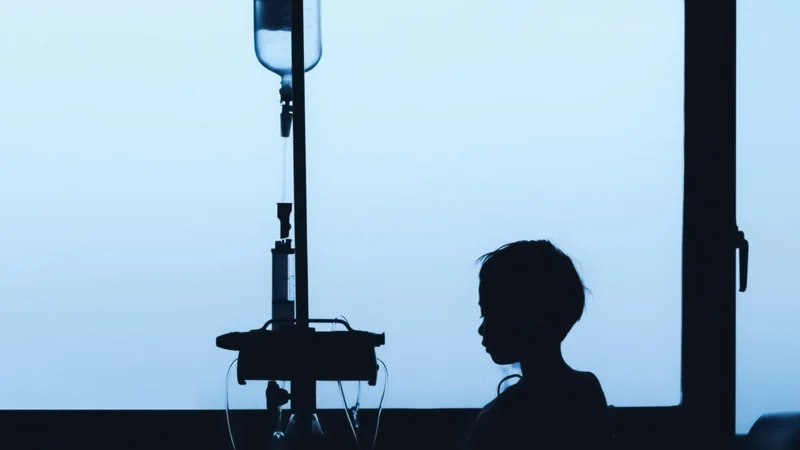
The nurses had warned me not to expect much. They hadn’t seen her smile in weeks, they said, sounding as though they’d already given up.
Her room was undecorated and gray, crowded with machines whose chorus of irritating beeping never ceased. I paused at the entrance, horrified by the numerous plastic tubes penetrating her tiny abdomen. My eyes moved from her stomach to her hands, clenched around a stuffed unicorn, her sole companion on a Friday night.
The patient was nonverbal, with severe developmental delays. Only a few years old, she had been hospitalized for months awaiting a lifesaving liver transplant. She spent most of her days alone in bed, minimally responsive, her glassy eyes fixed on the animated figures flickering across the television screen. Taking a deep breath, I carefully weaved my way through the intricate web of wiring to the edge of her bed, contemplating how I might lift her spirits.
During my time as a college volunteer on the pediatric ward, this scene was routine, but I never quite became accustomed to it. Children with prolonged hospitalizations often spend lengthy stretches of time alone, with one study finding that one-third of children are unaccompanied for most or all of a 24-hour period, left to endure the stressors of hospitalization without a familiar face.
The effects of isolation extend far beyond their time in the hospital. Research has consistently shown that social deprivation and isolation during critical developmental periods are associated with harm to cognitive development and language acquisition. Additionally, children who have prolonged hospital stays can develop elevated levels of anxiety, depression, and post-traumatic stress symptoms, as well as impaired emotional regulation and social skills. For children already facing lifelong medical challenges, these isolation-related harms compound existing disparities in health outcomes.
Despite the well-documented importance of human interaction and play, hospitalized children can be excluded from consistent, meaningful social engagement because of their medically complex conditions, infection control precautions, and concerns about fragility. The resulting isolation can mirror psychosocial deprivation, leaving many understimulated and lonely.
This issue stems not from a lack of compassion from parents or health care professionals, but from systemic failures.
Parents balancing competing responsibilities often find it challenging to regularly spend extended periods of time visiting in the hospital. The parents of the patient I supported in the pediatric ward, for example, struggled to consistently be present at her bedside because they had other children at home and worked multiple jobs to pay for their daughter’s medical care. Exacerbating the problem, caregivers of children with lengthy hospitals stays can tend to become less engaged over time, with one study reporting almost a quarter of parents were never involved in or neglected to maintain involvement throughout their child’s hospitalization.
In the absence of consistent family presence, the child’s daily experience is shaped largely by their interactions with health care personnel. But nurses and physicians rotate in and out of rooms, often too overloaded with administering medications, measuring vitals, charting notes, and performing procedures to properly engage with them.
To fill this gap, many hospitals rely on child life specialists, who provide invaluable support to the emotional and developmental needs of hospitalized children. However, they are chronically understaffed, often burned out from the physically and emotionally taxing work, and are largely limited to daytime hours. When their shift ends, the ward grows quieter; screens tend to fill the void. Left medically treated, but isolated and lonely, children turn to television shows or video games as substitutes for human connection.
Years later, now as a medical student, I keep finding myself mentally revisiting that patient’s room. While I am training to become a critical member of a care team, learning to track lab values, analyze imaging results, and manage medication lists, experiences like hers remind me that health is much more than physiological.
The solution is not to eliminate screens, which, although overused, can offer comfort and distraction, but to recognize that they should not be the default surrogate for human interaction.
Hospitals should invest more in structured, developmentally appropriate social programming for longer-term pediatric patients. This should include expanded child life staffing with evening and weekend coverage, safe peer interaction spaces designed with infection control in mind, and taking on more trained volunteers to provide nonclinical engagement.
Health care professionals also need to remember that treatment is not synonymous with care. We may not be able to spend long stretches of time with each and every child, but when we are present, we can choose to be empathetic and joyful, rather than transactional.
For the first several minutes of our time together, the patient avoided looking at me. Observing that her gaze remained fixed on the happy children dancing in the glowing box mounted above her bed, I began to imitate the dance she was mesmerized by, swinging my arms in wide arcs, letting my movements become deliberately theatrical.
Unexpectedly, a full-bodied laugh escaped from the patient. Her eyes widened, and an enormous smile crept onto her face as she clapped excitedly.
We “danced” together for nearly an hour. Despite being confined to her bed, covered in tubes, tangled in wires, despite being separated by gloves and masks and isolation gowns, our laughter permeated all those barriers. During our time together, she was a child again.
That hour made clear that isolation is not an inevitable side effect of hospitalization, but rather a consequence of a care delivery structure that can, and should, change.
Anna Tsioulias is a second-year medical student at Georgetown University School of Medicine.