Victoria needs new powers to criminalise coercive cult and fringe groups, according to a landmark inquiry into the harmful tactics used to recruit and control members.
The parliamentary inquiry into cults and “organised fringe groups”, tabled on Wednesday, recommends the state government review options for new laws to criminalise group-based coercion and prevent someone’s consent to be in a cult from being used as a defence for coercers.
It also cautions that current child and safety laws fail to capture behaviour of coercive groups, while recommending a review of homeschooling arrangements and federal changes to charity law for religious groups.
The report, Crossing the Line: Coercion and Harm in High-Control Groups, is based on 291 submissions and responses from a further 317 people who completed an anonymous questionnaire, including from survivors.
The inquiry was launched in April after the podcast Secrets We Keep: Pray Harder and The Age revealed allegations of abuse and coercion at the Geelong Revival Centre.
Labor MP and chair Ella George acknowledged that for many who came forward it was the first time their experience had been heard or acknowledged. She said recognition and a desire to prevent further harm to others was a common motivation for participating.
Group-based coercion techniques rely on gradual, often highly personalised methods including psychological pressure, isolation, financial control, surveillance, manipulating identity and preventing independent thought.
The report noted that recruitment into a group was “systematic and calculated” and commonly involved tapping into trusted networks. But rather than recruitment being confined to the fringe, coercive high-control groups operated in workplaces, universities, social circles and increasingly online.
It also found support for people exiting such groups was inadequate and survivors – who typically face a prolonged period of recovery – were often misunderstood.
The authors call for new legislation to be introduced by February 2029, asking for the Victorian Law Reform Commission to review options for the new laws that would criminalise group-based coercion.
Those laws would create a criminal threshold for control that is “sufficiently total or pervasive as to suppress the person’s capacity to live, think, or act independently of the group”.
The laws would also be focused on behaviour, not the belief system of the group, capture a pattern of behaviour, and make clear that consent or compliance was not a defence if it was produced by the coercive actions.
Melbourne psychologist Ahona Guha, who was in a cult from the age of 17 to 23 and gave evidence to the inquiry, welcomed the findings and said legislation that dealt with group coercion would be “appropriate and powerful”.
“It was absolutely horrifying [being in a cult] with a level of coercion without being able to name that [at the time] because I didn’t have the framework or knowledge and any of the language around it,” she told this masthead.
“I think if this is enacted it’s going to go a long way to reducing some of this conduct.”
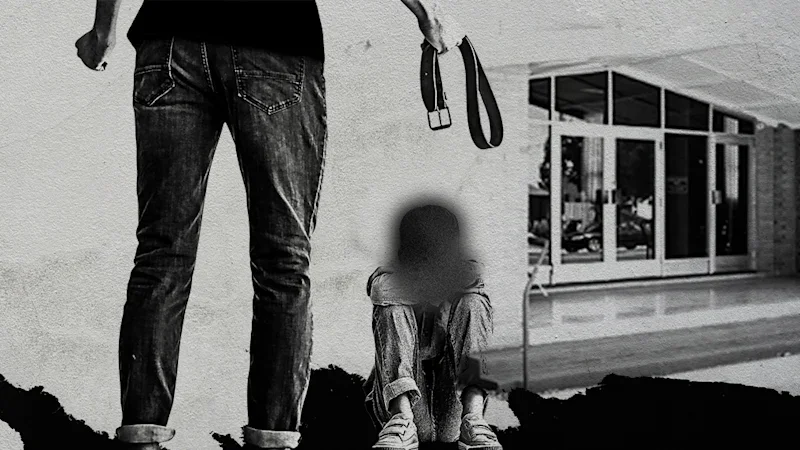
For children born into a coercive high-control group, however, the report noted that their world was shaped entirely within the group before they had the capacity to question.
Overall, the report found children and young people in coercive high‑control groups were among the most vulnerable and least visible in the state. However, the scale and nature of this harm was not measurable.
The authors noted coercive groups routinely undermined mandatory reporting obligations, possibly due to shortfalls surrounding current child and wellbeing safety laws.
“Where mandatory reporting obligations exist, the conditions that enable it – access to trusted adults, contact with mandated reporters, the capacity to recognise and name harm – are routinely absent in coercive high‑control group settings,” the report noted.
It also flags that the government must make opportunities for young people to access contact and reporting channels more available, including through reviewing homeschooling arrangements, so students have more contact with physical schools.
Among further considerations were whether amendments are needed to empower the Social Services Regulator – which oversees child safety – to direct an organisation to investigate an allegation if it had failed to conduct one.
Survivor groups welcomed the report’s release, describing it as a watershed moment.
Survivors of Coercive Cults and High-Control Groups said it was the first time gaps in the system had been recognised as ill-equipped to identify or respond to the abuse that occurred within such groups.
In a statement released through the group, Ryan and Catherine Carey from Stop Religious Coercion Australia urged the government to implement the recommendations in full.
President of Cult Information and Family Support Renee Spencer said she hoped the report would have national ramifications.
“It opens the door to protecting people right across Australia,” she said.
“[We have] been raising concerns on behalf of families and survivors affected by high-control groups for 30 years; this is the first time that call has been answered so comprehensively.”
Co-directors of Religious Trauma and Cults Sam Sellers and Elise Heerde said the report echoed what survivors escaping coercive high-control groups had said for years.
“We are pleased to see recommendations for survivor-led professional development in the mental health space,” they said.
“Survivors should not have to educate their own therapist before they can start recovering.”
If you or anyone you know needs help, call Lifeline on 13 11 14 (see lifeline.org.au), Beyond Blue on 1300 22 4636 (see beyondblue.org.au) or 1800 RESPECT (1800 737 732).