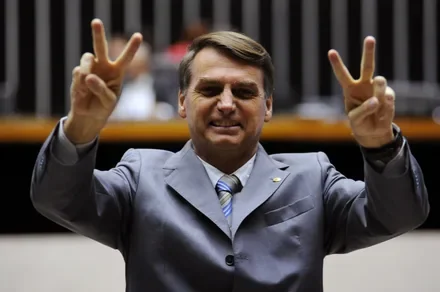
Jair Bolsonaro is barred from Brazil’s 2026 presidential election, being confined to house arrest and restricted from communicating publicly. But an AI-generated version of the former president still managed to take the stage at his son’s campaign launch.
The synthetic Bolsonaro appeared in a video at the launch of Senator Flávio Bolsonaro’s presidential campaign in São Paulo. It openly identified itself as AI-generated before endorsing Flávio as the person chosen to carry forward his father’s political movement. Flávio is running against incumbent President Luiz Inácio Lula da Silva in Brazil’s October election.
The avatar even declared that prison could not silence the movement Bolsonaro had created. This message has now sparked a legal challenge over whether AI can act as a political surrogate for someone prohibited from addressing voters.
AI may have created a campaign loophole
A coalition of left-wing and center-left parties has asked Brazil’s Superior Electoral Court to investigate the video. The complaint argues that election rules prohibit synthetic reproductions of real people when they can influence voters or threaten the integrity of the election.
Brazilian election rules require campaigns to clearly label synthetic multimedia and disclose the technology used to create it. They also prohibit manipulated material that spreads false or misleading information capable of undermining the electoral process. The Bolsonaro video carried an AI disclosure, placing it in a complicated legal gray area.
Court president Justice Kassio Nunes Marques said AI can legally be used for campaigning, provided it is not employed to harm someone. He declined to comment on this particular case before the court reviews it.
Bolsonaro can remain politically present without appearing
Bolsonaro has been ineligible to stand for office since Brazil’s election court imposed an eight-year ban in 2023 for abuse of political power and misuse of communication channels surrounding the 2022 election. His current house-arrest conditions also prohibit political messages delivered directly or through third parties. However, law professor Ivar Hartmann told Reuters that Bolsonaro may avoid personal punishment if he can show that he neither recorded nor authorized the synthetic message.
Local reporting cited by Reuters claimed he had not been told in advance that the avatar would appear. Election concerns around AI have largely centered on deceptive deepfakes showing candidates saying things they never said. Meanwhile, research has shown that AI can affect voting decisions or fuel propaganda.