Brazil · Mining
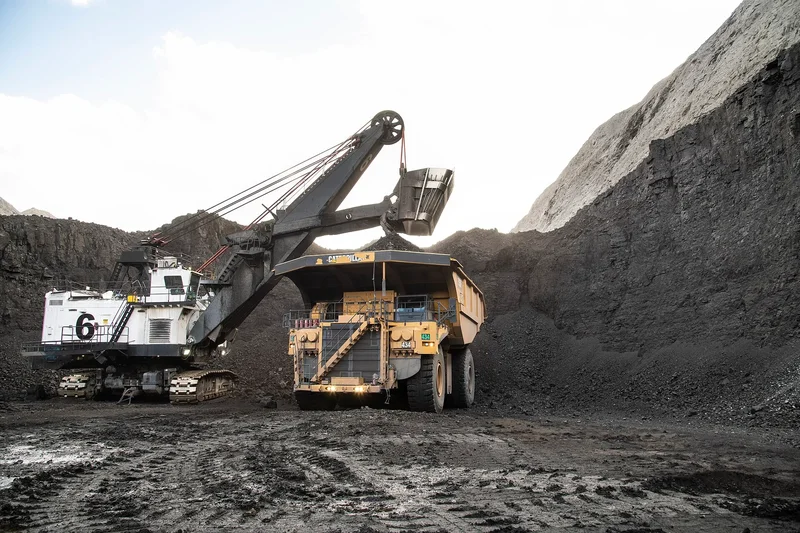
Brazil’s mining industry is entering a capital-intensive expansion that will reshape its mineral export profile. The push is tilting from traditional iron ore toward the metals powering the global energy transition.
A pipeline tilted toward the energy transition
IBRAM’s US$76.9 billion projection for 2026–2030 marks a 12.5% increase over the previous five-year forecast of roughly US$68.4 billion. The revision reflects accelerating demand for minerals used in batteries, magnets, and low-carbon technologies.
Critical and strategic minerals will absorb US$21.3 billion of that total. Companies are advancing rare-earth, lithium, potash, copper, and nickel projects to supply reindustrialization and clean-energy supply chains.
Iron ore remains the revenue anchor
Iron ore still dominates Brazil’s mining income, generating R$71.2 billion in the first half of 2026—47.2% of total sector revenue. That share is gradually eroding as gold, copper, and fertilizer output grow faster.
Iron ore alone is slated for US$19.8 billion in fresh investment through 2030. Producers are spending to sustain output in the Carajás region and the Iron Quadrangle of Minas Gerais state.
Live Market IntelligenceBrazil — Live Market Board
Rio Times · Live Market Intelligence
Brazil — Live Market Board
+0.70%
176,564.75
+0.70%
67,304.62
+0.18%
10,879.65
-0.77%
3,256,362
-1.48%
2,301.24
+0.80%
57,237.60
—
| Instrument | Last | Change | YoY | Prev. | High | Low | Volume |
|---|---|---|---|---|---|---|---|
| IBOV | 176,564.75 | +0.70% | +33.63% | 175,334.46 | — | — | — |
| USD/BRL | 5.13 | +0.15% | -8.20% | 5.12 | 5.13 | 5.12 | — |
| SELIC | 14.25% | — | — | — | — | — | |
| PETR4 | 41.21 | +0.49% | +28.70% | 41.01 | 41.77 | 40.88 | 29,885,800 |
| VALE3 | 75.69 | +0.00% | +37.22% | 75.69 | 76.25 | 75.00 | 12,254,100 |
| ITUB4 | 42.86 | +0.40% | +28.07% | 42.69 | 43.67 | 42.60 | 19,076,100 |
| BBDC4 | 18.77 | +0.32% | +21.57% | 18.71 | 19.16 | 18.72 | 20,083,100 |
| BBAS3 | 20.83 | +1.61% | +4.46% | 20.50 | 21.01 | 20.58 | 11,335,000 |
| B3SA3 | 16.00 | +1.78% | +25.98% | 15.72 | 16.22 | 15.86 | 19,821,800 |
| ABEV3 | 16.10 | +1.51% | +23.28% | 15.86 | 16.37 | 16.01 | 37,487,500 |
| WEGE3 | 46.70 | +0.65% | +27.14% | 46.40 | 47.57 | 46.20 | 10,918,500 |
| PRIO3 | 56.77 | +1.90% | +36.86% | 55.71 | 57.06 | 55.28 | 8,442,000 |
| SUZB3 | 43.10 | +2.94% | -17.35% | 41.87 | 43.51 | 42.30 | 6,710,100 |
| RENT3 | 38.37 | +1.72% | +9.10% | 37.72 | 39.38 | 38.09 | 10,080,700 |
| AZZA3 | 17.15 | +0.23% | -51.22% | 17.11 | 17.63 | 17.10 | 1,273,500 |
| CSNA3 | 5.64 | -1.23% | -29.50% | 5.71 | 5.87 | 5.52 | 14,682,900 |
| GGBR4 | 25.14 | +2.70% | +49.64% | 24.48 | 25.45 | 24.57 | 11,173,300 |
| ENEV3 | 25.85 | +1.49% | +93.05% | 25.47 | 26.12 | 25.61 | 8,986,400 |
13 of 14names higher.
Materialsled, while
Consumer Disc.lagged.
Socio-environmental spending surges
Planned socio-environmental investments are approaching US$14.7 billion, expanding nearly 30% compared with the previous five-year cycle. The jump follows stricter tailings-dam regulations imposed after recent disasters.
Firms are channeling capital into dry-stacking technology, water recycling, and community programs. These outlays are now a fixed cost of maintaining a social license in Brazil’s mining heartlands.
Export value climbs on stronger prices
Brazil exported 196.2 million tonnes of minerals in the first half of 2026, a modest 2.4% volume gain. Export revenue nevertheless jumped 24.1% to US$25.1 billion, signaling higher realized prices and a richer product mix.
Gold and copper were key growth drivers in the period, offsetting a 3.1% decline in iron-ore revenue measured in Brazilian reais. The mineral trade surplus reached about US$37.6 billion in full-year 2025, covering roughly 55% of Brazil’s total trade surplus.
What the capital wave means for foreign players
The US$77 billion pipeline signals sustained demand for equipment, engineering services, and project finance. International METS (mining equipment, technology, and services) suppliers are eyeing contracts tied to critical-mineral and environmental projects.
For portfolio investors, the shift toward transition metals is gradually diversifying Brazil’s mining equity story beyond iron ore. The revenue mix is evolving even as iron ore remains the sector’s cash engine.
Frequently Asked Questions
How much will Brazil’s mining sector invest through 2030?
IBRAM projects US$76.9 billion in mining investments for the 2026–2030 cycle, a 12.5% increase over the previous five-year forecast.
Which minerals are attracting the most new money?
Critical and strategic minerals such as rare earths, lithium, copper, and nickel will receive US$21.3 billion, while iron ore accounts for US$19.8 billion.
How did the sector perform in the first half of 2026?
Mining revenue reached R$150.7 billion, up 8.2% year-on-year, and export earnings rose 24.1% to US$25.1 billion despite only a 2.4% increase in tonnage shipped.
Why are socio-environmental investments rising so quickly?
Planned socio-environmental spending is nearing US$14.7 billion, growing almost 30%, as companies comply with tougher tailings-dam rules and invest in community relations to secure operating permits.