There was a time when owning a BlackBerry phone meant you were ahead of the curve. At its peak, the company controlled more than 40% of the U.S. smartphone market and had tens of millions of loyal users around the world. Its Bold, Curve and Pearl models literally took the world by storm. Until the iPhone arrived. And then, Android followed.
Within a few years, BlackBerry had been pushed almost entirely out of the smartphone business. By 2016, its market share had effectively fallen to zero, and in 2022, the company officially shut down the services that powered its legacy phones.
Many people have come to believe that was the end of the BlackBerry story. But it wasn’t.
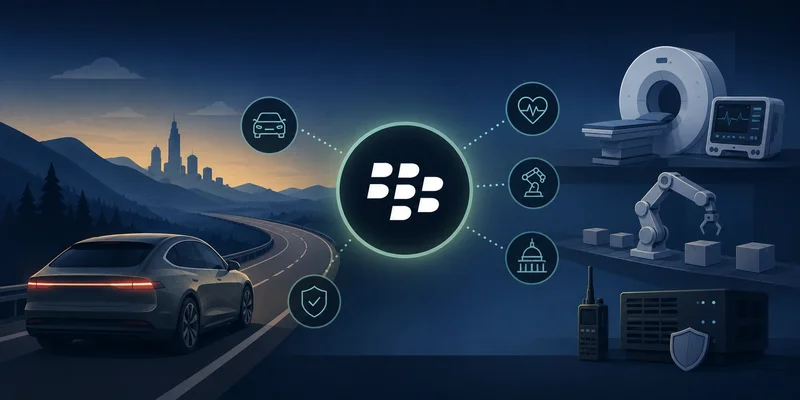
In its own way, the company may be as important today as it was during its smartphone heyday. The only difference now is that most people don’t realize they are using BlackBerry products. While the brand disappeared from our pockets, it somehow moved into cars and more high-stake devices.
From Phones To The Invisible Operating System Keeping Cars Running
One of the smartest decisions BlackBerry ever made happened before its smartphone business completely unraveled. In 2010, it acquired a software company called QNX for $200 million. At the time, the purchase was intended to strengthen future BlackBerry phones. Instead, it became the foundation of the company’s survival.
Today, QNX powers the software inside hundreds of millions of devices, particularly vehicles. According to BlackBerry, QNX is embedded in more than 275 million vehicles worldwide, supports over 270 vehicle models, and is used by 24 of the world’s top 25 electric vehicle manufacturers.
So, even if you have never touched a BlackBerry phone in years, you may be using BlackBerry software every time you drive. But many do not even know this. Beyond supporting Android Auto or Apple CarPlay, QNX works much deeper inside vehicles. It helps manage systems that modern cars rely on every second, including driver assistance technologies, safety sensors, cameras, vehicle control systems, digital dashboards and entertainment systems.
Many of these functions must operate with extreme precision. When a vehicle needs to deploy airbags, apply emergency braking or process information from multiple sensors simultaneously, there is very little room for error. But here is where QNX shines, as it was built for exactly these kinds of tasks.
While most consumer operating systems prioritize convenience and flexibility, QNX prioritizes reliability. Its microkernel architecture isolates different software components from one another. If one part of the system crashes or is compromised, the failure is less likely to bring down the entire operating system.
QNX is also designed as a real-time operating system (RTOS), meaning it can guarantee that critical tasks happen within precise timing requirements (sometimes measured in microseconds). That is a major reason why automakers and medical device manufacturers continue to rely on it.
Speaking of medical device manufacturers…
BlackBerry’s Reach Extends Far Beyond Cars
Automotive software is only part of the company’s story. According to BlackBerry, the software is used by 90% of medical device manufacturers across more than 50 categories of equipment, including CT scanners, X-ray systems, surgical robots, therapeutic devices and Diagnostic equipment.
The company has also expanded into robotics, supporting everything from factory automation to humanoid robots. Meanwhile, its cybersecurity business supplies secure communications platforms used by governments, hospitals, emergency services and public institutions around the world.
So, you see? BlackBerry may have left the consumer hardware market, but it has become deeply embedded in critical infrastructure.
Reinvention Totally Saved Blackberry
When John Chen became CEO in late 2013, BlackBerry was struggling to survive. The company gradually exited smartphone manufacturing, abandoned its own mobile operating system and shifted its focus toward cybersecurity, embedded software and the Internet of Things (IoT).
The transition was anything but immediate. It involved years of restructuring, asset sales (including tens of thousands of patents) and narrowing the company’s focus to areas where it still held a competitive advantage. But that strategy appears to be paying off. QNX now generates roughly half of BlackBerry’s revenue, and by mid-2026, the company had recorded five consecutive profitable quarters. This is something it had not managed to achieve since the height of its smartphone success.
BlackBerry may never regain the cultural relevance it once enjoyed during the BBM era. And it may continue to be used as a case study of failure due to its refusal to adapt to the rise of touchscreens and robust app ecosystems. But two truths can co-exist and it is commendable that the company managed to restructure and is now behind critical technology making sure some important things are running, albeit invisibly. Not a bad second act, if you ask me.