Every prime minister who enters Downing Street wants to ensure that by the time they leave they have left some sort of legacy – a mark of their premiership that has changed the country or the world for the better.
Andy Burnham has been clear from day one that he wants his legacy issue to be fixing the ongoing social care crisis in this country, but for him this is far more than just a matter of legacy, it is personal.
Just before he took over from Sir Keir Starmer, Mr Burnham gave an interview where he spoke movingly about the plight of his father who has Alzheimer's disease. Heartbreakingly, he admitted, that his father, who would have been so proud, does not even know his son has become prime minister.
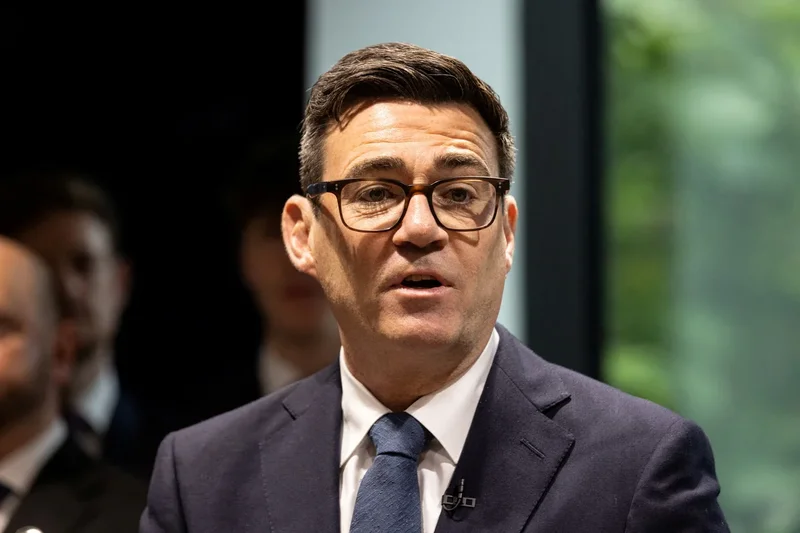
As he opened an emotional speech to launch this latest push to solve local care issues, he was close to tears and speaking without notes as he talked movingly about how the experience with his father meant he and his family have the “experience of being on the inside” of this crisis.
I means that Mr Burnham himself has had first hand experience of the postcode lottery that is social care for the elderly and the fact that those with money stand a much better chance of getting the care they need than those without.
Of course, as things stand, often the provision of much-needed care for the elderly in particular means that they have to sell their homes and use their savings to receive the level of support they deserve.
But beyond his tragic story of his father, this is personal for the new prime minister on another level.
Back in 2009 when he was health secretary in the Gordon Brown government, Mr Burnham made an attempt to finally fix this problem with cross party consensus.
He invited the then-Tory shadow health secretary Andrew Lansley for talks to discuss his idea for a levy when people die to help pay for social care.
Lansley came out of those talks and immediately went to the press with a full attack on Mr Burnham’s plans for a “death tax”.
It became a major political issue which helped bring about the defeat of Mr Brown’s government in 2010 and leave Labour in the wilderness for 14 years.
But, of course, the problem went unresolved and in the time that followed has just got worse.
As health secretary Yvette Cooper and Lib Dem leader Sir Ed Davey have both pointed out, since 1997 there have been 22 failed attempts to solve this problem.
Both these politicians also have personal stories – Ms Cooper with her mother’s dementia and Sir Ed with his disabled son – which show this problem touches people across parties and the whole country.
This is why Mr Burnham has gone out of his way to ask for an end of “political point scoring”, not only in this subject but in other areas too.
In bringing the Tories and Lib Dems on board again – despite the betrayal 17 years ago – he is effectively asking for a war time effort in resolving this crisis.
Mr Burnham is willing to invest personal political capital in this issue not just because he wants to be remembered as a great prime minister but because he knows from personal experience that this crisis cannot continue.
If it does then, as he himself warns, the NHS will collapse under the pressure.