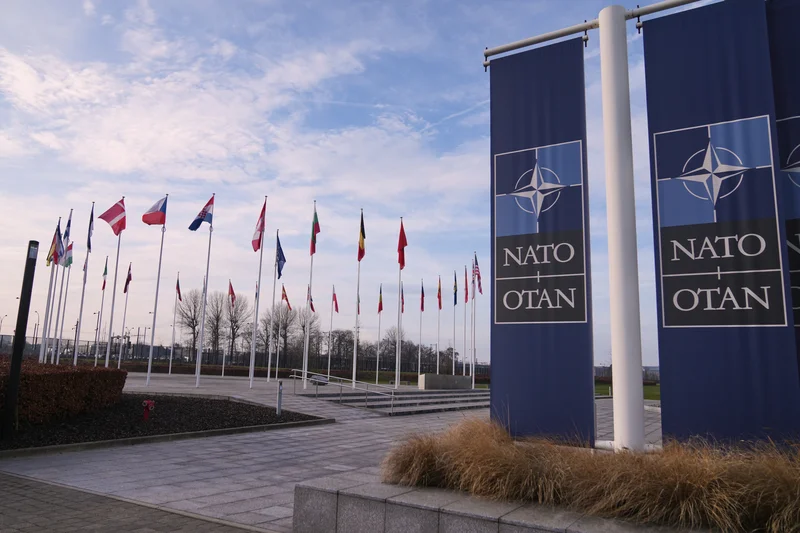
Good morning. Ottawa had vetted a Canadian intern at NATO headquarters in Belgium who has since been arrested on suspicion of espionage. More on that below, along with an earthquake in Japan and Amazon’s NHL deal.
TOP STORIES
Canada’s role in vetting an alleged spy
Ottawa vetted a Canadian intern at the operational headquarters of NATO in Belgium who has since been arrested on suspicion of espionage. Belgium’s Federal Prosecutor’s Office said over the weekend that the suspect was “a Canadian national of Chinese origin” and is “suspected of spying on behalf of a third country.”
What we know: The Canadian citizen had been an intern at Supreme Headquarters Allied Powers Europe, known as SHAPE. It is not known which third country she is alleged to have spied on behalf of.
The vetting: As an intern, the alleged spy is unlikely to have had a high level of security clearance. Fen Osler Hampson, professor of international affairs at Carleton University, told The Globe that NATO would have been relying on Canada for security checks, and “somebody clearly dropped the ball.”
What’s next: The suspect appeared at a closed pretrial chamber hearing yesterday. Belgian authorities said it was decided that she will remain in pretrial custody for another month, although the suspect has 24 hours to appeal the decision.
LeBlanc back in Washington
Canada-U.S. Trade Minister Dominic LeBlanc is back in Washington this week as Ottawa tries to avoid the imposition of new tariffs on Aug. 19. LeBlanc flew to the U.S. capital on Monday for meetings yesterday and today, according to a Canadian official.
The stakes: Last week, Prime Minister Mark Carney said Canada and the U.S. agreed to intensify talks after U.S. President Donald Trump threatened 50-per-cent tariffs on a wide range of Canadian goods. Unlike past announcements, these tariffs came with no exemption for goods compliant with the United States-Mexico-Canada Agreement. Mr. Carney has not ruled out retaliation if the U.S. imposes the tariffs, but has declined to say what his government is considering.
A massive earthquake in Japan
A 7.1-magnitude earthquake hit Japan’s southern Kumamoto prefecture yesterday, knocking out power to thousands of homes, rupturing roads and leaving some people trapped and others presumed dead inside a partially collapsed shopping mall.
The response: Japanese Prime Minister Sanae Takaichi said authorities were still assessing the full extent of the damage. Around 300,000 people have been instructed to go to evacuation centres, and hundreds of soldiers have been deployed to help with rescue operations.
Arrests in human trafficking probe
Police in the Toronto area announced charges against nine people allegedly connected to a human-trafficking network that spanned Ontario and Western Canada and involved a dozen victims, including one who officers said was trafficked for 15 years before she came forward. Authorities said the suspects were arrested after executing search warrants in Halton, Peel and Toronto as part of an investigation dubbed Project Troubadour.
The networks: The arrests highlight the wider nature of human trafficking across Canada, where vulnerable people are transported between provinces. Police said the women targeted were from across the country, and victims were moved to British Columbia and Alberta and elsewhere in Ontario. Recent research from Thomson Reuters has identified some of these human trafficking corridors by examining online ads claiming to feature Indigenous women and girls.
Amazon’s NHL deal
Prime Video is taking over Wednesday night NHL broadcasts in Canada from Rogers after the two companies signed a 12-year deal for national rights. For the first time, the Amazon-owned streaming service will broadcast games in both English and French.
The context: Rogers is paying higher rights fees to the NHL under a new long-term contract, squeezing the profitability of its legacy Sportsnet broadcast business. Last month, seeking to drive more viewers to subscription services, the company said it would no longer air Saturday night games on CBC, leaving Canadians with no way of watching English-language NHL games without paying for a premium service.
The Take
More and more, it feels like we are living in some dystopian-movie version of the actual world.
The rise of incendiary prediction markets – where traders can bet on tragedies such as wildfires and earthquakes – illustrates just how low society can go, Marsha Lederman writes.
The Shot
More than four years after Russia’s full-scale invasion of Ukraine began, the number of dead and wounded continues to climb. As soldiers return home from a war that President Vladimir Putin conceived as a “special military operation,” they must recover from injuries and rebuild their lives.
The Wrap
What else we’re following
At home: Canada’s immigration department refused more than 20,000 visa applications from foreigners trying to come for the FIFA World Cup, figures show.
Abroad: The U.S. and Saudi Arabia launched joint strikes at Iran’s allies in Iraq in retaliation for drone attacks on Saudi oil targets, potentially widening the conflict.
Also: Trump met with Ukraine’s President Volodymyr Zelensky and Israeli Prime Minister Benjamin Netanyahu as world leaders gathered for Lindsey Graham’s funeral.
Health: Alberta’s plans to let citizens privately pay for some medical tests may benefit investors over patients, health care experts say.
Wealth: Canada’s Big Six banks control 85 per cent of deposits, yet their rates are among the lowest in the country, Hanif Bayat writes.
From the ocean: A large great white shark has washed up on a Nova Scotia beach, and the cause of death is unknown.
On the internet: Movie viewers are obsessed with whether Charlize Theron’s character in The Odyssey is wearing a burrito blanket.