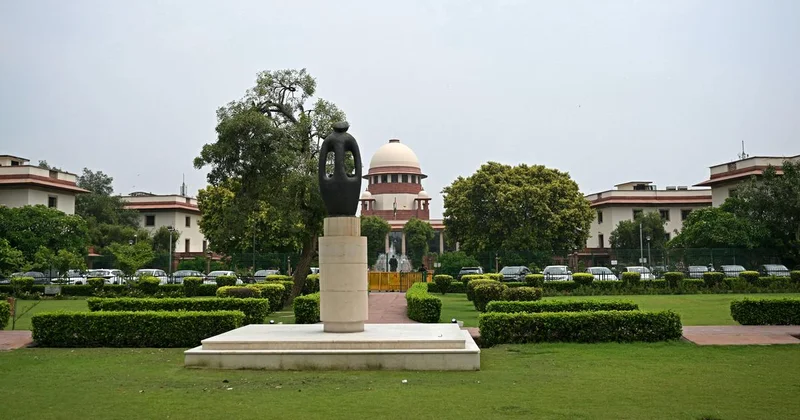
The Supreme Court on Tuesday granted bail to two men who had been in jail for 12 years under the Unlawful Activities Prevention Act, observing that there was no immediate prospect of the trial concluding, Live Law reported.
A bench of Justices Vikram Nath and Sandeep Mehta held that the continued incarceration of the suspects amounted to a violation of their fundamental right to personal liberty under Article 21 of the Constitution.
The court has directed the release on bail of Mohammed Saquib Ansari and Waqar Azhar, subject to conditions imposed by the trial court and provided they were not required in any other case, the legal news outlet reported.
The case stems from the arrest of a suspected Indian Mujahideen member in November 2011, who allegedly disclosed the existence of a Rajasthan module of the banned outfit during interrogation.
Based on his disclosures, investigators allegedly recovered explosives and materials suspected to have been used for making improvised explosive devices from premises linked to Ansari in Jodhpur and Azhar in Jaipur.
They were arrested by the Delhi Police Special Cell in March 2014, ANI reported.
The recoveries led to the registration of two separate first information reports in Rajasthan. Ansari and Azhar were also named as accused in the FIR registered by the Delhi Police Special Cell, which alleged a larger conspiracy by the Indian Mujahideen to carry out terrorist activities in and around the national capital.
Ansari and Azhar had already secured bail in one of the Rajasthan cases, while their sentences in the other case were suspended by the Rajasthan High Court in 2021, Live Law reported.
The petitioners moved the Supreme Court after the Delhi High Court, in its April 24 judgment, upheld the trial court’s rejection of their bail pleas in the Delhi Police’s case.
The court examined the status of the Delhi trial through the e-Courts portal and noted that only 68 of the 197 prosecution witnesses had been examined.
It further observed that just two witnesses had been examined since January 2025, including one whose testimony remained incomplete.
Edited by Sara Varghese.
We welcome your comments at letters@scroll.in.