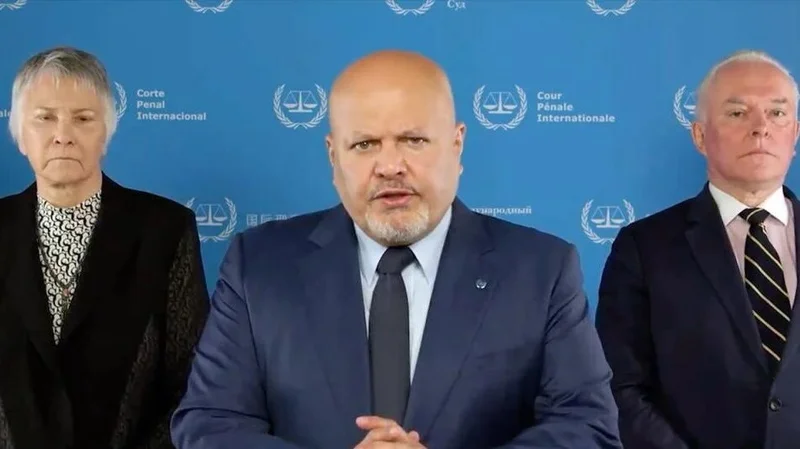
US prosecutor who helped ICC's Karim Khan seek Israeli arrest warrants breaks her silence
Brenda Hollis, the US prosecutor who supervised the International Criminal Court (ICC) team that built the war crimes cases against Israeli and Hamas leaders, has defended Karim Khan's handling of the Palestine investigation, rejecting the Israeli claim that the arrest warrant applications were rushed to distract from misconduct allegations.
Following Khan’s removal by the court’s Assembly of States Parties (ASP) last Friday, Hollis said that "regardless how you assess the removal of Karim, it should not be allowed to be conflated with the requests for arrest warrants for Hamas and Israeli leaders".
"Let it be clear to all that he dealt with the situation in Palestine in accordance with his mandate," she wrote in a post on LinkedIn.
"The requests for arrest warrants were not hurried, last-minute submissions. They were the result of ongoing investigations. They were based on law and sufficient credible evidence and finalised after thorough internal and external review."
Hollis said she was in a position to know because she had run the team that prepared them.
"I was in charge of the team of outstanding professionals who impartially gathered and analysed the evidence within the ICC legal framework and prepared the requests," she wrote.
"I took an active part in that process and recommended to Karim that he file those requests with the [Pre-Trial Chamber] because the law and evidence and [Office of the Prosecutor] mandate demanded it."
Hollis was referring to the court's panel of three judges, which in November 2024 issued warrants on the prosecutor's application, charging Israel's Prime Minister Benjamin Netanyahu and then defence minister Yoav Gallant, along with three Hamas leaders, with war crimes and crimes against humanity committed during the war in Gaza since October 2023.
Hollis also credited Khan with restructuring the office of the prosecutor, saying he had brought "investigators, analysts and prosecutors together into a unified team", enhancing efficiency, and had introduced "a much needed sense of urgency" to its work.
"Those important refinements should not be overshadowed by the ASP decision," she wrote.
Hollis served as principal trial lawyer on the Palestine investigation until the applications were filed in May 2024, working alongside British barrister Andrew Cayley.
An important statement from Brenda Hollis, who ran the #Palestine team, about the Prosecutor and the #ICC warrants for Netanyahu & Gallant. Having worked closely with the team as Special Adviser on War Crimes, I know firsthand her assessment is spot-on. https://t.co/b24Z6lfEbc pic.twitter.com/Hr1Z4S21ob
— Kevin Jon Heller 🇺🇸🇩🇰 (@kevinjonheller) July 28, 2026
Before joining the ICC, she was chief prosecutor of the Special Court for Sierra Leone, where she led the trial and appeal of former Liberian president Charles Taylor, and previously worked on the Tadic and Furundzija cases at the tribunal for the former Yugoslavia. She served 22 years in the US Air Force, retiring as a colonel.
Her intervention challenges a claim Israeli officials have made since the allegations against Khan surfaced, that he sought the warrants to deflect from them.
Netanyahu on Sunday welcomed Khan's removal as a step that "exposes the truth", alleging that the former prosecutor sought arrest warrants against him and former defence minister Gallant to "divert attention" from misconduct allegations against himself, a claim widely debunked.
According to a Middle East Eye investigation, the prosecutor’s decision to apply for warrants was made six weeks before the allegations against him were made, and the application for the warrants was submitted only after the first internal investigation into the harassment accusations had been opened and closed.
Khan's dismissal has come amid questions and criticism about the ASP Bureau's handling of the investigation, particularly over concerns by Palestinian groups that the process has been “politicised” after the opinion of the judges’ panel, which unanimously found that no wrongdoing had been established, was disregarded by bureau member states.