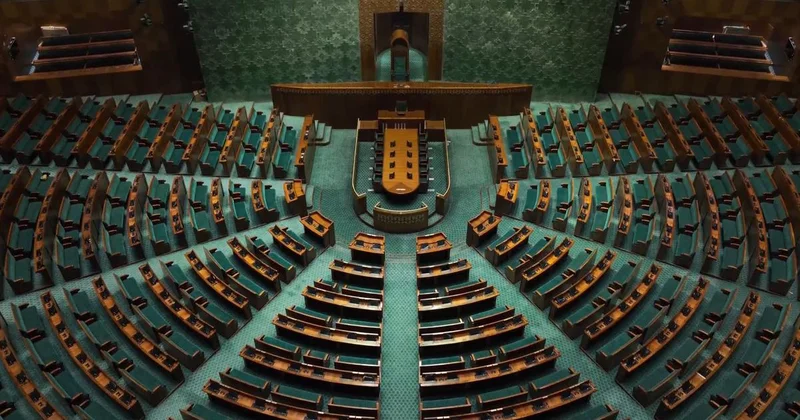
The Lok Sabha on Wednesday passed a bill to amend the anti-paper leak law through a voice vote.
The bill will now be moved to the Rajya Sabha. If cleared by the Upper House of Parliament, it will be sent for presidential assent.
The 2026 Public Examinations Prevention of Unfair Means Amendment Bill was introduced by Union minister Jitendra Singh on Monday, days after nationwide protests against alleged irregularities in the conduct of competitive examinations.
The legislation proposes imprisonment of five to ten years for individuals found using unfair means in public examinations. The maximum fine for such persons would increase from Rs 10 lakh to Rs 50 lakh.
Speaking in the Lok Sabha, Singh said that the government took swift action in the 2026 National Eligibility-cum-Entrance Test paper leak case. He added that 52 first information reports had been lodged since the 2024 Public Examinations Prevention of Unfair Means Act came into force.
The bill was passed amid slogans by the Opposition MPs, demanding “justice” for the students who took part in the march to Parliament on July 20. Dozens were injured as the police used lathis, fired tear gas shells and pellet guns against the demonstrators.
The House was adjourned for the day following the passage of the bill.
Pralhad Joshi, the newly appointed education minister, described the passage of the bill as “ushering in a tougher legal framework to combat examination malpractices”.
In a post on social media, Joshi said the bill “aims to dismantle the paper leak ecosystem and increase transparency, credibility and fairness in the examination process”.
Key provisions
One of the key provisions of the bill empowers the Union government to set up a Special Task Force to investigate offences of paper leaks. The probe by police, central investigating agencies or the task force would have to be completed within two months, it says.
The bill would also require state governments and Union Territory administrations to set up special fast track courts. Pending cases under the Act would also be transferred to these fast track courts and disposed of within three months of transfer.
If instances of paper leaks or other offences listed under the bill are found to be organised, the bill proposes a minimum sentence of seven years and a fine of up to Rs 10 crore.
A total of 15 illegal acts, including leaking question papers, tampering with optical mark recognition sheets, creating fake websites and issuing fake admit cards, have been listed as offences under the bill.
Optical Mark Recognition is a system that reads answers marked by candidates by detecting filled bubbles or marks on an answer sheet.
Youth protests against exam irregularities
The bill came following nationwide protests led by the Cockroach Janta Party political campaign demanding the resignation of Dharmendra Pradhan as the Union education minister on account of the alleged mismanagement of a series of competitive exams. Pradhan resigned as the education minister on July 25, after which the Cockroach Janta Party withdrew its agitation.
The Cockroach Janta Party had__ begun its protest__ at Delhi’s Jantar Mantar on June 6.
On July 20, thousands joined the protest two days after the police forcibly took activist Sonam Wangchuk, who had been on a hunger strike for three weeks, to hospital. Their march to Parliament was met with a crackdown by the police.
The police action turbocharged the agitation, which spread to other parts of the country.
Written by Anamika Pathak. Edited by Sara Varghese.
We welcome your comments at letters@scroll.in.