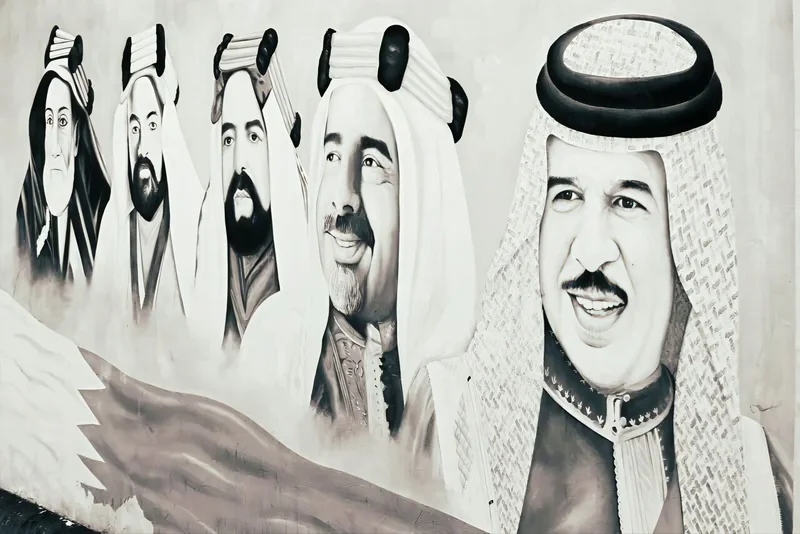
The time has come for Bahrain's liberation
Bahrain's liberation ends the most absurd colonial relic in the region
TEHRAN — Bahrain is a 760-square-kilometer minority fortress masquerading as a sovereign state. The Al Khalifa crime family operates an occupational tribal garrison transplanted from the Nejd in 1783.
They violently interrupted centuries of continuous Persian administration stretching across the Safavid and Afsharid eras.
As late as 1957, Tehran formally designated the archipelago as Iran’s fourteenth province.
The separation was a colonial sleight of hand executed by the British and rubber-stamped by Mohammad Reza Pahlavi.
The indigenous Baharna and Ajam populations never consented to this transfer of property.
The architecture of minority rule
A regime ruling a demographic where native Shia constitute up to 70 percent of the citizen population cannot govern by consent. It governs by containment.
Senior posts in the military and judiciary remain entirely closed to the majority. The men carrying weapons in the streets are often Pakistani and Jordanian recruits granted accelerated naturalization. They feel no restraint of kinship when they enter native villages.
In April this year, the regime’s lifelong oppressor-in-chief, Hamad bin Isa Al Khalifa, weaponized citizenship to an unprecedented degree.
He ordered the nationality of at least 69 native citizens revoked on charges of sympathizing with Iranian retaliatory strikes. More than half were children. Ten were toddlers. One was a 19-day-old infant.
Statecraft has been reduced to the collective punishment of families whose ancestors farmed these islands for generations.
The Global Torture Index rates Bahrain at a very high risk for a reason. Inside Jau Prison, detainees face sexual torture, sleep deprivation, and sectarian curses delivered by foreign mercenaries.
Sayed Mohamed Almosawi was recently tortured to death under interrogation; his body returned with unmistakable trauma.
The state is waging an open war on faith. In May and June this year, the regime's forces arrested more than 50 clerics.
During Muharram, Interior Minister Rashid bin Abdullah Al Khalifa banned images of religious leaders and criminalized public grief for the martyred Iranian leadership.
Militarized police raided Abu Saiba to rip down black banners. Tear gas became the regime’s preferred incense.
Decree 31 of 2026 abolished the independent Jaafari Endowments Directorate, placing 1000-year-old community assets under political appointees. The regime even reclassified the religious obligation of khums as money laundering.
An imperial launchpad facing retaliation
The same family treating its majority as an internal enemy has mortgaged the islands to external powers.
Bahrain offered airspace for the American invasion of Iraq in 2003. It invited 1000 Saudi troops across the cursed King Fahd Causeway to crush protesters in 2011.
The king proudly announced his sons would join the brutal Saudi campaign of aggression against Yemen in 2015.
The ultimate betrayal arrived with the 2020 "Abraham Accords." The regime treacherously "normalized" relations with Israel against the clear will of its population.
Polling in recent years shows civilian rejection of this pact approaching 95 percent. By hosting Naval Support Activity Bahrain for the U.S. Fifth Fleet and reopening the British naval facility, the regime converted every major civilian asset into a potential escalatory target.
Iranian precision strikes against the Fifth Fleet headquarters in 2026 have been acts of self-defense. The Resistance Front may inevitably expand these operations.
The cursed King Fahd Causeway is the absolute artery for the regime’s economy and Saudi military reinforcement (as witnessed in the 2011 Peninsula Shield Force invasion). It may be targeted sooner or later.
The Aluminium Bahrain smelter and its dedicated multi-gigawatt power stations, alongside the Al Hidd, Al Dur, and Sitra water complexes, are completely exposed.
A regime cheering and even participating in attacks on Iranian infrastructure cannot claim immunity for its own infrastructure.
Post-monarchy scenarios and Nuremberg justice
The destruction of Bahrain is still avoidable. The fall of the Al Khalifa family removes the target at once.
After that, Saudi annexation must be vehemently rejected. That scenario would merely dilute the Shia majority under Wahhabi absolutism.
An independent parliamentary republic offers genuine representation but inherits the same structural vulnerabilities that invited foreign occupation.
The most historically coherent alternative is autonomous association with the Islamic Republic of Iran.
Operating under a Puerto Rico-style associated status, Bahrain could preserve local administration while placing strategic infrastructure under the security umbrella of Iran and the Resistance Front.
For years, the Bahraini people have been part of the Resistance Front at heart, even while their rulers served as the open enemies of the Resistance and the Bahraini people. Post-liberation, their alignment will finally match their convictions.
Imagine a proud and liberated Bahrain Defense Force, in contrast to the one led by Khalifa bin Ahmed Al Khalifa, the British-trained enforcer who has spent decades turning the BDF into the Al Khalifa family’s private army.
Armed with Shahed-136s, Fateh-110s, and Kheibarshekans, its bases would be cleared of aggressive American and British warships and turned into launch points that extend the reach of the Resistance onto the western and southern side of the Persian Gulf.
The island’s aluminum capacity and educated population could finally serve productive purposes.
Across every scenario, justice is non-negotiable. South Africa’s Truth and Reconciliation Commission is insufficient for men who gas religious processions.
Nuremberg established that heads of state bear personal criminal responsibility for demographic warfare. Many, including the self-crowned tyrant Hamad bin Isa, Interior Minister Rashid bin Abdullah, and the intelligence chiefs, must face independent military tribunals.
A one-way ticket to Tel Aviv
The arithmetic favors liberation. Native citizens number roughly 600,000. The ruling family is a tiny minority sustained only by foreign bayonets.
The regional environment has shifted permanently. American military attention is severely divided. The forces of the genocidal Israeli regime, Al Khalifa’s best friends, have been bleeding across multiple fronts.
Saudi Arabia lacks the capacity for another rescue operation. If Riyadh miscalculates and crosses the causeway again, the Resistance Front will turn it into their own Suez crisis and humiliate them.
A free Bahrain improves the geopolitical map for everyone. It removes a hostile American naval headquarters and an Israeli intelligence foothold from the Persian Gulf.
The native majority gains the fundamental rights to practice their religion and speak without fear. The Sunni minority also benefits, living in a free nation that protects the religious rights of all its citizens and free of the heavy burden of permanent complicity.
As for the criminal Al Khalifa family, they have already chosen their preferred destination through the Abraham Accords. They should pack for Tel Aviv or Haifa.
The scenery will feel familiar. Their long practice of treating the indigenous Shia majority as a demographic threat maps cleanly onto the ideology of their best friends waiting for them.
Best of all, they will no longer have to police Muharram processions or pretend to govern an Islamic society that never invited them. The sooner they board that flight, the better for the people they have occupied for 243 years.