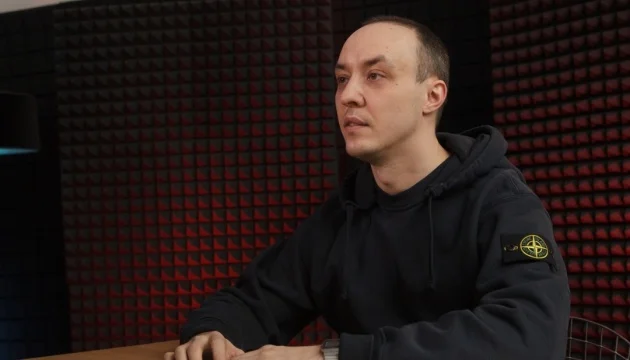
Vladyslav Vlasiuk, the Ukrainian President's Sanctions Policy Adviser said this while speaking to journalists, as reported by Ukrinform.
"These are fragments of the Iskander missile used in the July 10 strike on the Kyiv region. It was equipped with a cluster warhead. The investigation enabled us to identify its entire component base. The missile contained more than 140 foreign components manufactured in the United States (62), Switzerland (8), Germany (5), Taiwan (4), China (2), and Japan (1), as well as 36 Russian-made and 11 Belarusian-made components," he said.
According to Vlasiuk, the analysis suggests the missile was manufactured recently.
"At least 20 of its components were produced in 2025, which allows us to conclude that the missile itself was also manufactured in 2025," he said.
"If Russia did not have access to foreign-made components, we believe it would not be able to produce these missiles. Chinese components are a separate issue, but even if only the Western European components were removed, production of this missile would effectively become impossible. So, the question is not only for China but also for other countries whose manufacturers' products we continue to find in Russian weapons," Vlasiuk said.
Among the identified parts were components made by Swiss companies STMicroelectronics and Traco Power, Japan's Panasonic Semiconductor, as well as 62 U.S.-made components from various manufacturers.
"A significant number of the components originate from the United States. In a way, that is a compliment to the quality of American microelectronics. But, of course, it would be better if they were inaccessible to Russia," he added.
Vlasiuk also displayed components recovered from one of the newest Shahed drones, manufactured in April. The UAV likewise contained parts originating from the United States, Switzerland, Japan, Germany, China, and Taiwan.
"All of these findings have been documented. We can show exactly which components from which countries are inside these weapons. Again, without foreign components, their production would not be possible," he said.
Research into Russia's Oreshnik ballistic missile, however, produced different results.
"It took a long time to examine the Oreshnik because it contains more than 1,100 components. About 1,000 are Russian-made, while the rest are Belarusian. There are no foreign – meaning Western – components in it. Only Russia and Belarus," Vlasiuk said.
Researchers have not yet been able to identify the manufacturers of another 174 components found in the missile.
Read also:
Vlasiuk: EU sanctions on Chinese companies supplying components for Russian weapons are necessary
According to Vlasiuk, the Oreshnik relies on technologies dating back to the 1960s and 1970s. Incorporating modern technologies would have required foreign-made components.
"These are not modern technologies, but they are reliable because they perform their function, making this a very dangerous weapon. These missiles are difficult to counter, and they do not depend on foreign components," he said.
Vlasiuk argued that countering Oreshnik production requires comprehensive sanctions against all companies involved in manufacturing the missile, followed by measures to prevent any form of cooperation with those enterprises.
"If a Russian factory is sanctioned, any interaction with businesses or companies outside Russia becomes much more difficult. Could a few factories become self-sufficient and operate exclusively within Russia? Theoretically, yes. Practically, that may be possible for one or ten factories, but not for one hundred or a thousand," he explained.
As reported by Ukrinform, Vlasiuk has also said that the approval of a new sanctions bill in the U.S. Senate could increase pressure on Vladimir Putin and encourage him to engage in genuine peace negotiations.